


Biannual report 1 / 2023 - Our animal numbers
Animal balance 1/2023 – into a new phase
May 22nd is the International Day of Biodiversity – and for Citizen Conservation the occasion to present the balance of our contribution to its preservation. And the results are impressive!
Set goals...
The goals CC sets for its conservation breeding programs are not arbitrary, but have been determined using science-based population management tools. The goal is to establish populations in which the genetic diversity of the source animals is largely maintained over a 40-year period. To achieve this, we need a certain number of holdings and animals per species.
...come within reach
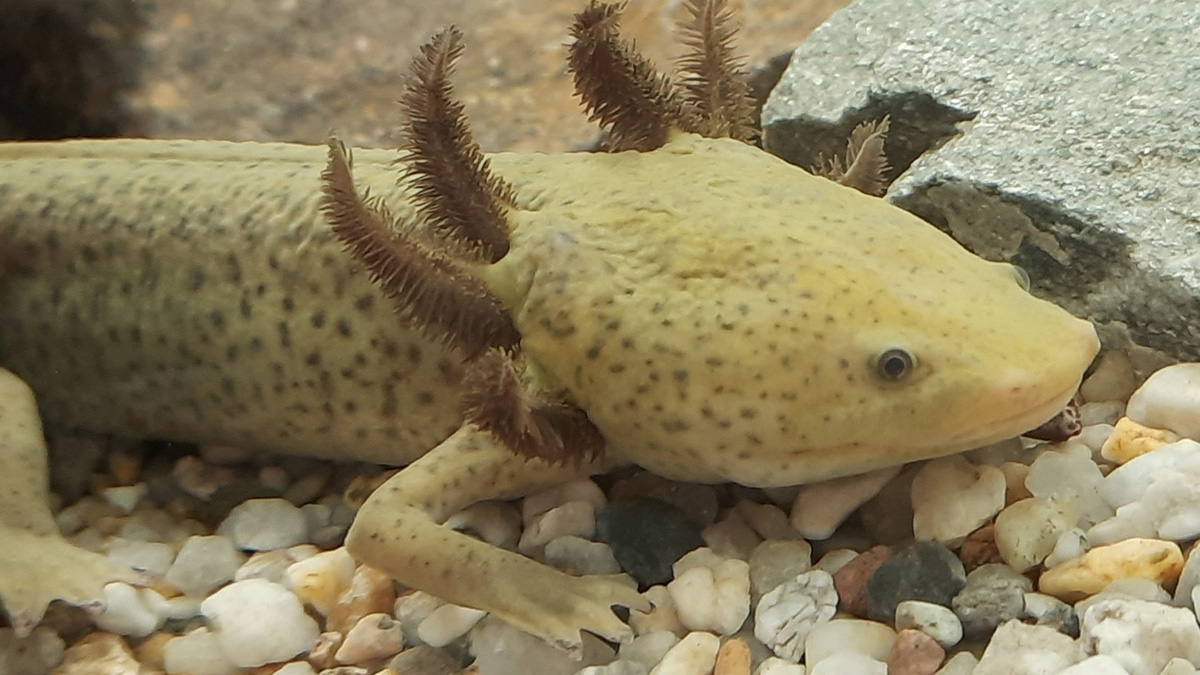
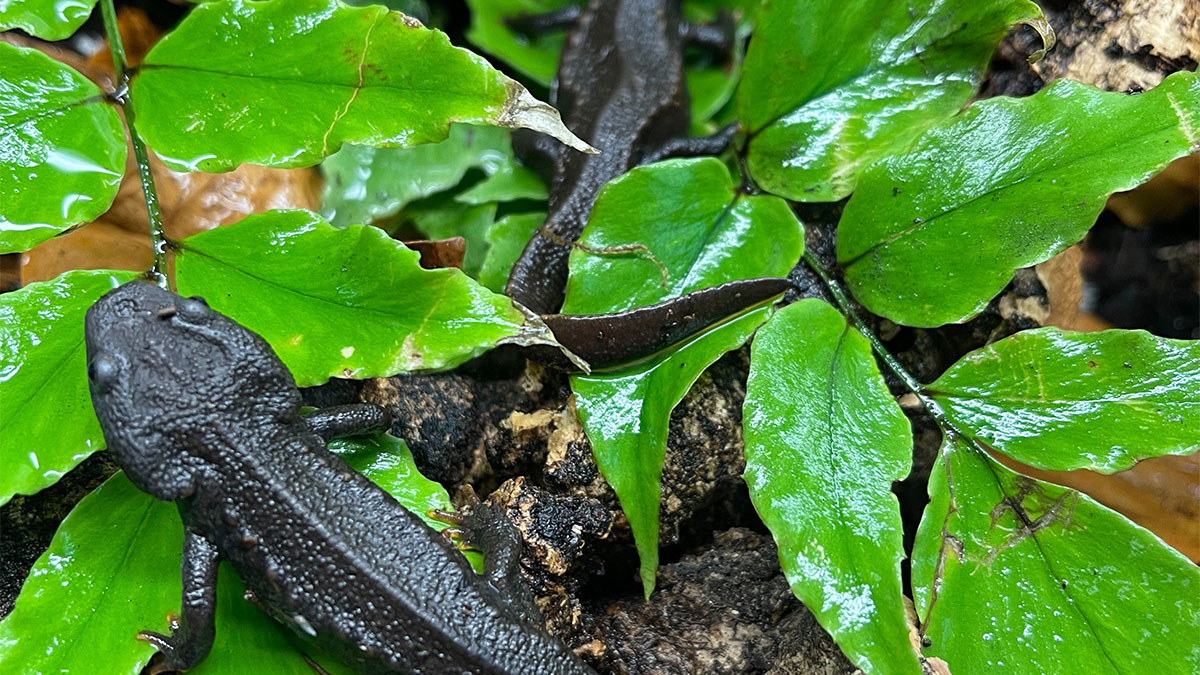
In the meantime, we have come very close to achieving these goals for the first species. For the Vietnamese crocodile newt, for example, we already have enough animals in our program thanks to good breeding success. Now we only need four more keepers to reach the required number of 30. This should still be possible this year. After that we can focus our efforts on the second species of the genus in our program: Ziegler’s crocodile newt.
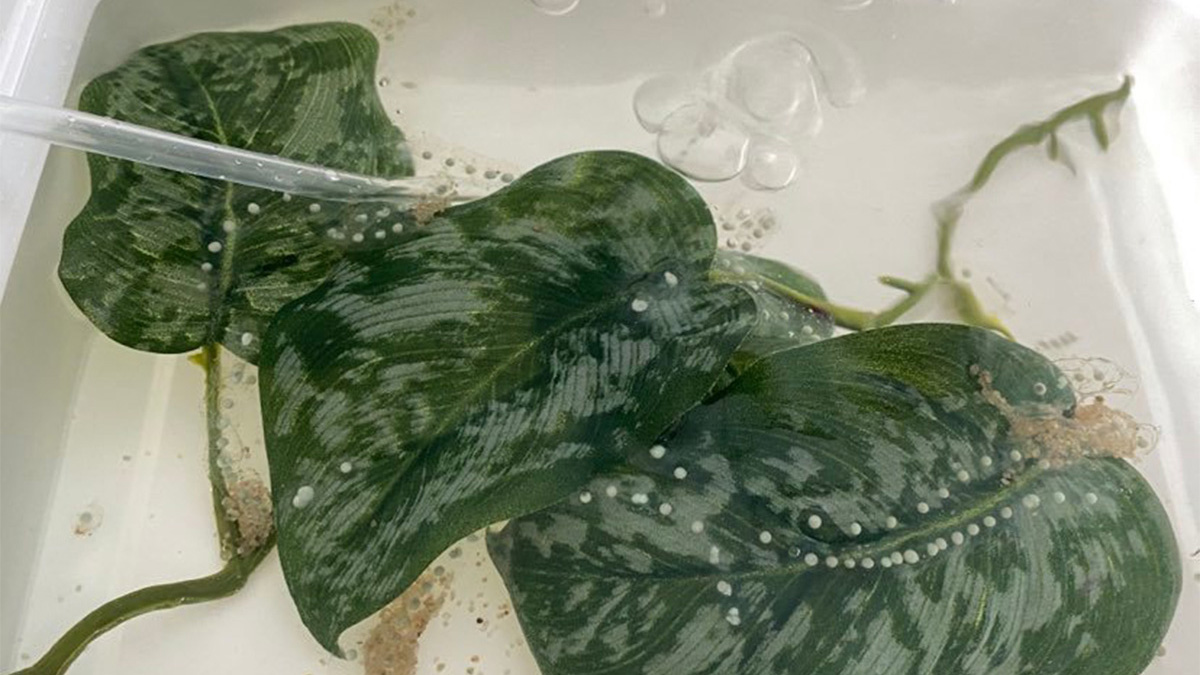
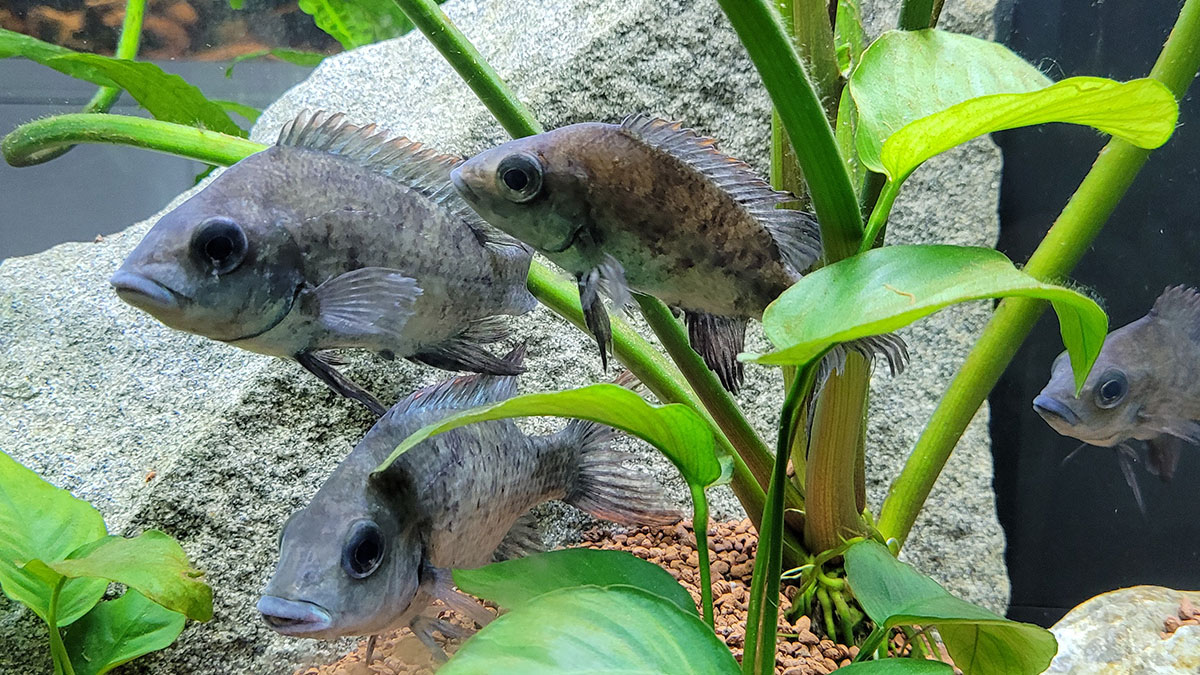
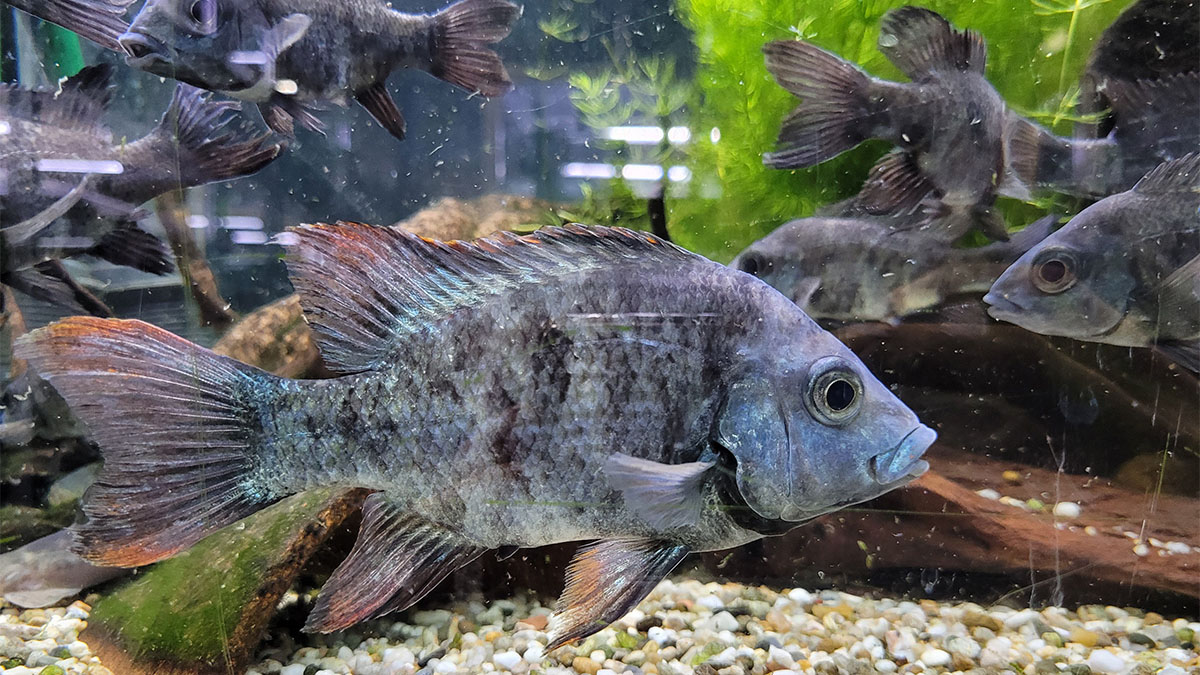
The situation is similar for the Mangarahara cichlid, one of the rarest fish in the world, which may have already been extirpated in the wild. According to our calculations, to keep this species stable over 40 years, we need 16 husbandries with a total of 192 animals – 12 husbandries are already in place, and here too good breeding successes have ensured sufficient individuals. First successes with our two other species of Malagasy cichlids let us look optimistically into the future also for them.
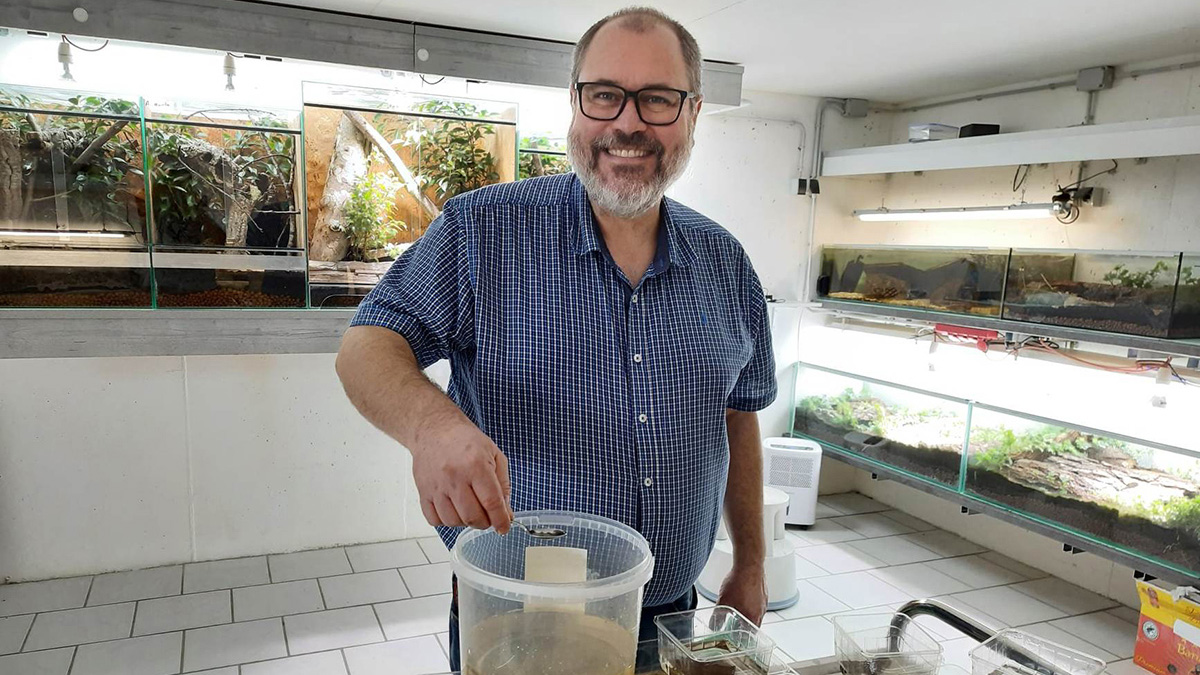
Thomas Wilms was highly successful in breeding the Pátzcuaro salamander.
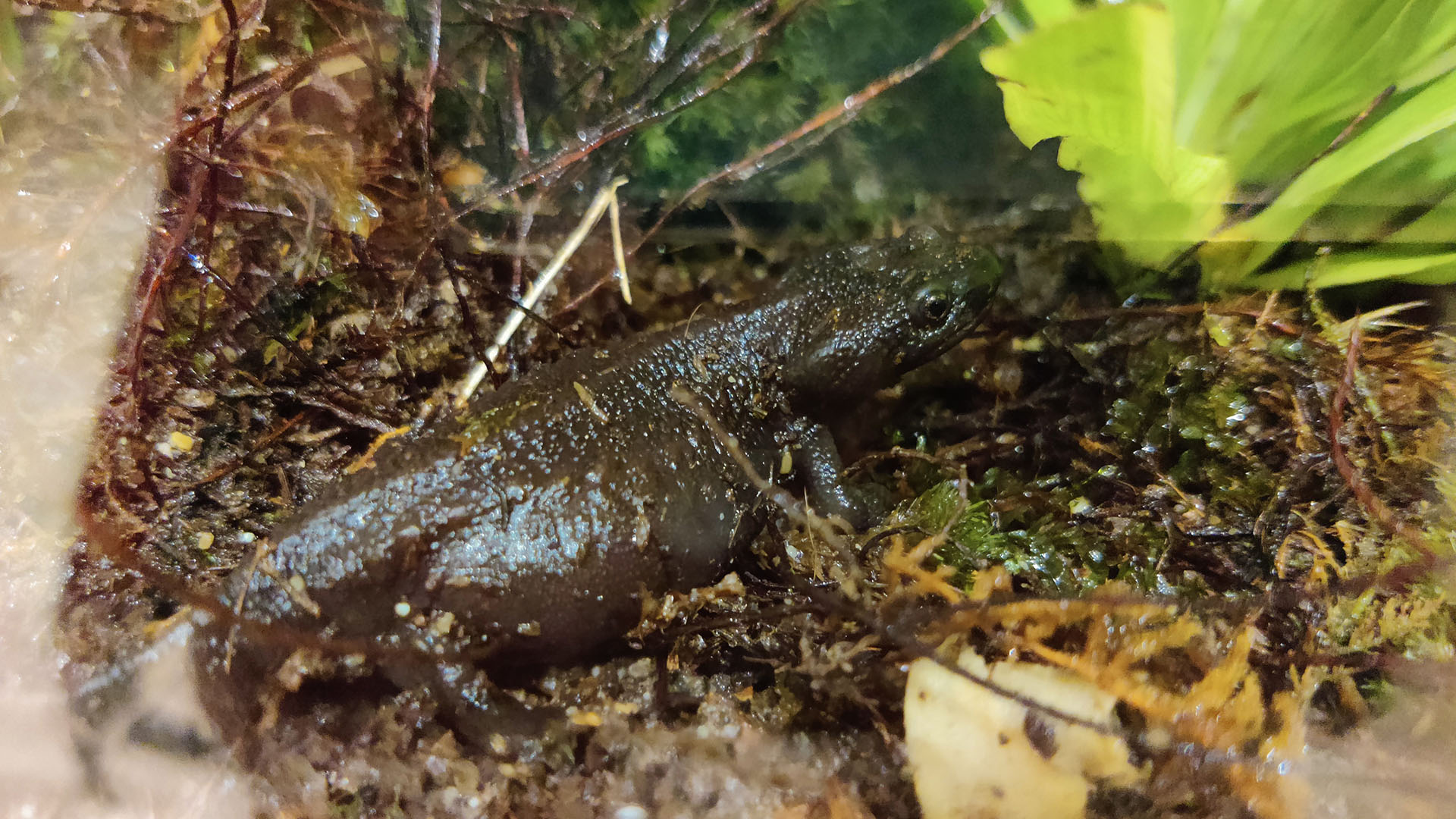
For the Vietnamese crocodile newts, we have almost reached our target numbers. Only a few more keepers are needed.
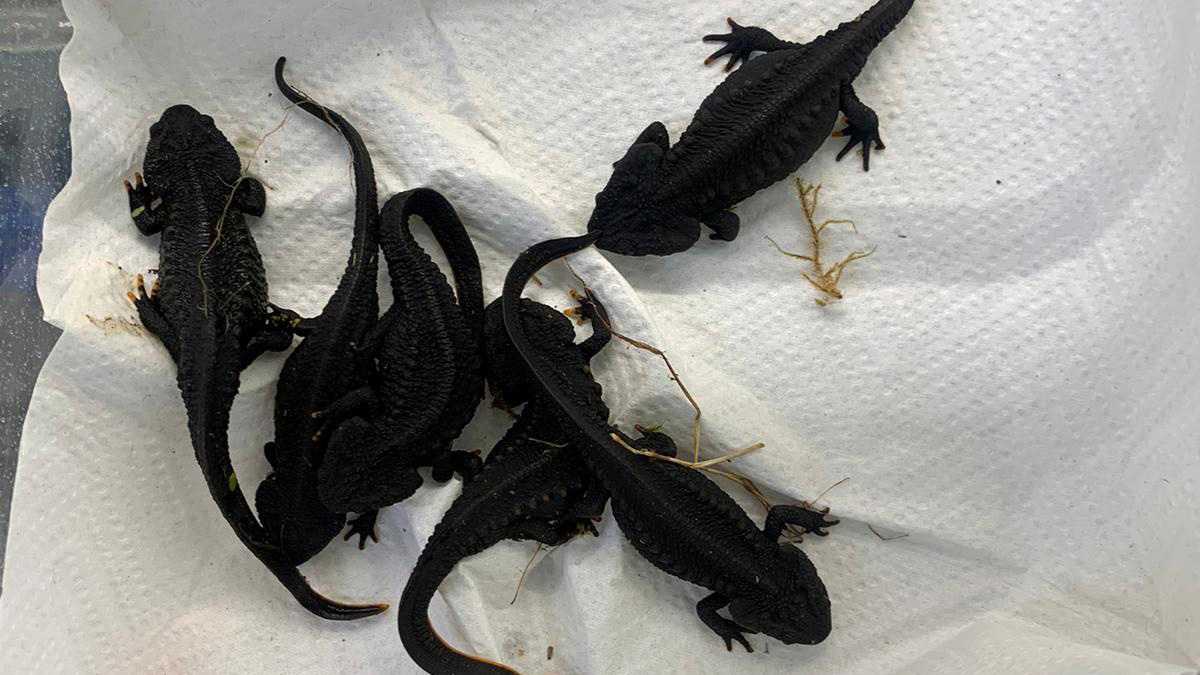
After that, the focus can be entirely on the second species of the genus, Tylototriton ziegleri
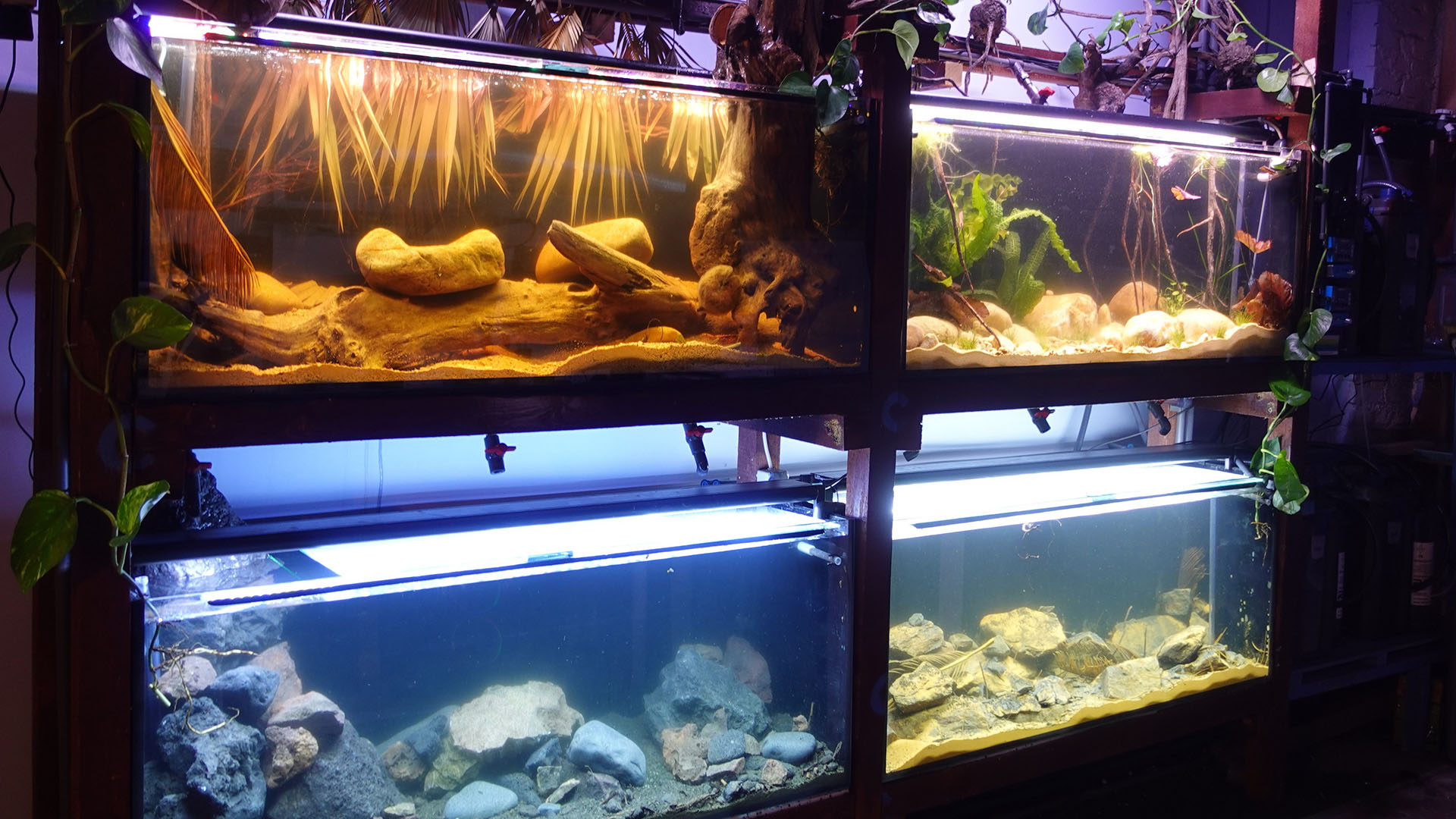
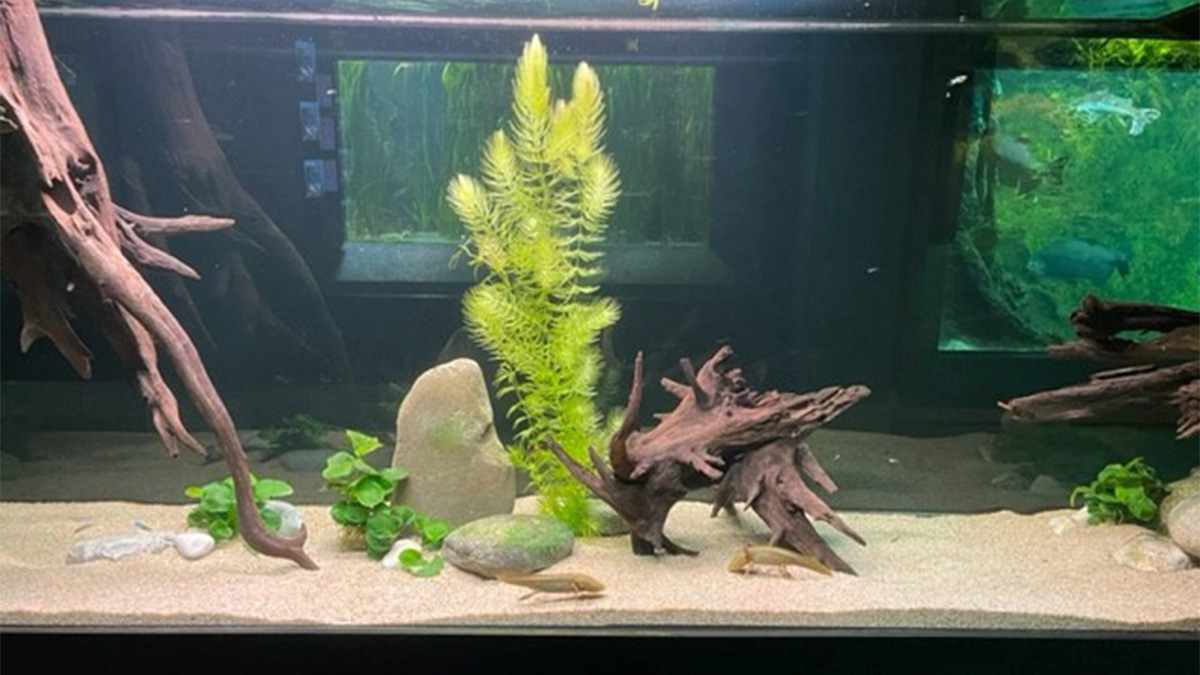
In one of these beautifully designed tanks, the first captive breeding of the Nosy Be cichlid within CC was achieved.
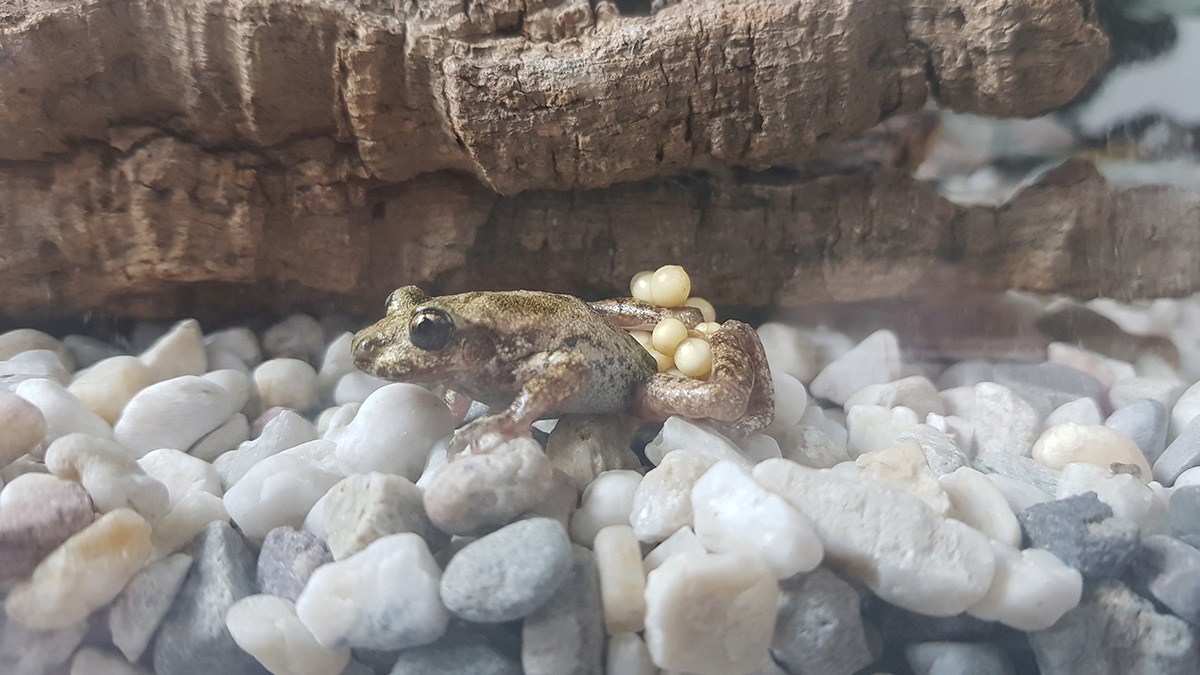
This male Mallorcan midwife toad is eagerly contributing to reaching the target numbers. The Mallorcan midwife toads continue to breed well in the program.
Successes and efforts
Pátzcuaro’s cross-toothed newt, Majorca’s midwife toad and Chinese fire-bellied toad are also reproducing very successfully among CC participants. Lemur tree frog and bone-headed toad, on the other hand, are causing more trouble than originally thought. But even with these species, the knot will hopefully be broken.
For the fire salamanders, poison dart frogs, Titicaca giant frogs, Anderson’s cross-toothed newts, and Madagascar spadefoot, it is too early to make any statements, as these programs are just beginning.
To new shores
However, “target number reached” does not mean that we can sit back with satisfaction. For some species, we have initially only been able to draw on an extremely narrow genetic range in the initial animals – sometimes only on the offspring of individual pairs or siblings. Here, we hope to be able to obtain more foundation animals in the long term. In any case, the necessary infrastructure for long-term conservation breeding is already in place, in accordance with our guiding principle: build capacity.
We are also preparing to add a number of other amphibian, fish and, for the first time, reptile species. At the next balance at the end of November some new names will already be found on our species table – be curious!
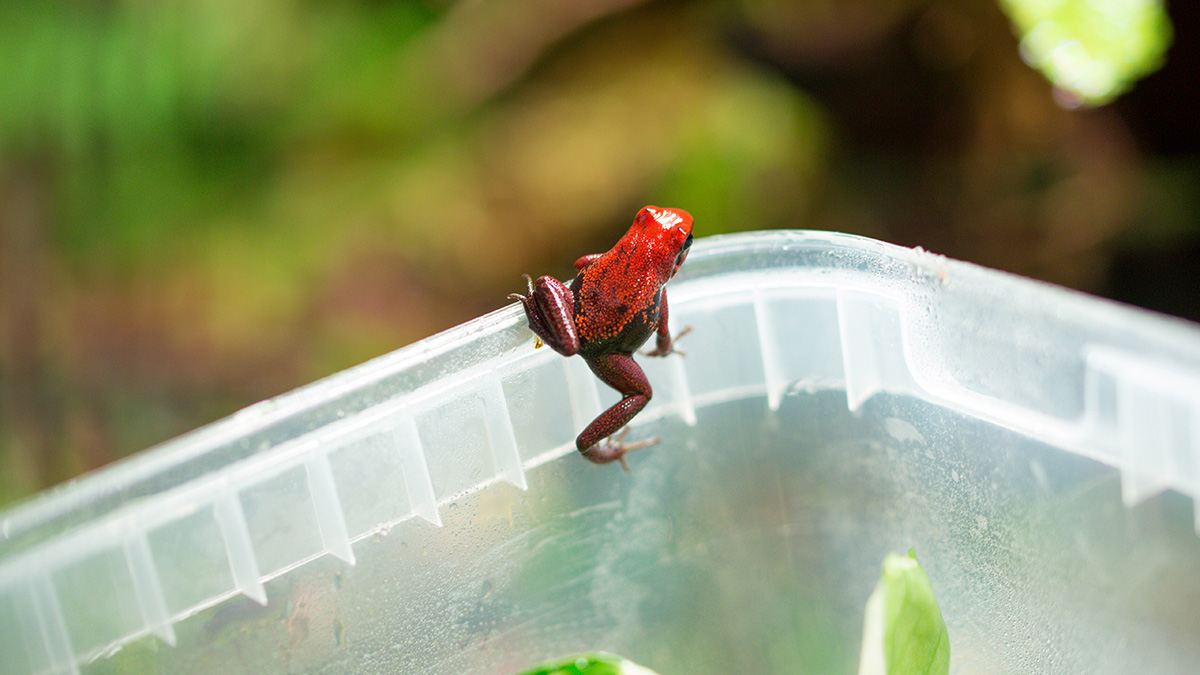
Back in the program since last semester: Minyobates steyermarkii. The species is currently kept at three locations – more are to follow.
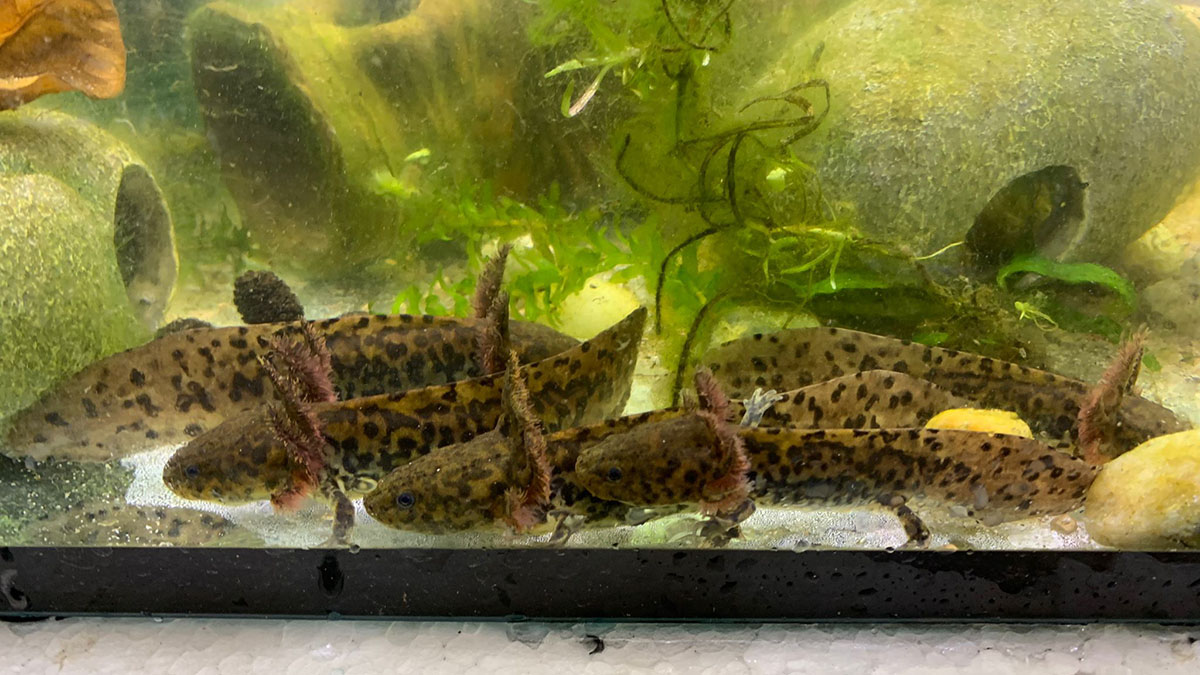
Anderson's salamanders from CC can now also be seen at Tierpark Chemnitz.
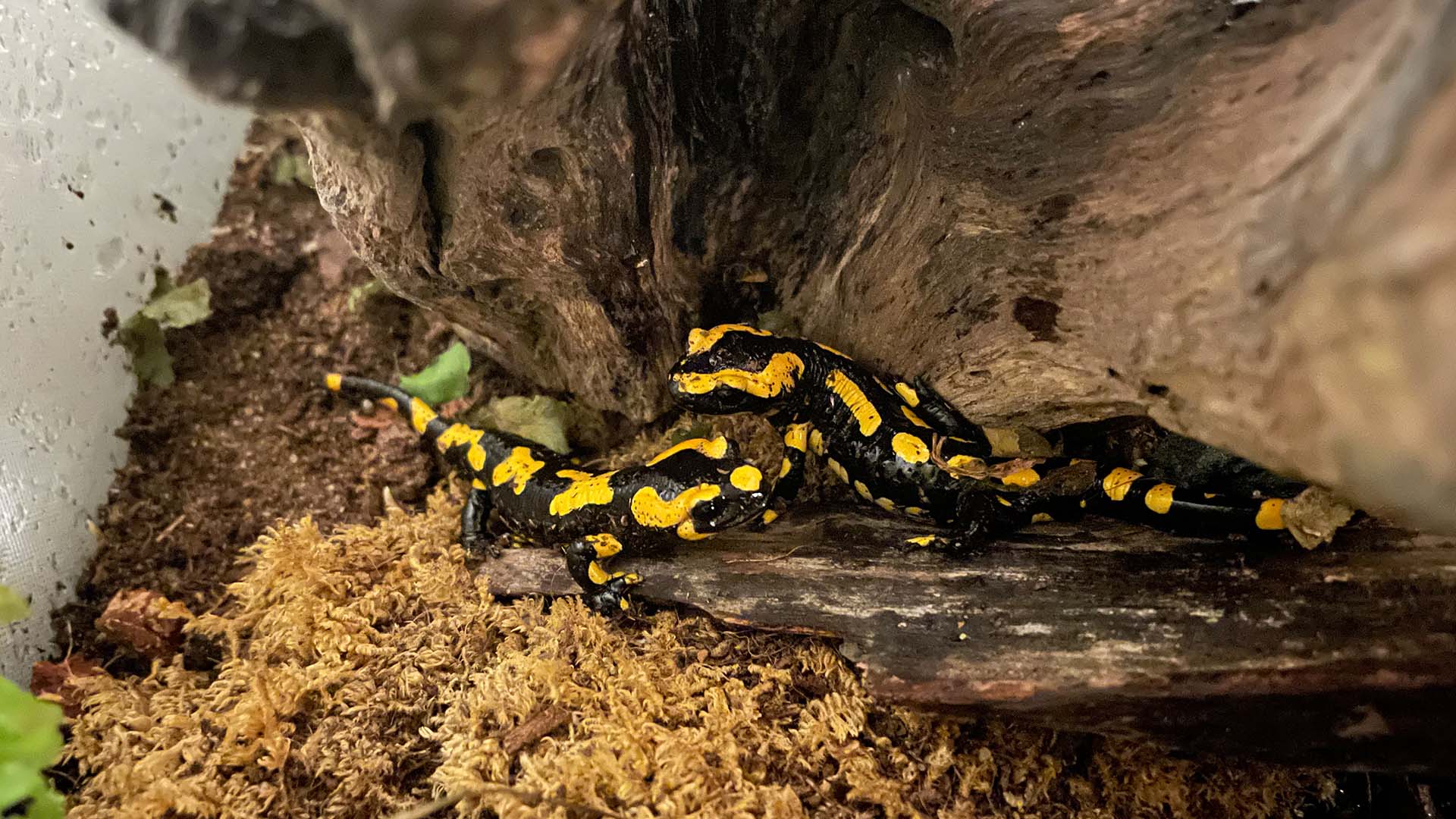
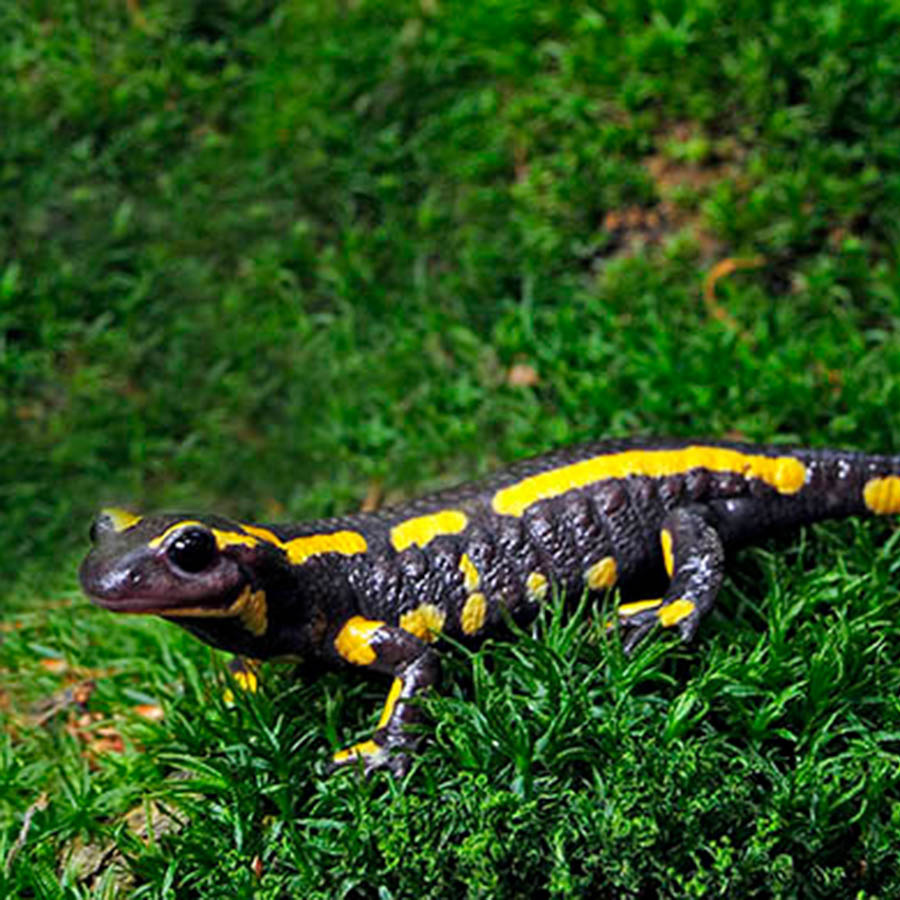
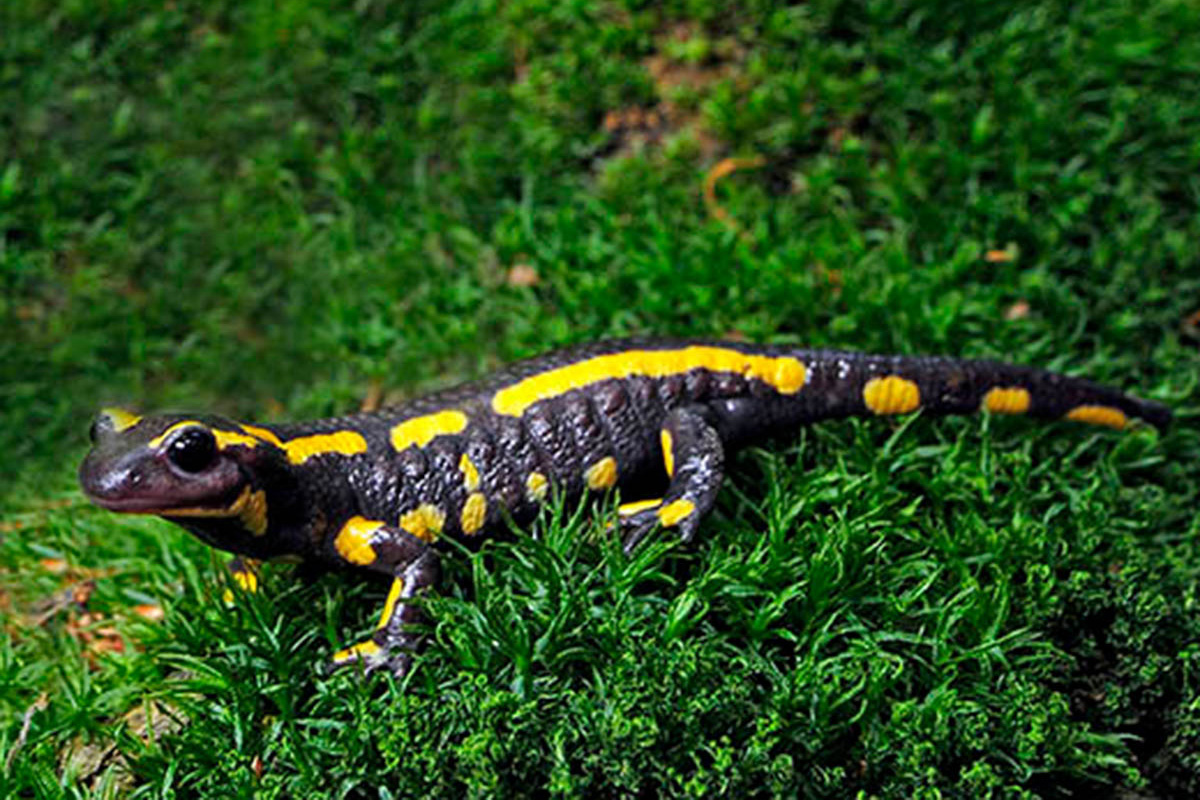
It is still too early to make statements about the Fire salamanders, but we have been able to increase the number of individuals and keepers in the last six months.
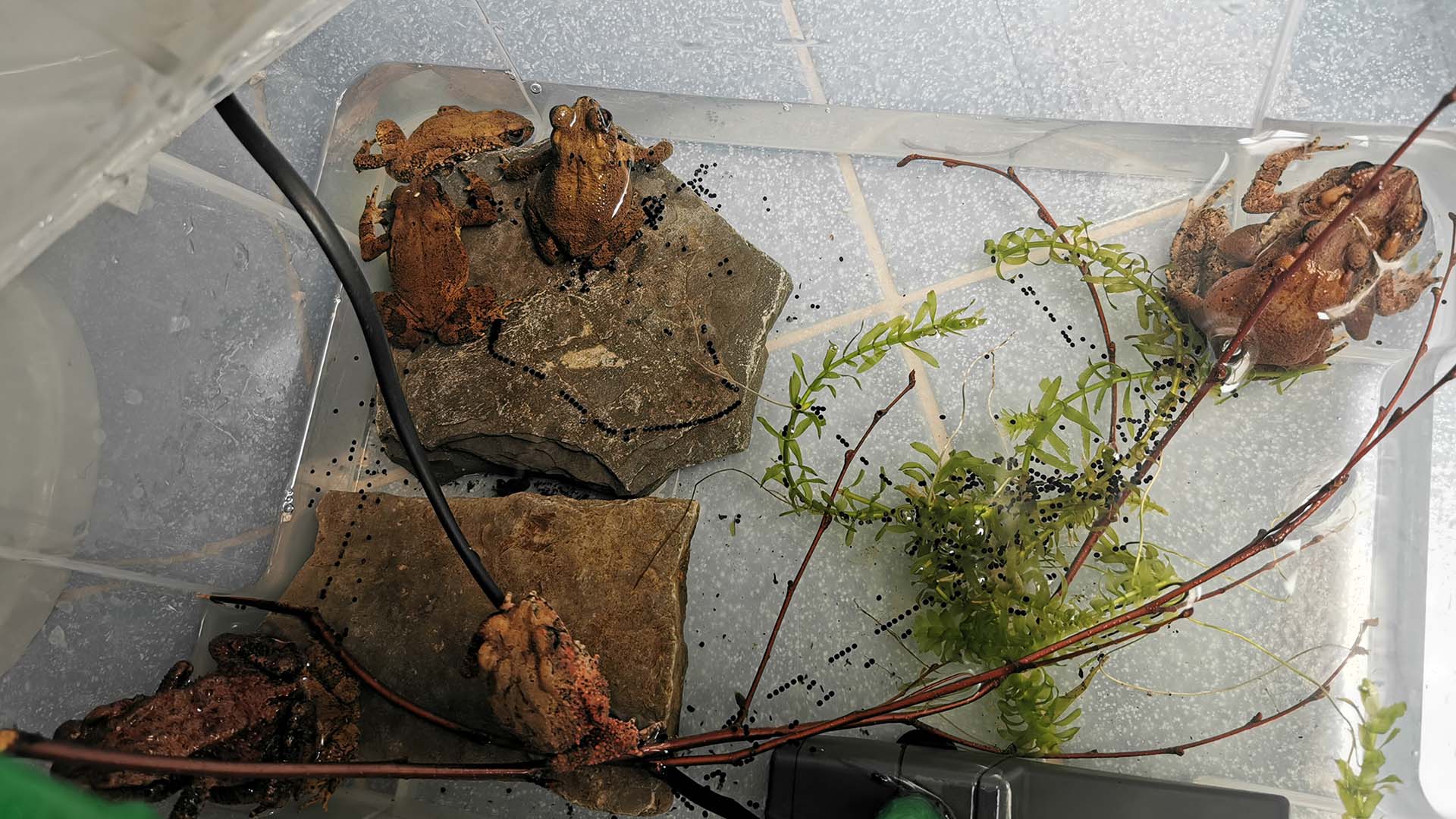
Keep your fingers crossed for the breeding of the Knobbed newt. Reproducing these animals is not as easy as initially thought.
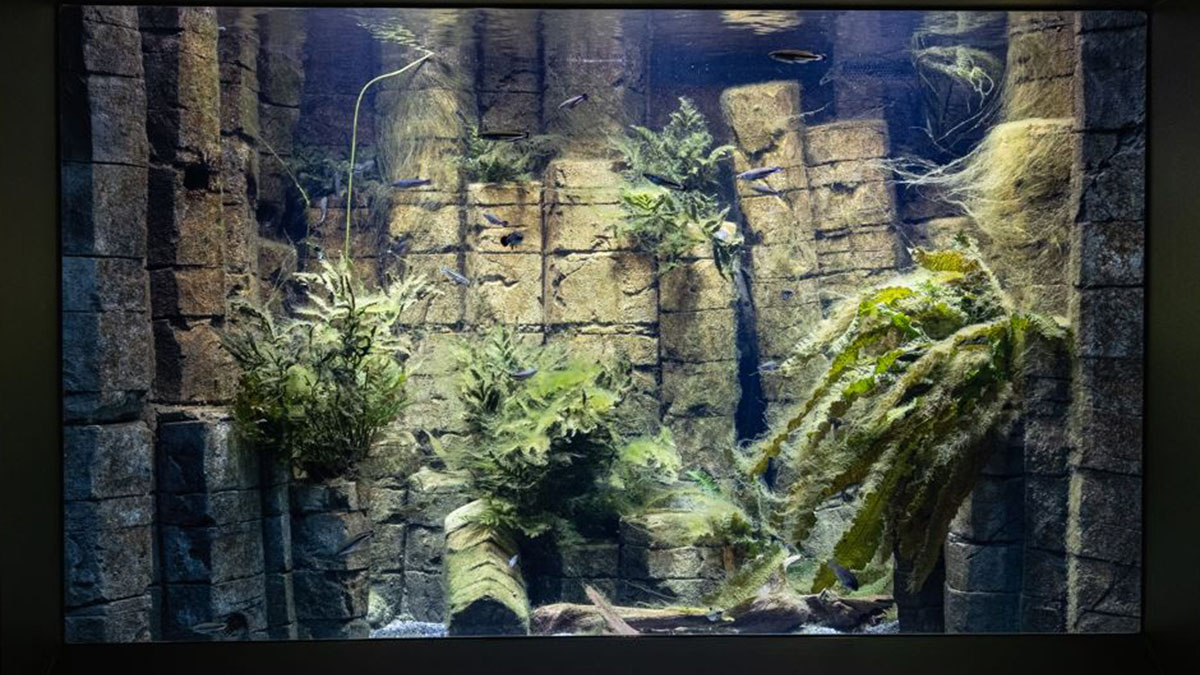
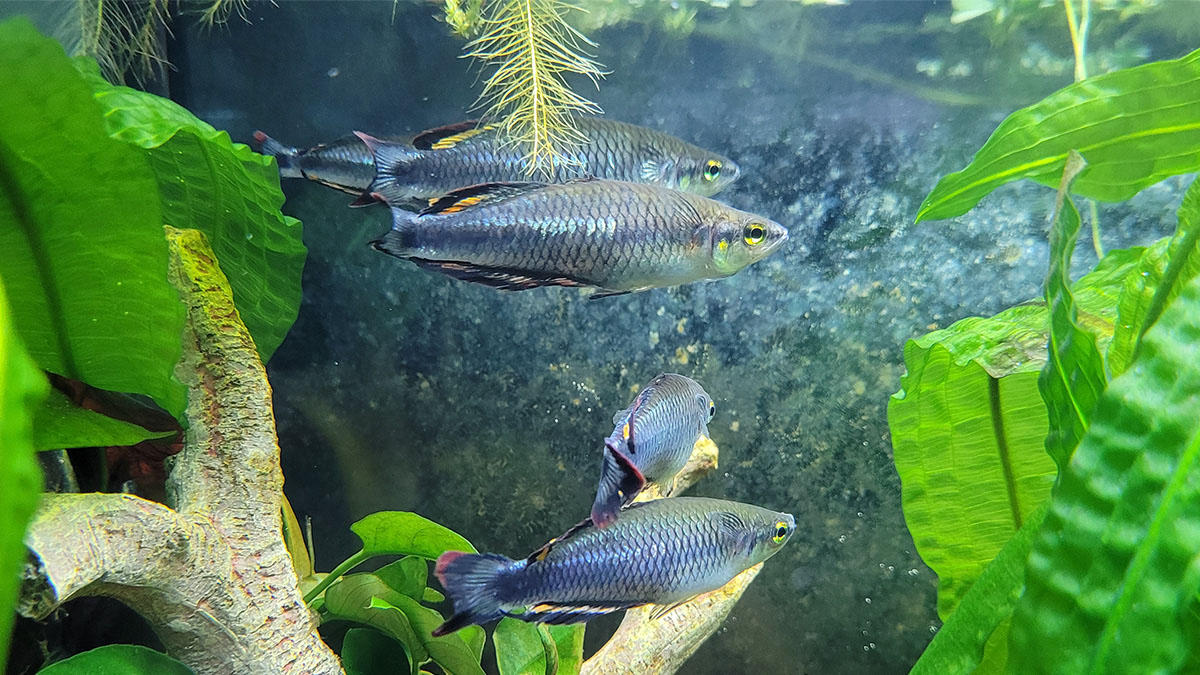
There are also CC fish at the Leipzig Zoo. There, Ptychochromis loisellei and Bedotia madagascariensis swim in a shared aquarium.
Stock overview May 2023
(You can scroll horizontally in the table.)
| Scientific name | Engl. name | Animals total (m/f/u) | Keepers total | Deaths 11/22 – 04/23 (m/f/u) | New offspring 11/22 – 04/23 | External arrivals 11/22 – 04/23 | Aim (animals, keepers) | status* |
|---|---|---|---|---|---|---|---|---|
| Amphibians | ||||||||
| Agalychnis lemur | Lemur Leaf Frog | 44 (15/12/17) | 7 | 8 (0/0/8) | 0 | 0 | 225, 40 | 19% |
| Alytes muletensis | Majorcan Midwife Toad | 326 (7/10/309) | 27 | 12 (0/0/12) | 125 | 0 | 425, 53 | 64% |
| Ambystoma andersoni | Anderson’s Salamander | 76 (27/25/24) | 7 | 11 (0/3/8) | 0 | 3 | 225,40 | 26% |
| Ambystoma dumerilii | Lake Patzcuaro Salamander | 238 (58/45/132) | 21 | 6 (0/4/2) | 125 | 0 | 225, 40 | 76% |
| Bombina orientalis | Oriental fire-bellied Toad | 193 (30/20/143) | 16 | 26 (14/2/10) | 3 | 16 | 225, 60 | 56% |
| Ingerophrynus galeatus | Bony-headed Toad | 46 (16/14/16) | 10 | 28 (3/4/21) | 0 | 0 | 225, 40 | 23% |
| Minyobates steyermarki | Demonic Poison Frog | 15 (3/0/12) | 3 | 0 | 0 | 15 | 110, 20 | 14% |
| Phyllobates terribilis | Golden Poison Frog | 17 (8/2/7) | 3 | 5 (0/5/0) | 0 | 6 | 225, 70 | 6% |
| Salamandra sal. almanzoris | Almanzor Fire Salamander | 24 (17/7/0) | 7 | 2 (1/1/0) | 0 | 0 | 185, 30 | 18% |
| Salamandra salamandra (D) | Fire Salamander | 85 (11/11/63) | 11 | 3 (0/0/3) | 0 | 5 | 330, 90 | 19% |
| Telmatobius culeus | Titicaca Water Frog | 36 (6/6/24) | 6 | 0 | 0 | 0 | 225,45 | 15% |
| Tylototriton vietnamensis | Vietnamese Crocodile Newt | 193 (30/38/125) | 26 | 14 (1/0/13) | 63 | 14 | 185, 30 | 93% |
| Tylototriton ziegleri | Ziegler’s Crocodile Newt | 28 (0/1/27) | 7 | 3 (1/0/2) | 0 | 6 | 185,30 | 19% |
| Fish | ||||||||
| Bedotia madagascariensis | Madagascar Rainbowfish | 108 (19/5/84) | 8 | 22 (1/1/20) | 0 | 65 | 192, 16 | 53% |
| Ptychochromis insolitus | Mangarahara Cichlid | 277 (23/25/229) | 12 | 17 (7/7/3) | 55 | 100 | 192, 16 | 88% |
| Ptychochromis loisellei | Loiselle’s Ptycho | 197 (19/14/164) | 9 | 1 (0/1/0) | 120 | 19 | 160, 16 | 78% |
| Ptychochromis oligacanthus | Nosy Be Cichlid | 56 (6/4/46) | 3 | 0 | 0 | 12 | 192,16 | 24% |
m: male, w: female, u: undetermined sex * Status = mean value of the percentage of the target number of keepers already achieved and the target number of animals
NN = yet to be classified

Building an arch for the fire salamander
Mittendrin im Artensterben
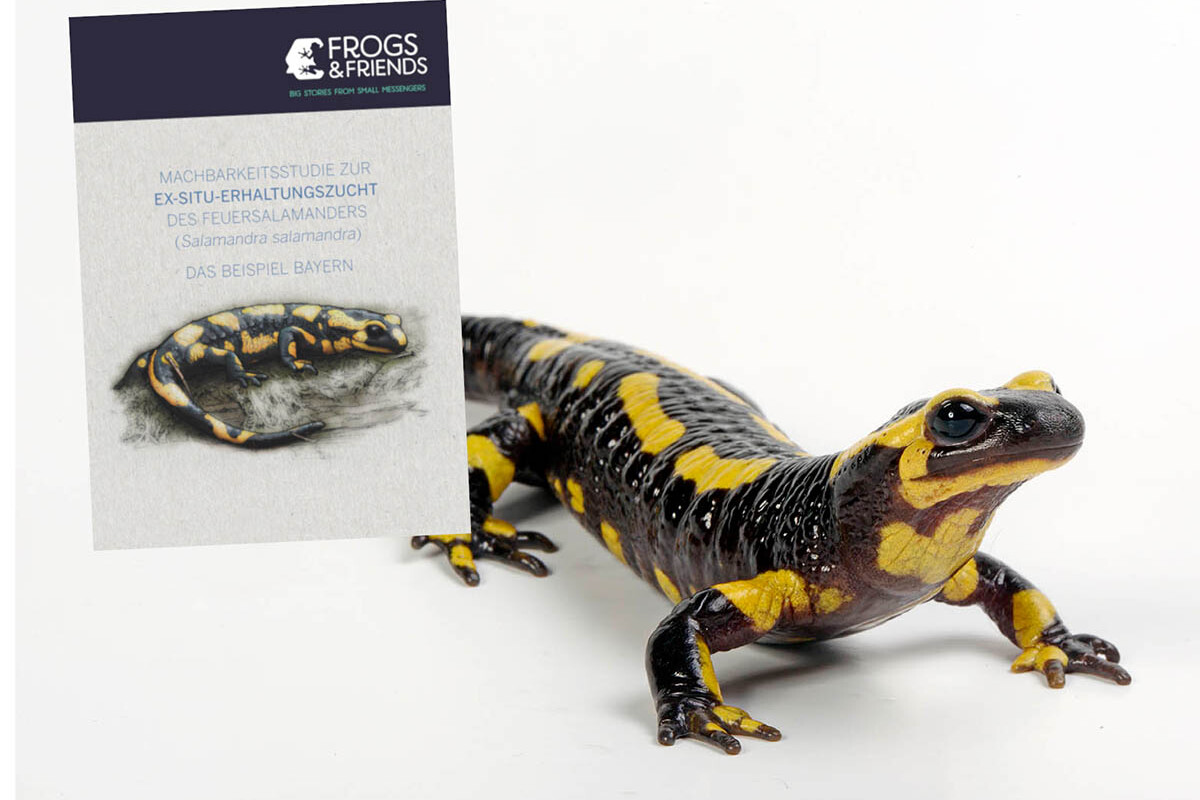
Dass der Feuersalamander in Deutschland nicht nur mit Veränderungen seines Lebensraums kämpft, hat man inzwischen vielleicht mitbekommen. Ein eingeschleppter Pilz setzt ihm seit ein paar Jahren nun zusätzlich zu. Leider gibt es bisher keine Möglichkeit, diesen Bsal (von Batrachochytrium salamandrivorans) genannten „Salamanderfresser“ in der Natur wieder loszuwerden. Und die Krux bei der Sache: Befallene Feuersalamander werden durch Bsal relativ schnell getötet. Seit kurzem ist der Pilz auch in Bayern nachgewiesen. Daher stellt man sich nun auch dort die Frage, wie der Feuersalamander, und hier vor allem die Unterart des Gefleckten Feuersalamanders, die in Deutschland nur im Südosten Bayerns zu finden ist, langfristig erhalten werden kann.
The keeping and breeding of aquarium fish has a long tradition in Germany. The topic of species conservation is increasingly coming into focus. For this reason, the VDA working group Nature, Species & Animal Conservation and the German Cichlid Society (DCG) invited to the 3rd conference on species conservation in aquariums in Thannhausen on July 8 and 9. Among the participants and speakers were representatives from zoos, species conservation organizations, the pet trade as well as private fish keepers. For Citizen Conservation Björn Encke and Tina Nagorzanski participated to share on the one hand the program itself as well as the first experiences in the field of aquarium conservation and to give an outlook on the new fish species that will be added to the program soon.
Increasing transparency and coordination in ex situ species conservation
Once again, this meeting highlighted how many volunteer efforts already exist in the area of ex situ species conservation. The challenge that all species conservation efforts face is the issue of data collection and processing. Accordingly, the presentation of the new wildlife database “Wild at Home” struck a chord with the aquarists in attendance. The database, designed by Frogs & Friends, has been in development for two years thanks to funding from the German Federal Ministry of Economics and Climate Protection and the support of software developer marmalade GmbH, and is due to be presented to the public next year.
The online tool will not only be used for the management of CC programs, but will be accessible to all wildlife keepers and breeding communities, thus providing the opportunity to facilitate and standardize the documentation of species conservation programs. The reactions of the fishkeepers and species coordinators of voluntary associations present were correspondingly positive and coupled with the hope that Wild at Home will provide them with an effective tool to make the coordination of species conservation programs within the aquatics scene much more effective and transparent.
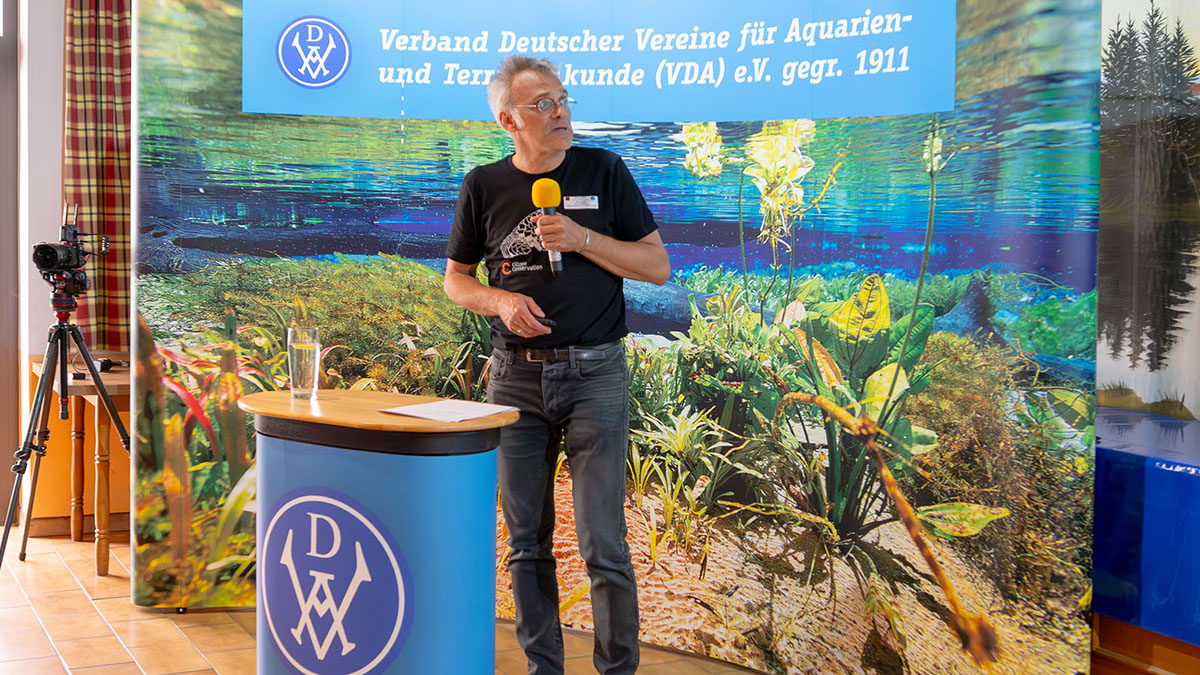
The presentation of Citizen Conservation was done personally by CEO Björn Encke.

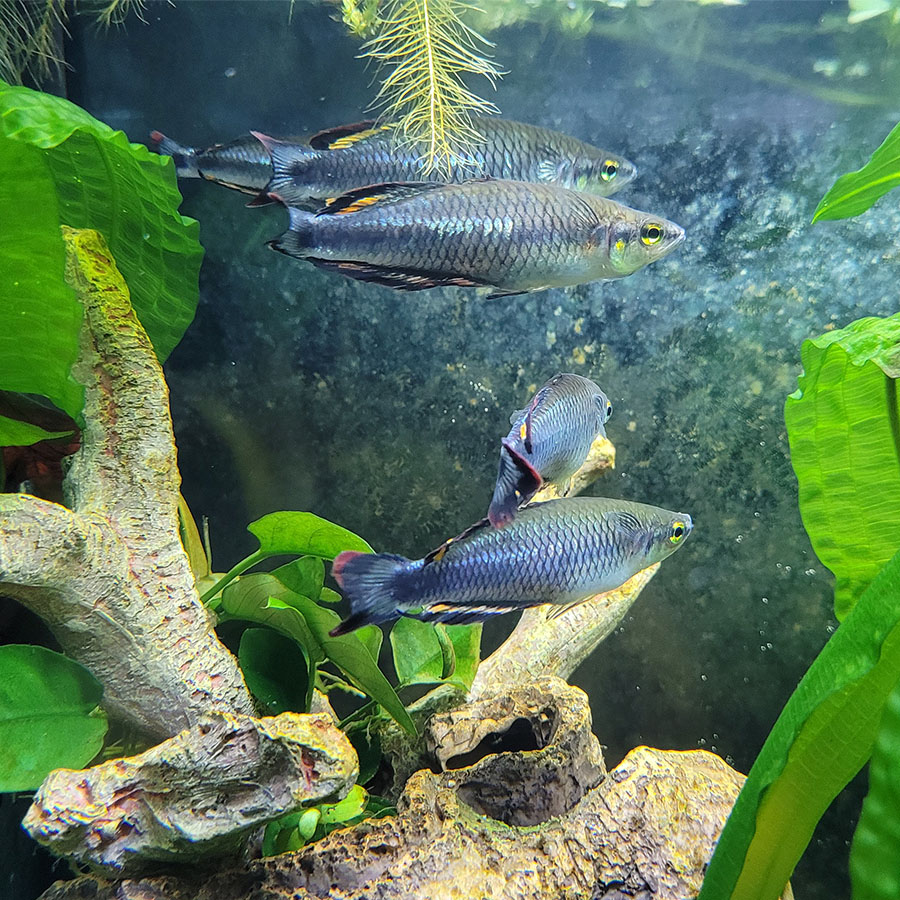
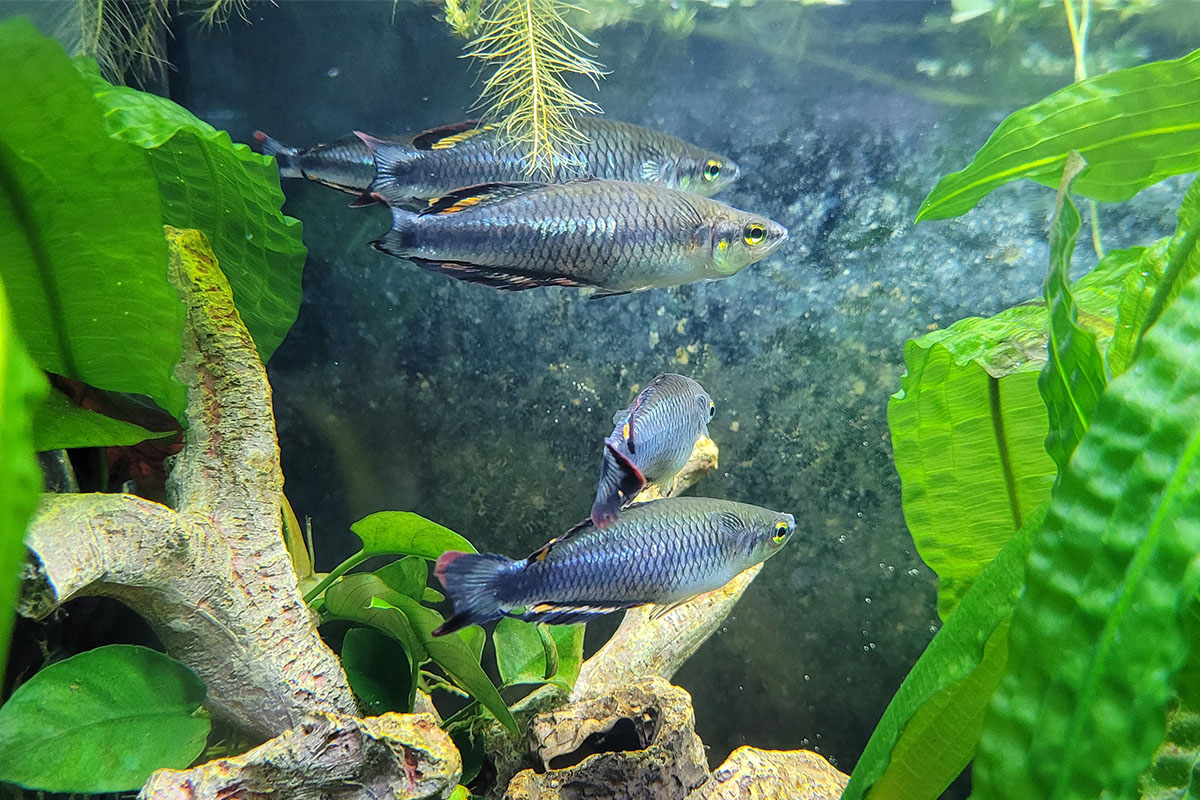
An aquarium exhibition in the event room of the Hotel Sonnenhof showed some endangered fish species, including the Madagascar rainbowfish and offspring of the Mangarahara cichlid from CC.
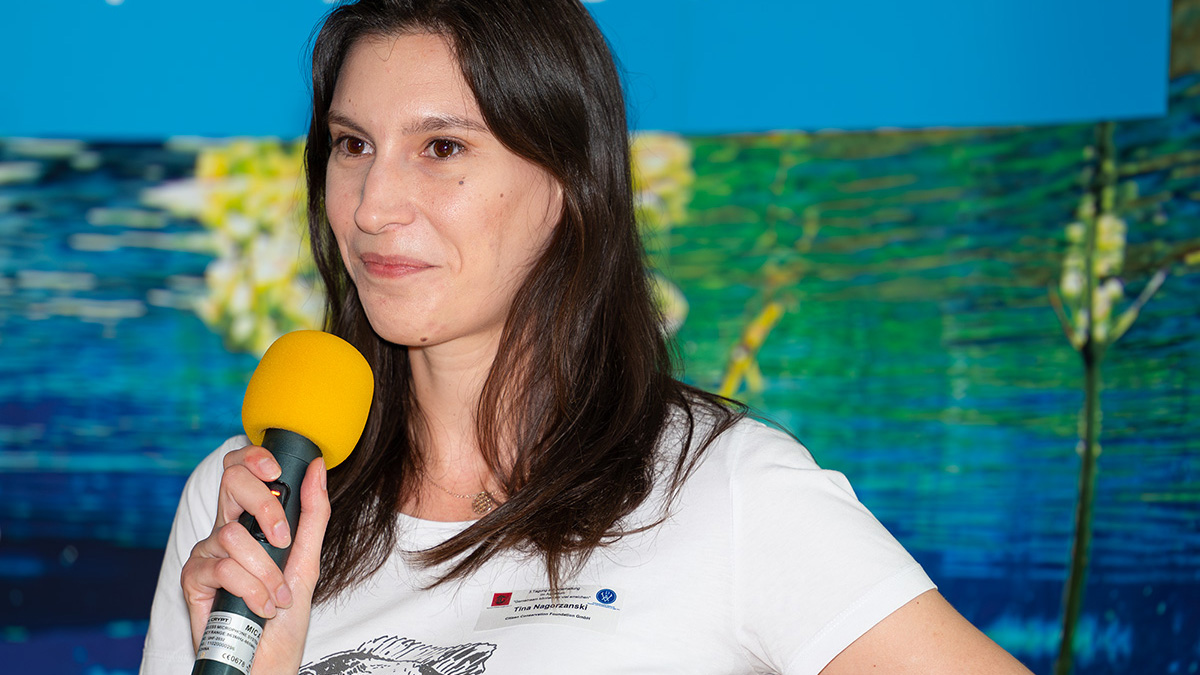
As species manager for fishes at CC, Tina Nagorzanski reported on the current status of the four project species already released and revealed which species will be included next.
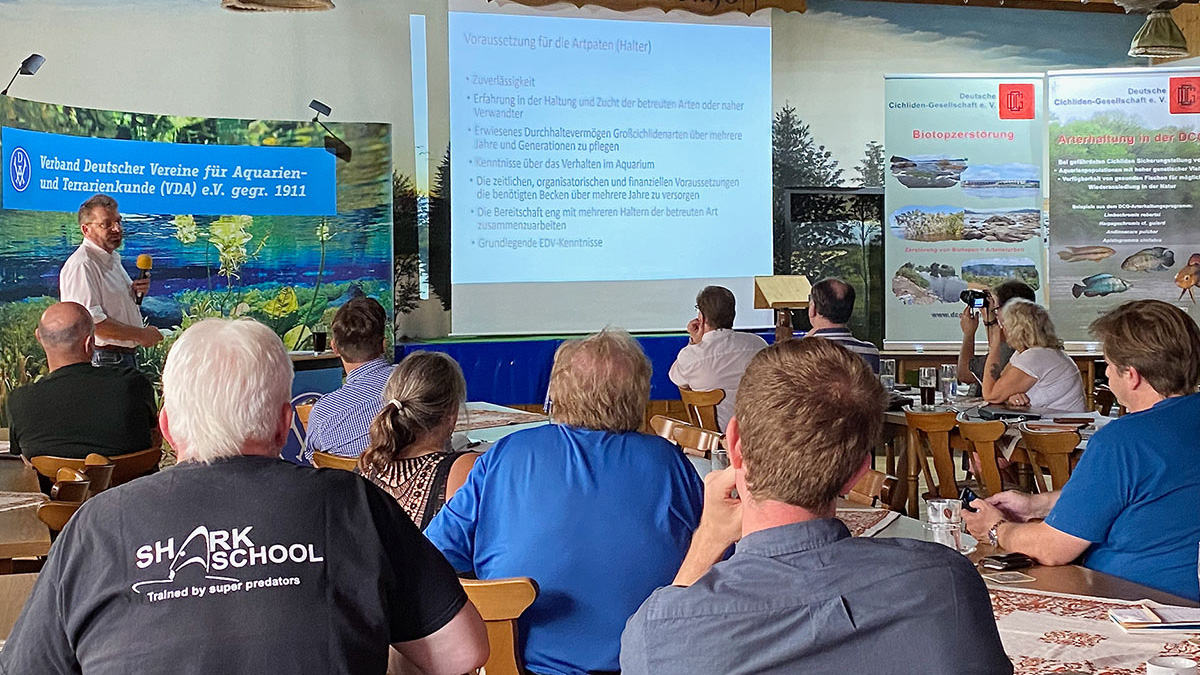
Private keeper Carsten Weile showed the participants the effort he puts into coordinating species conservation programs for large cichlids on a voluntary basis.

The event was organized in part by the two CC participants Helmut Seiler and Werner Witopil. Also responsible were Kathrin Glaw and Robert Guggenbühl from the DCG-Resort Species Conservation.
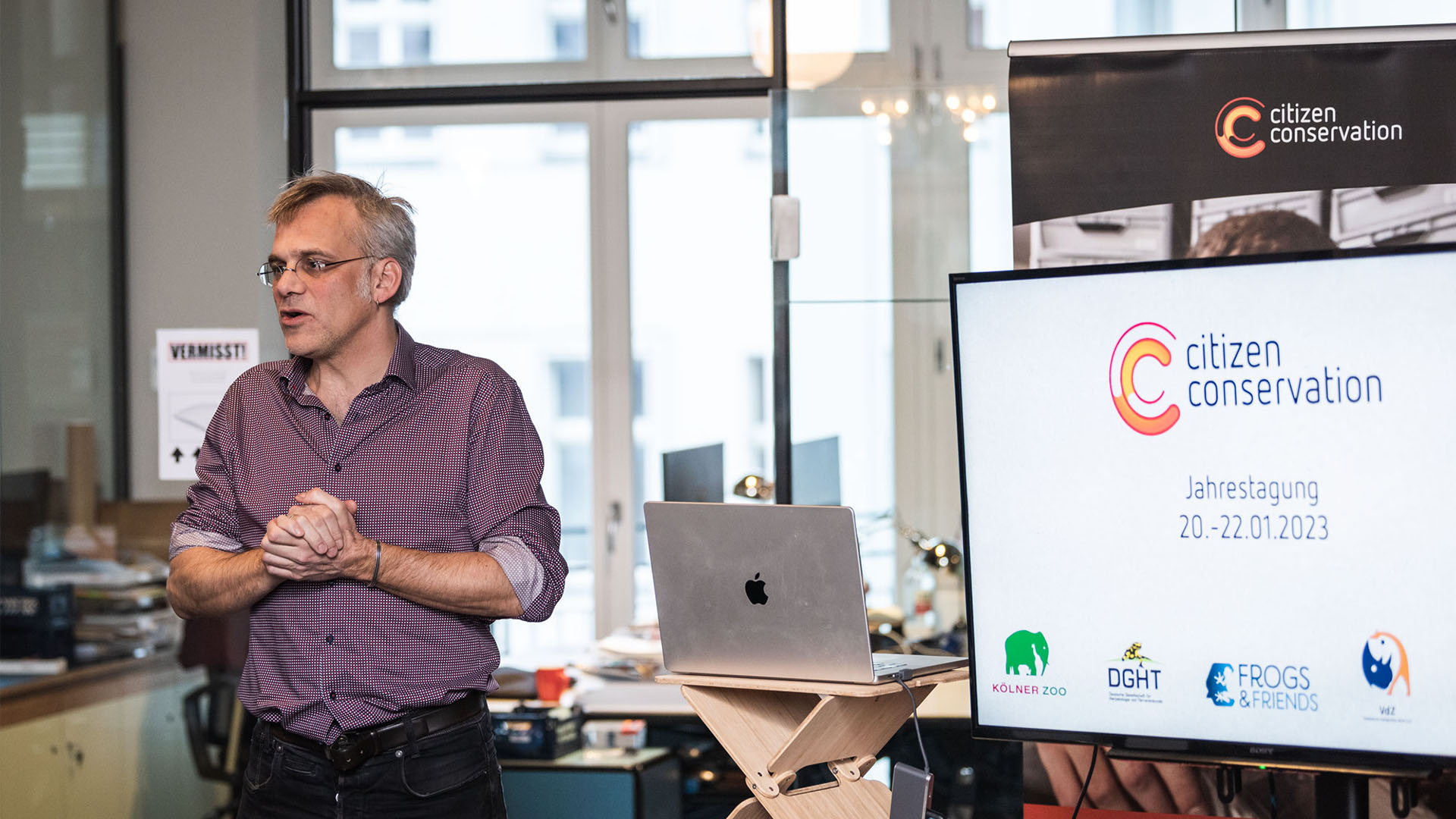
Together for species conservation – first CC plenary convention in Berlin

The pilot phase of Citizen Conservation has now finally come to an end, the newly established Citizen Conservation Foundation has already started its work as a non-profit limited liability company (gGmbH) – CC is striving towards new shores.
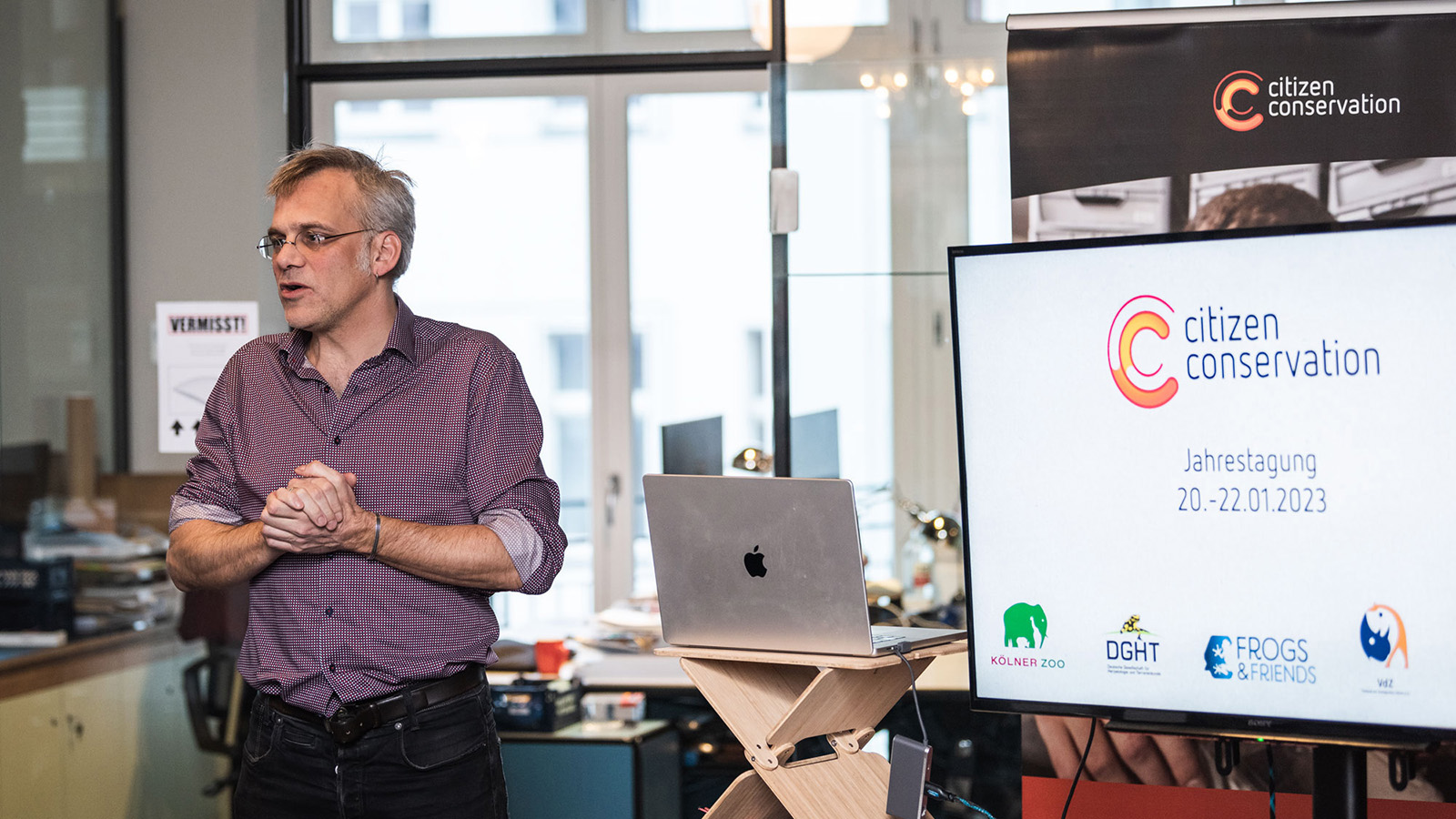
To discuss our future strategy, a total of 35 experts from private animal husbandry, zoos, science, species conservation and business met at our premises in Berlin-Kreuzberg on the weekend of January 19-21, 2023. Both in plenary sessions and separately in the various expert advisory councils, we held committed discussions about which species we want to save from extinction with CC in the near future if possible – and how we can best go about it.
The pilot phase of Citizen Conservation has now finally come to an end, the newly established Citizen Conservation Foundation has already started its work as a non-profit limited liability company (gGmbH) – CC is striving towards new shores.
To discuss our future strategy, a total of 35 experts from private animal husbandry, zoos, science, species conservation and business met at our premises in Berlin-Kreuzberg on the weekend of January 19-21, 2023. Both in plenary sessions and separately in the various expert advisory councils, we held committed discussions about which species we want to save from extinction with CC in the near future if possible – and how we can best go about it.
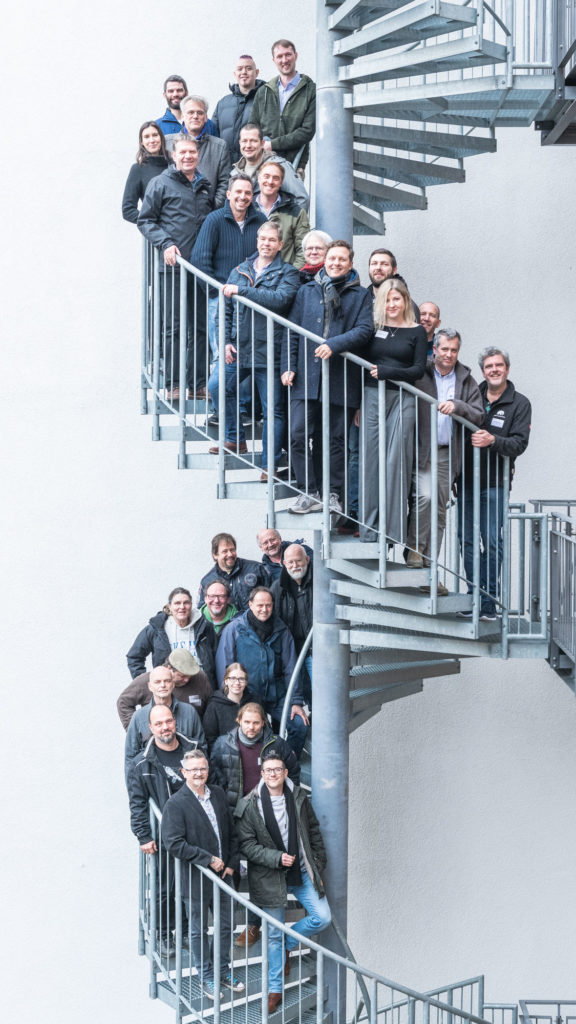
In the terrarium for amphibians and reptiles
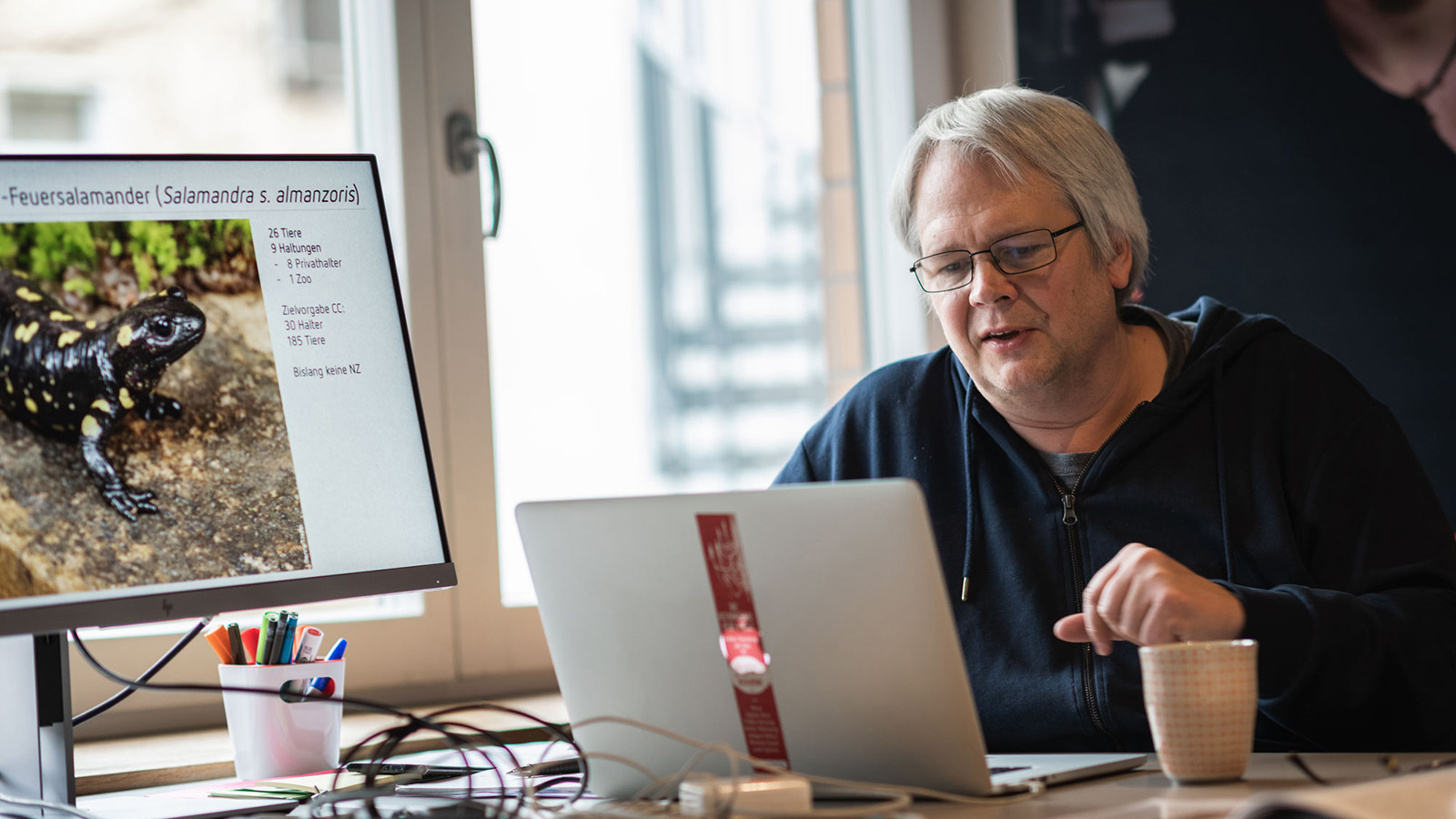
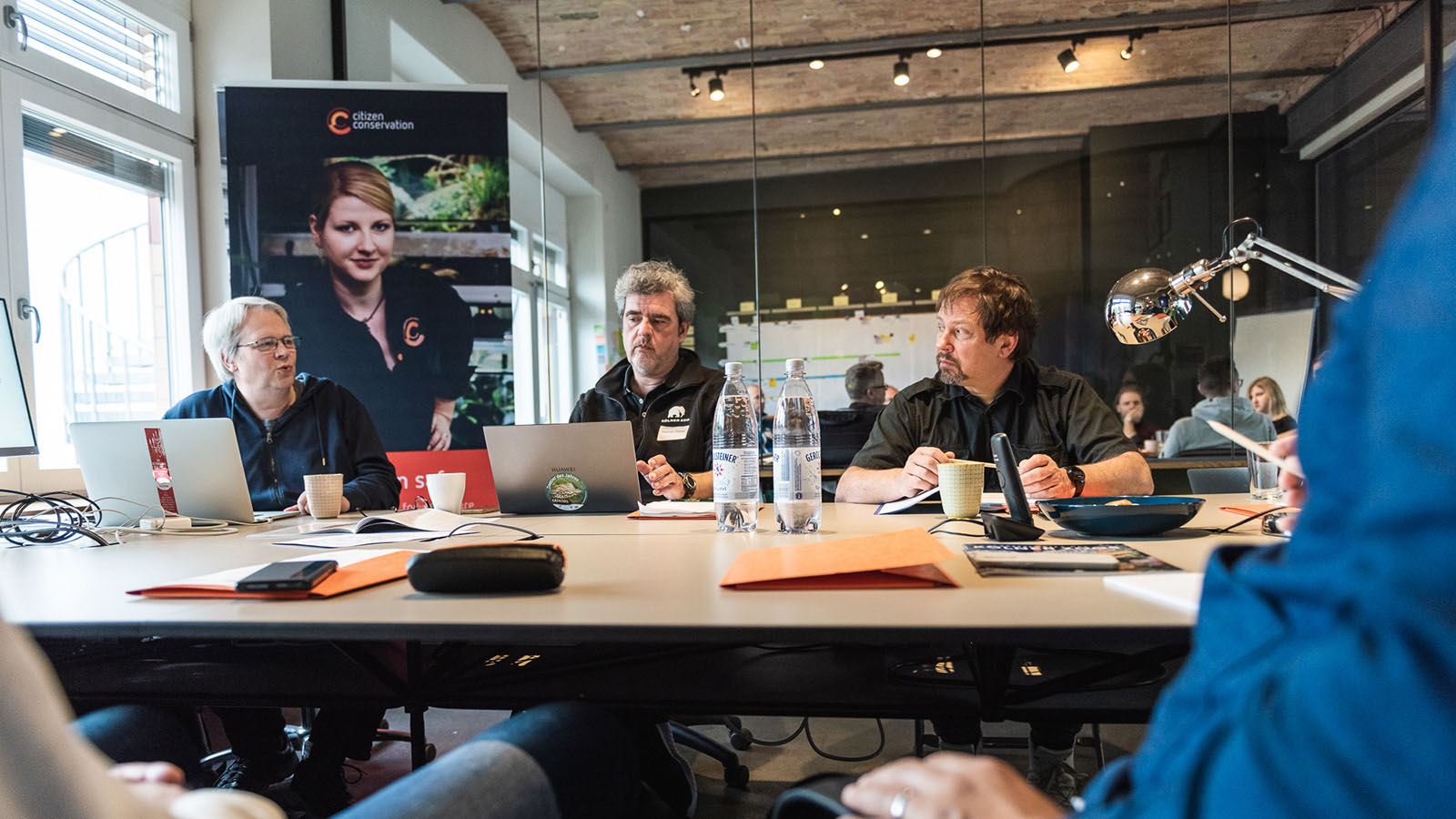
How fitting that we always jokingly call our offices, separated by floor-to-ceiling glass partitions, “terrariums” … In one of them Thomas Ziegler from the Cologne Zoo, DGHT managing director Axel Kwet and the private keepers Karl-Heinz Jungfer and Joachim Nerz from our well-tried advisory board #Amphibians gathered to discuss the management of our by now 1,115 amphibians from 13 taxa in 141 husbandries.
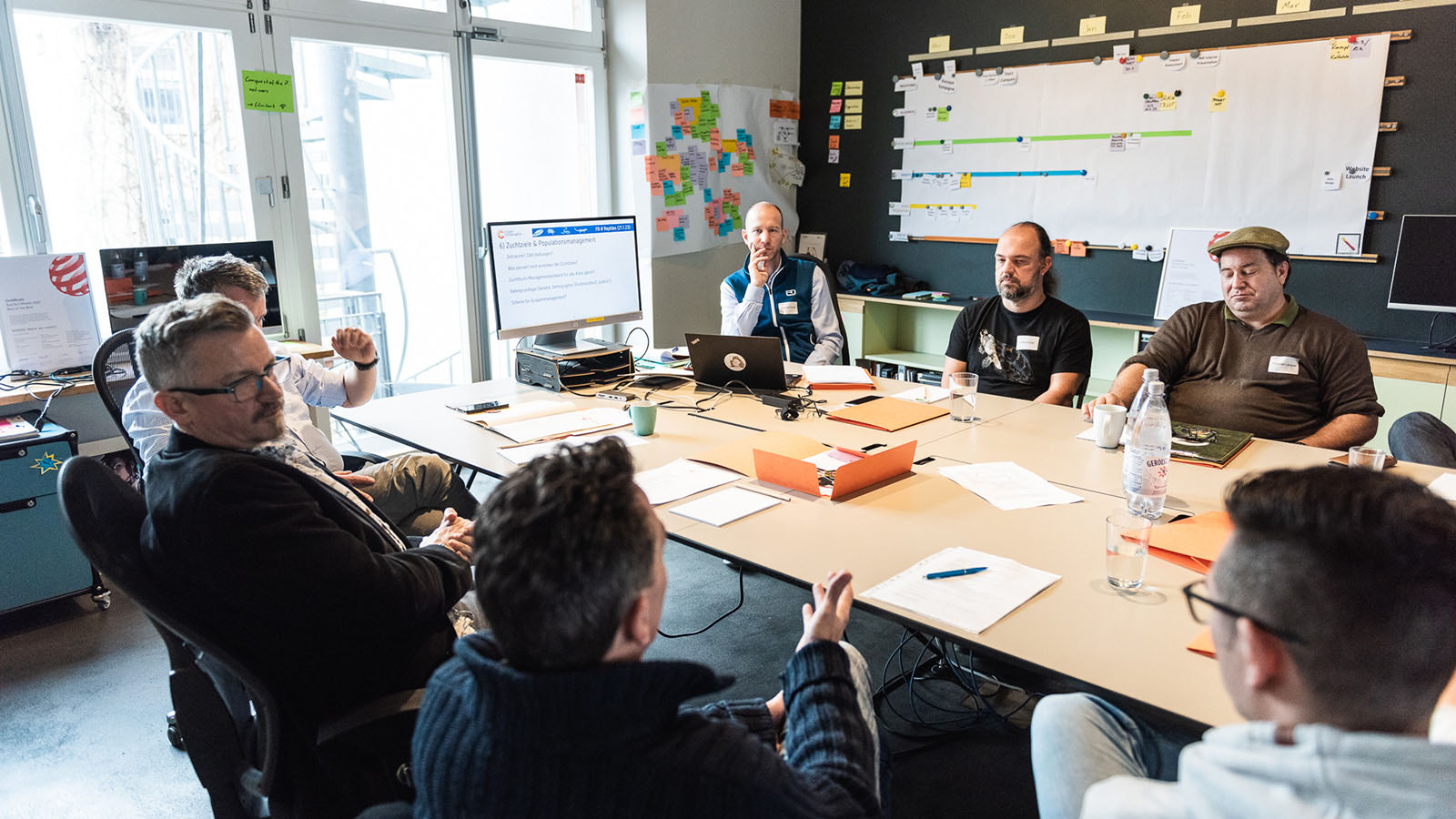
In the terrarium next door, the new advisory board #Reptiles was founded: Philipp Wagner and Christian Langner from the Allwetterzoo Münster, Anna Rauhaus from the Cologne Zoo and the private keepers Markus Auer, Felix Hulbert and Thomas Lindner as well as veterinarian Gregor Geisler discussed the first highly endangered reptile species that will soon be allowed to crawl under the protective umbrella of CC. Nothing is revealed here yet, except of course: Candidates who are in dire need of it are unfortunately more than enough.

Competence from all areas
Although CC has already built up a basic stock of four Malagasy freshwater fish species quasi-extraordinarily in the pilot phase, a separate #Fish advisory board was now also created at the meeting: Anton Weissenbacher from Vienna’s Schönbrunn Zoo, Ariel Jacken from Leipzig Zoo, David-Suryanto Kasih from Project 1000 Species, Holger Kraus from NaturaGart-Park Ibbenbüren, and private keepers Stefan Inselmann, active in the German Cichlid Society, and Benjamin Wilden from the Parosphromenus Project will provide expert support for our aquaristic efforts in the future.
To include further expertise also from cross-sectional areas, Mark-Oliver Rödel from the Museum für Naturkunde Berlin and chairman of Frogs & Friends, the Schwerin zoo director Tim Schikora and the managing director Volker Homes from the Verband der Zoologischen Gärten (VdZ), Volker Ennenbach from the zoo wholesaler “Das Tropenparadies” and from the Zentralverband Zoologischer Fachbetriebe (ZZF) were also present, Arne Schulze from the Zoological Society for Species and Population Conservation (ZGAP), Gert Emmrich from the German Zoo Society (DTG), Matt Goetz from the Durrel Wildlife Conservation Trust and Tobias Kohl from the Species Conservation Foundation on site to provide further input and discuss current issues such as the controversial positive list for pets.
Moving into the next phase
Directly afterwards, on 21 January, there was not only a small workshop with the aim of saving the highly endangered and unique Nimba Toad in the medium term, but also the constituent meeting of the Supervisory Board of the Citizen Conservation Foundation gGmbH, which was also attended by the DGHT Presidents Markus Monzel and Marco Schulz. Tim Schikora was elected chairman of the supervisory board, and Saskia Kress, vice-chairman of Frogs & Friends, was elected as his deputy.
We are happy and proud that we were able to discuss our project for coordinated conservation breeding of endangered species so intensively with such a competent, committed and friendly group for a whole weekend and we are looking forward to the coming time together. For there is truly enough to do.

Awarded: "Knowledge Book of the Year"

"Ein prekäres Bestiarium“ is "Knowledge Book of the Year"!
And the winner is … the „prekäre Bestiarium” by Citizen Conservation! Our story book “Von Okapi, Scharnierschildkröte und Schnilch – ein prekäres Bestiarium” (translated, this means “Of okapi, box turtle and schnilch – a precarious bestiary”), published by Galiani Berlin in February 2022, has won the prestigious “Knowledge Book of the Year” award. In the category “Entertainment – the most exciting book”.
A jury of eleven science journalists from Zeit and Süddeutsche Zeitung to WDR, SWR, Max Planck Research and the Physikalisch-Technische Bundesanstalt have awarded prizes to the best science books of the year for the magazine “bild der wissenschaft”. The twelfth vote was cast by the readers – 2,437 people voted. We are particularly pleased that not only the professionals voted for the “prekäre Bestiarium “, but also most of the readers.

Enamoured amazement at the curious diversity
Jury member Lukas Meyer-Blankenburg of SWR2 Wissen justifies the award with the beautiful words: “The authors never make fun of their readers’ half-knowledge – at most of their own. Their humour is rather an enamoured amazement at the curious diversity of the animal kingdom – a feeling that one definitely shares when opening this book.” Read the entire rationale for the award here.
Without lecturing, but with a lot of empathy
Daniela Schmidt reviews the “Bestiarium” for mdr Wissen on the occasion of the awarding of the prize “and can only recommend it: A book without a raised forefinger, butwith a lot of empathy for animals that we urgently need to get to know.”
Read the book, become a patron
“Von Okapi, Scharnierschildkröte und Schnilch – ein prekäres Bestiarium” brings together 49 texts on animal species that would probably have become or are becoming extinct without conservation breeding. They illustrate the meaning of Citizen Conservation with numerous practical examples, from Parosphromenus alfredi to Zhou’s box turtle, from bison to the bearded vulture. The texts were written by Heiko Werning, Ulrike Sterblich and Björn Encke, originally for CC’s Creature Podcast, which continued to run in 2022 and where numerous celebrity supporters gave their voices for the ex situ keeping of endangered animals, including the current Ingeborg Bachmann Prize winner Ana Marwan, the “Tatort Münster” commissioner Axel Prahl and the bestselling author Frank Schätzing (“The Swarm”).
The fees for the book go entirely to CC, the publisher adds half a euro per copy sold. Anyone from the readership who would like to support us beyond that can do so with a patronage: 150 euros for species protection, and as a thank you you will not only receive a card signed and stamped by the authors, but also a CC T-shirt with a vignette of your favourite animal from the book. Wildly Stylish
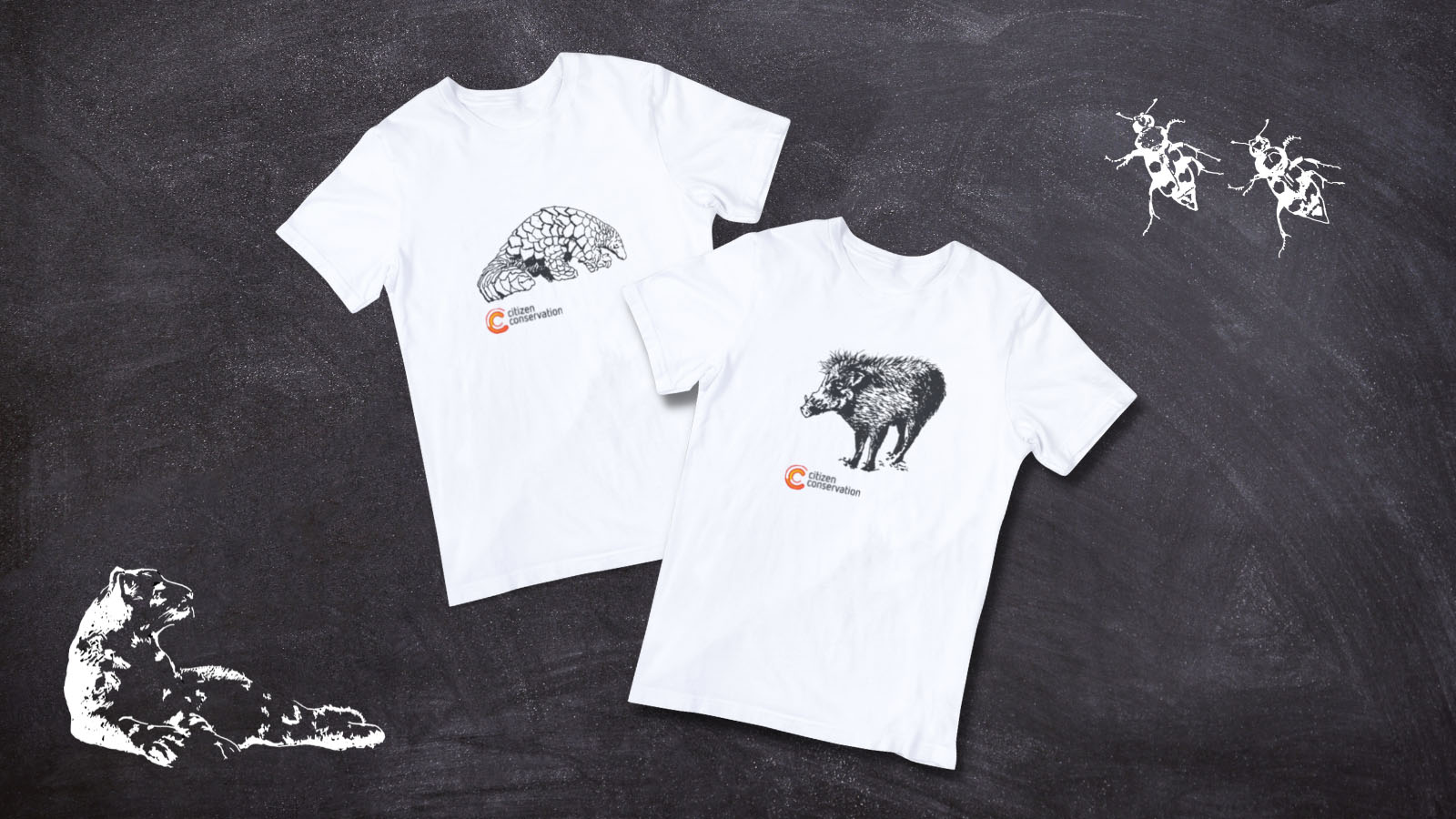
T-Shirts: These shirts are available as a thank you for a patronage – with a vignette of the favourite animal from the book!
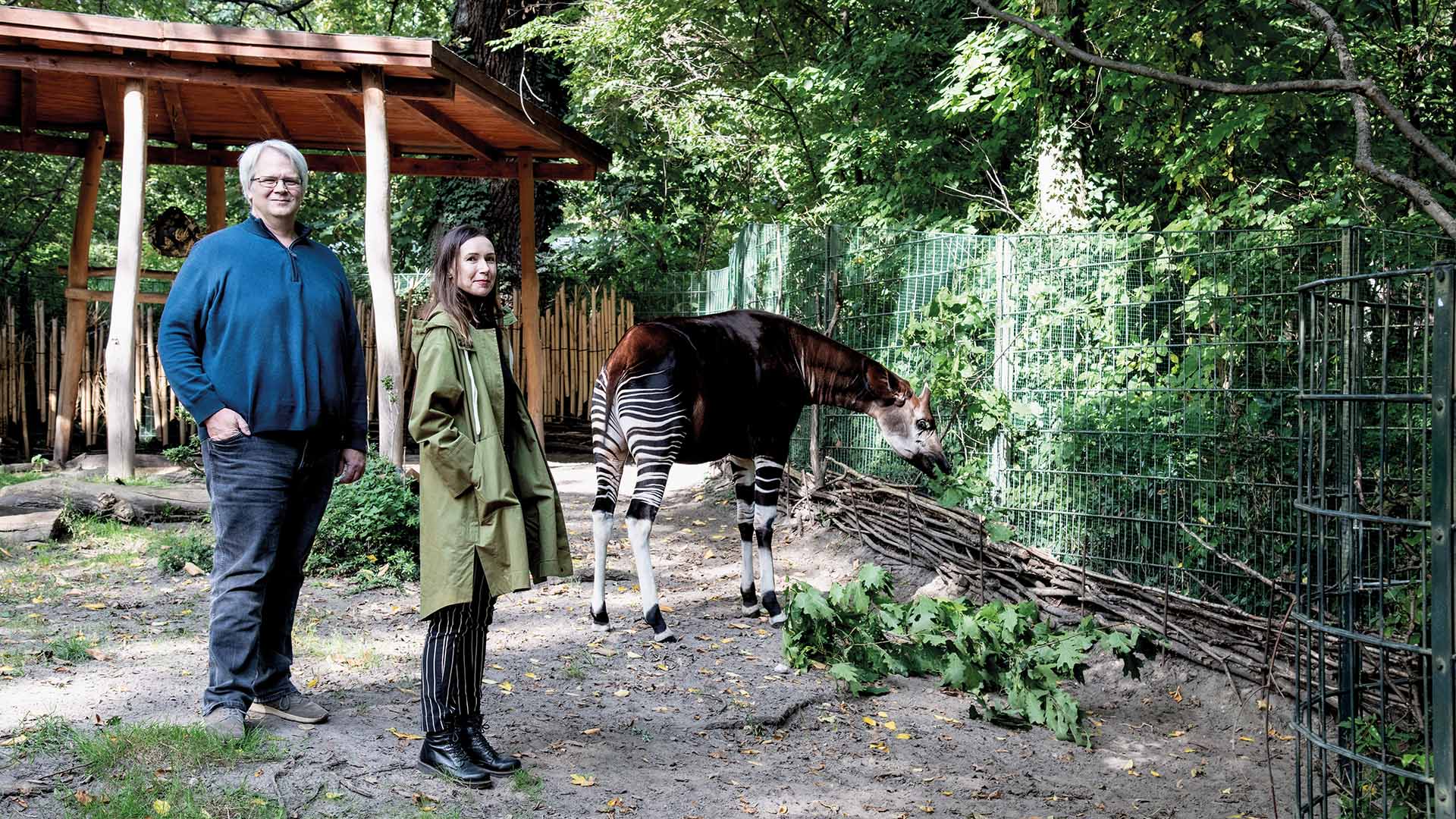
Authors: The brains behind the "Bestiarium": Ulrike Sterblich and Heiko Werning think and write for Frogs & Friends and Citizen Conservation.
Biannual report 2 / 2022 – our animal numbers
Biannual report 2 / 2022: Before the end of the pilot phase
When Citizen Conservation was launched in 2018, the project sponsors Frogs & Friends, VdZ and DGHT decided to run a five-year pilot phase to test whether our beautiful concept would work in practice.
Self-set goals achieved
In these first five years, we had planned to establish the basis for conservation breeding of 10 amphibian species by finding an average of 15 keepers for each of them; this would correspond to 150 husbandries. A look at the figures at the end of the fifth year shows: under the umbrella of CC, amphibians from 12 species or subspecies are currently maintained in 138 husbandries, in addition to another four fish species, which are cared for in 24 husbandries. This lays the foundation for the conservation of these 16 mostly highly endangered species or subspecies in human care. As of November 1, 2022, a total of 1,382 animals were being cared for by participating keepers, zoos, school vivariums and other institutions.
On the way to stable conservation breeding
Nine of the species we care for have already reproduced in CC. Our Lake Pátzcuaro salamander, Mallorcan Midwife toads, Oriental fire-bellied toads, Bony-headed toads, Vietnamese crocodile newts and Mangarahara cichlids are reproducing regularly and with several keepers. Here, we are making great strides towards the target markers we set for a 40-year CC population: 70% has already been achieved for the Vietnamese crocodile newt, 67% for the Mangarahara cichlid, 61% for the Lake Pátzcuaro salamander, and 43% for the Mallorcan midwife toad. In the meantime, there have also been successes with the other fish species – but since we do not report larvae, they are not yet listed in the table.

A new hope
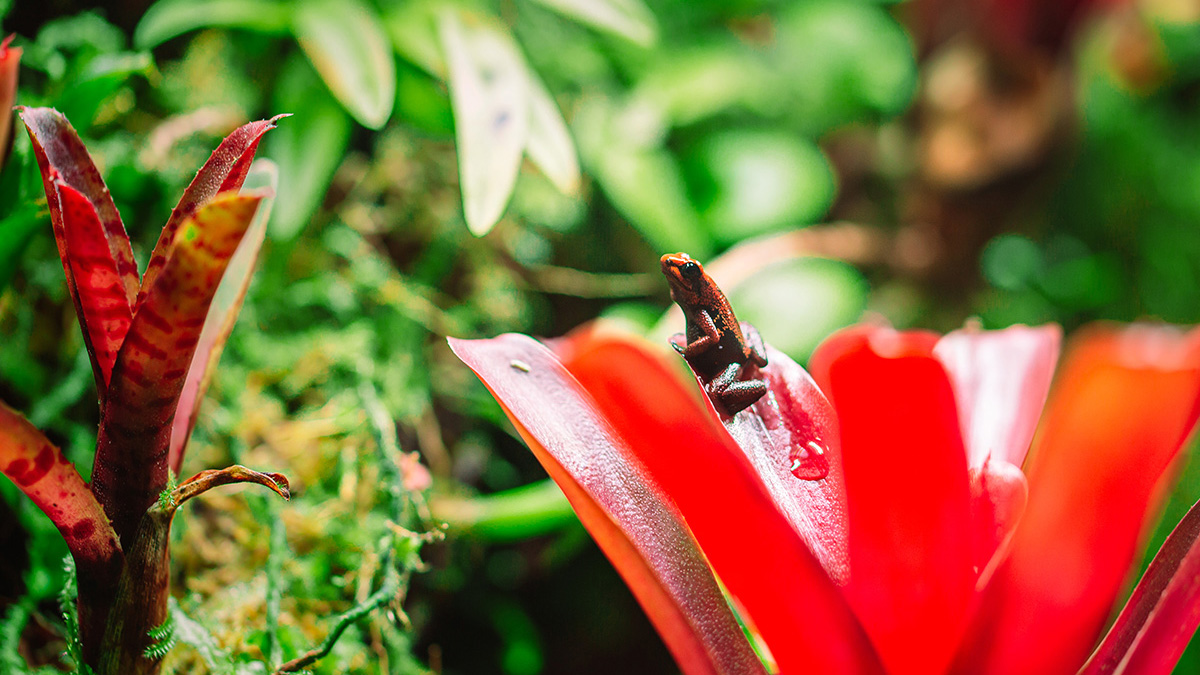
Our problem child so far was the Demonic poison frog because for a long time we had not succeeded in even getting foundation animals. But we can now happily announce that we are one frog leap further: 15 animals could be distributed to three CC keepers after balance closing on November 1. We hope, especially for this extremely critically endangered species with an apparently tiny population of animals in human care, that the first successes will soon be achieved and keep all available fingers crossed for our keepers.
Moving into the next phase
One of the tasks of CC’s pilot phase was to find an own form of organization for the time after. That is why the Citizen Conservation Foundation was founded this year as a non-profit limited liability company. In January 2023, it will go into the next round during the first supervisory and advisory board meeting. The specialist group for fish will be formally established, we will then also start with reptiles including our own specialist advisory board, and of course our amphibian program will continue to be expanded step by step. We are excited to see what will have happened by the time of the next semi-annual review, which we will publish for International Biodiversity Day on May 22, 2023. One or the other new species will certainly appear in the table then.
Inventory overview November 2022
(You can scroll horizontally in the table.)
| Wiss. Name | Dt. Name | Bestand Tiere (m/w/u) | Anzahl Haltungen | Todesfälle 05/22 – 10/22 (m/w/u) | Zugänge Nachzucht 05/22 – 10/22 | Zugänge extern 05/22 – 10/22 | Ziel (Tiere, Halter) | Status* |
|---|---|---|---|---|---|---|---|---|
| Amphibien | ||||||||
| Agalychnis lemur | Lemur-Laubfrosch | 52 (16/12/24) | 9 | 8 (0/0/8) | 5 | 0 | 225, 40 | 23 % |
| Alytes muletensis | Mallorca-Geburtshelferkröte | 209 (3/6/185) | 19 | 24 (1/1/22) | 78 | 0 | 425, 53 | 43 % |
| Ambystoma andersoni | Andersons Querzahnmolch | 84 (2/2/80) | 5 | 0 | 7 | 13 | 225,40 | 25 % |
| Ambystoma dumerilii | Pátzcuaro-Querzahnmolch | 143 (42/45/56) | 23 | 6 (2/2/2) | 19 | 0 | 225, 40 | 61 % |
| Bombina orientalis | Chinesische Rotbauchunke | 200 (17/13/170) | 16 | 2 (0/0/2) | 47 | 54 | 225, 60 | 58 % |
| Ingerophrynus galeatus | Knochenkopfkröte | 74 (14/13/41) | 12 | 23 (0/2/21) | 6 | 4 | 225, 40 | 31 % |
| Minyobates steyermarki | Tafelberg-Baumsteiger | 0 | 0 | 0 | 0 | 0 | 110, 20 | 0 |
| Phyllobates terribilis | Schrecklicher Blattsteiger | 16 (8/6/2) | 4 | 1 (0/0/1) | 0 | 6 | 225, 70 | 6 % |
| Salamandra sal. almanzoris | Almanzor-Feuersalamander | 26 (15/7/4) | 9 | 1 (0/1/0) | 0 | 0 | 185, 30 | 22 % |
| Salamandra salamandra (D) | Feuersalamander | 90 (10/11/69) | 10 | 6 (2/2/2) | 8 | 0 | * | * |
| Telmatobius culeus | Titicaca-Riesenfrosch | 36 (6/6/24) | 6 | 0 | 0 | 20 | 225,45 | 10 % |
| Tylototriton vietnamensis | Vietnamesischer Krokodilmolch | 130 (26/33/71) | 21 | 5 (0/0/5) | 0 | 31 | 185, 30 | 70 % |
| Tylototriton ziegleri | Zieglers Krokodilmolch | 25 (0/0/25) | 6 | 5 (0/0/5) | 0 | 5 | 185,30 | 17 % |
| Fische | ||||||||
| Bedotia madagascariensis | Madagaskar-Ährenfisch | 65 (20/6/39) | 6 | 6 (6/0/0) | 0 | 25 | 192, 16 | 36 % |
| Ptychochromis insolitus | Mangarahara-Buntbarsch | 139 (21/18/100) | 10 | 4 (0/0/4) | 0 | 16 | 192, 16 | 67 % |
| Ptychochromis loisellei | Loiselles Buntbarsch | 59 (17/13/29) | 6 | 4 (0/1/3) | 0 | 4 | 160, 16 | 37 % |
| Ptychochromis oligacanthus | Nosy-Be-Buntbarsch | 44 (6/4/34) | 2 | 6 (0/0/6) | 0 | 0 | 192,16 | 18 % |
m: male, w: female, u: undetermined sex * Status = mean value of the percentage of the target number of keepers already achieved and the target number of animals
NN = yet to be classified

Feed the fish - and the frogs!

Discounted food for terrarium and aquarium animals
Our network is growing all the time. Over 100 private keepers, zoos, school vivariums and aquariums are already taking part in Citizen Conservation. Through their commitment, they all help to establish conservation breeds for endangered species and save them from extinction. They not only sacrifice time and space, but also bear the costs of keeping and breeding our amphibians and fish. . “Six feet to eat”, a live food breeding company from Schnürpflingen, Baden-Württemberg in Germany, is now helping them with this.
Nutritious insects for humans and animals
“Six feet to eat”, a brand of “fauna topics – Zoobedarf, Zucht- und Handels-GmbH”, has been breeding insects in Schnürpflingen since 2018, which are not only approved as feed for animals, but also as food for human consumption. In addition to live food such as crickets, grasshoppers, fruit flies, cockroaches, springtails & Co., rodents as well as fish and frozen food and food plants are also offered. Those who join Citizen Conservation will be able to order their food there at significantly reduced rates in the future – even for their own private livestock!
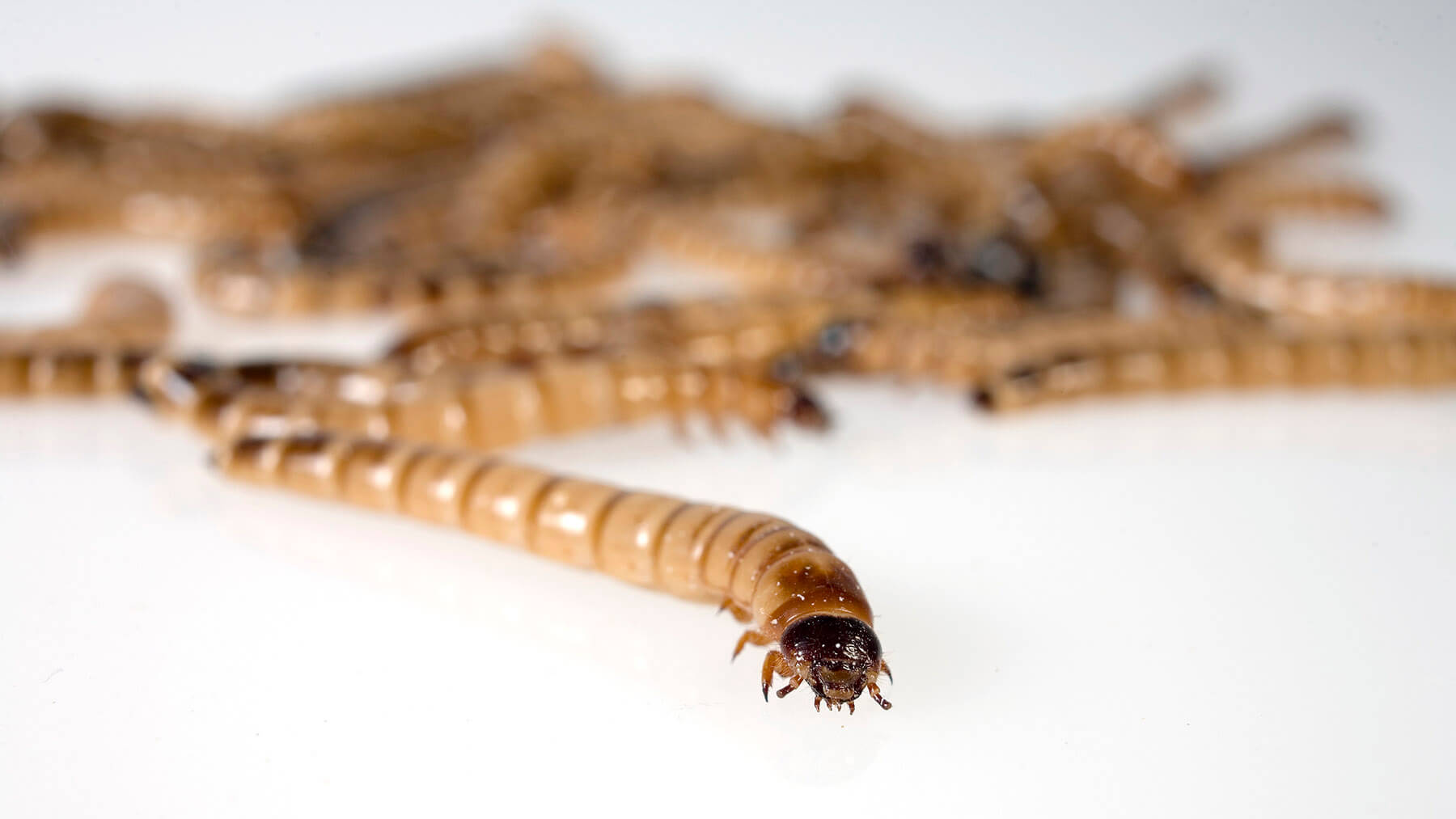
On the menu today: Zophobas
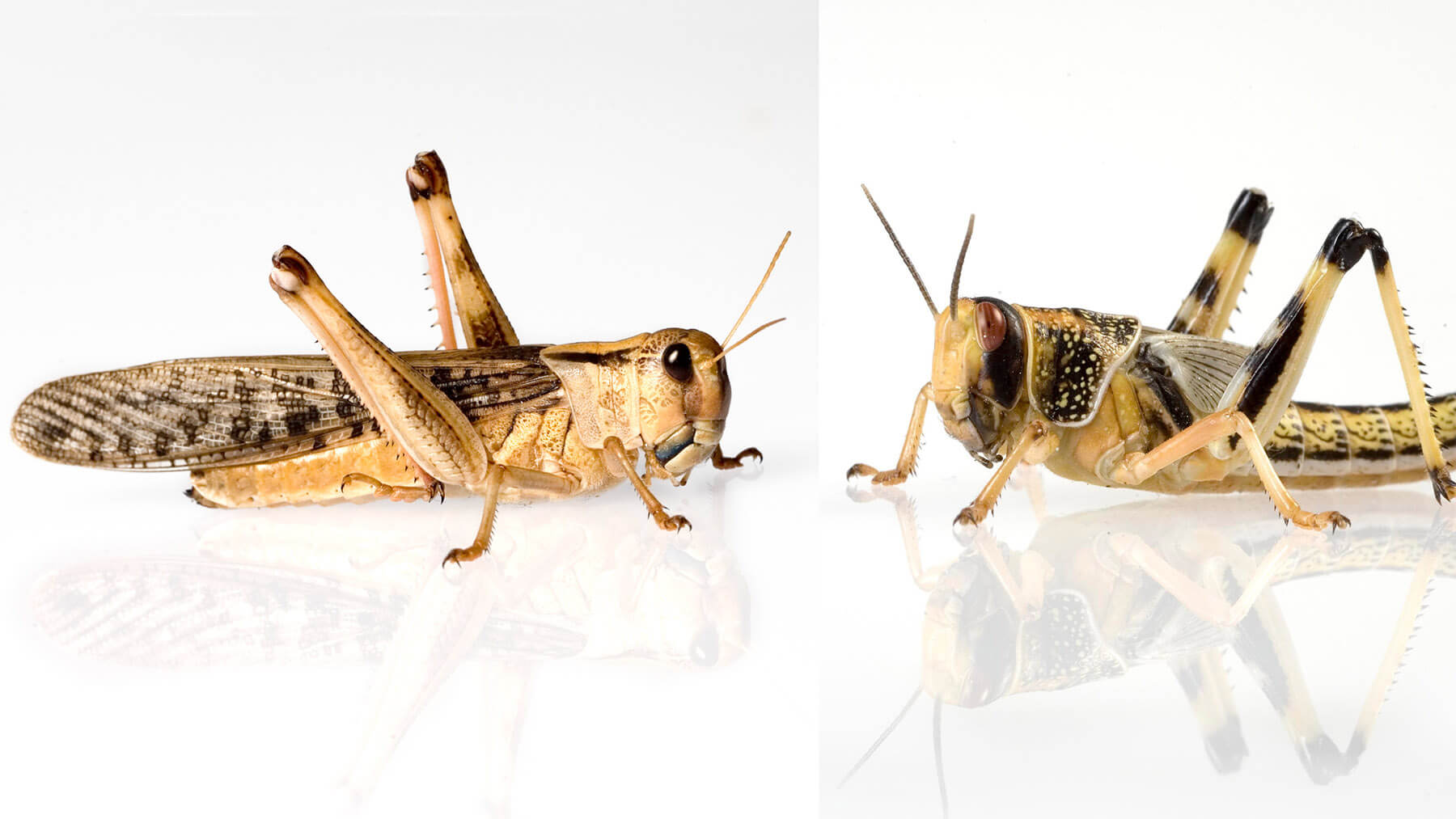
On the left: the migratory locust; on the right: a desert locust
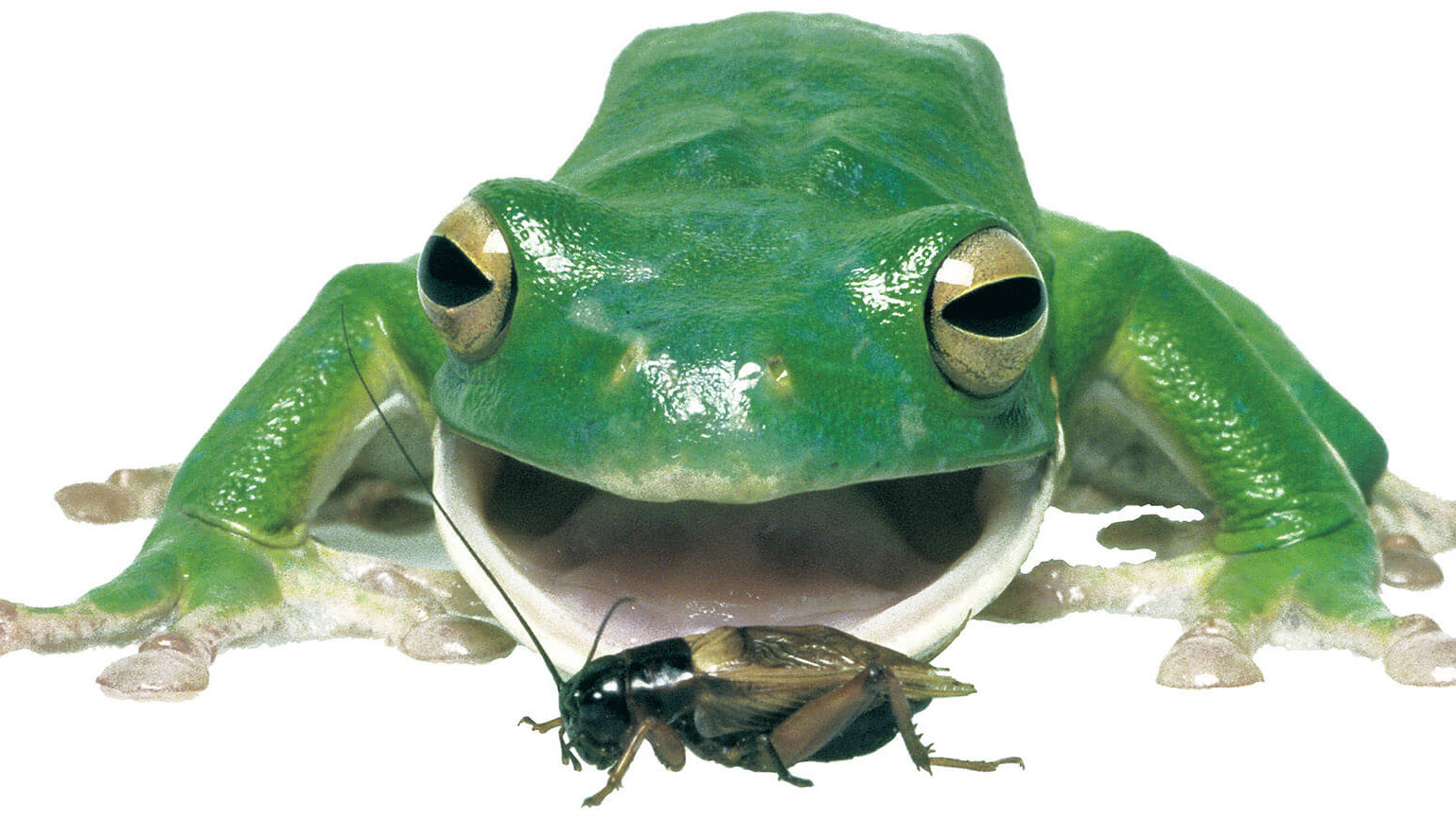
Bon appetit!
Feeding for species conservation
All CC participants who order items through the company will receive a discount. In addition, there is no minimum order value. This ensures full bellies for the fosterlings at all times.
School zoos that participate in Citizen Conservation even receive an additional discount to support their important work. We are especially pleased that 5% of the turnover of all orders received through Citizen Conservation is donated to our species conservation programme. So our keepers support us twice every time they feed!
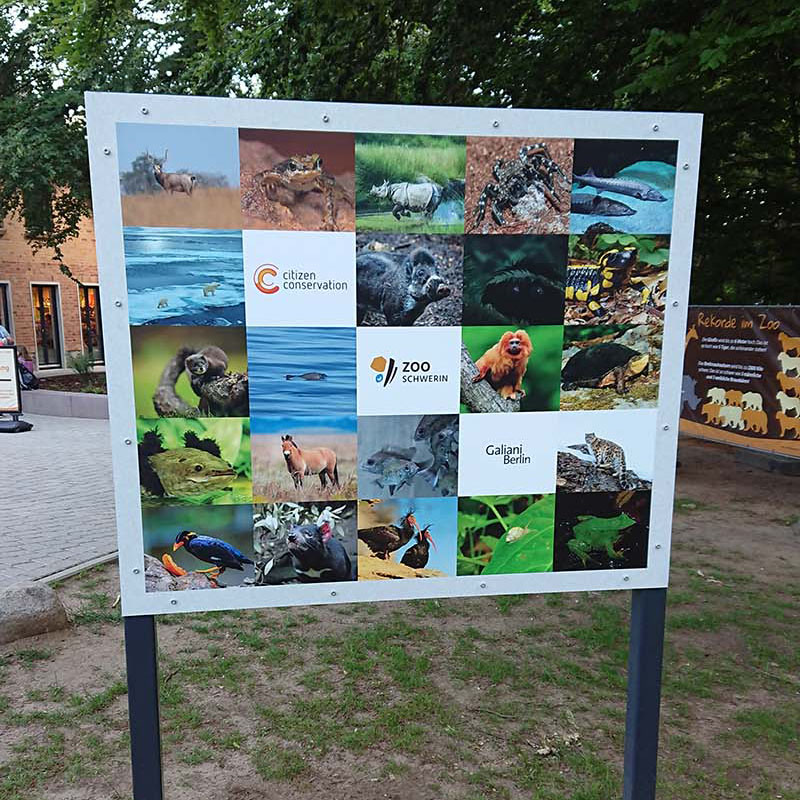
Bestiarium at Schwerin Zoo
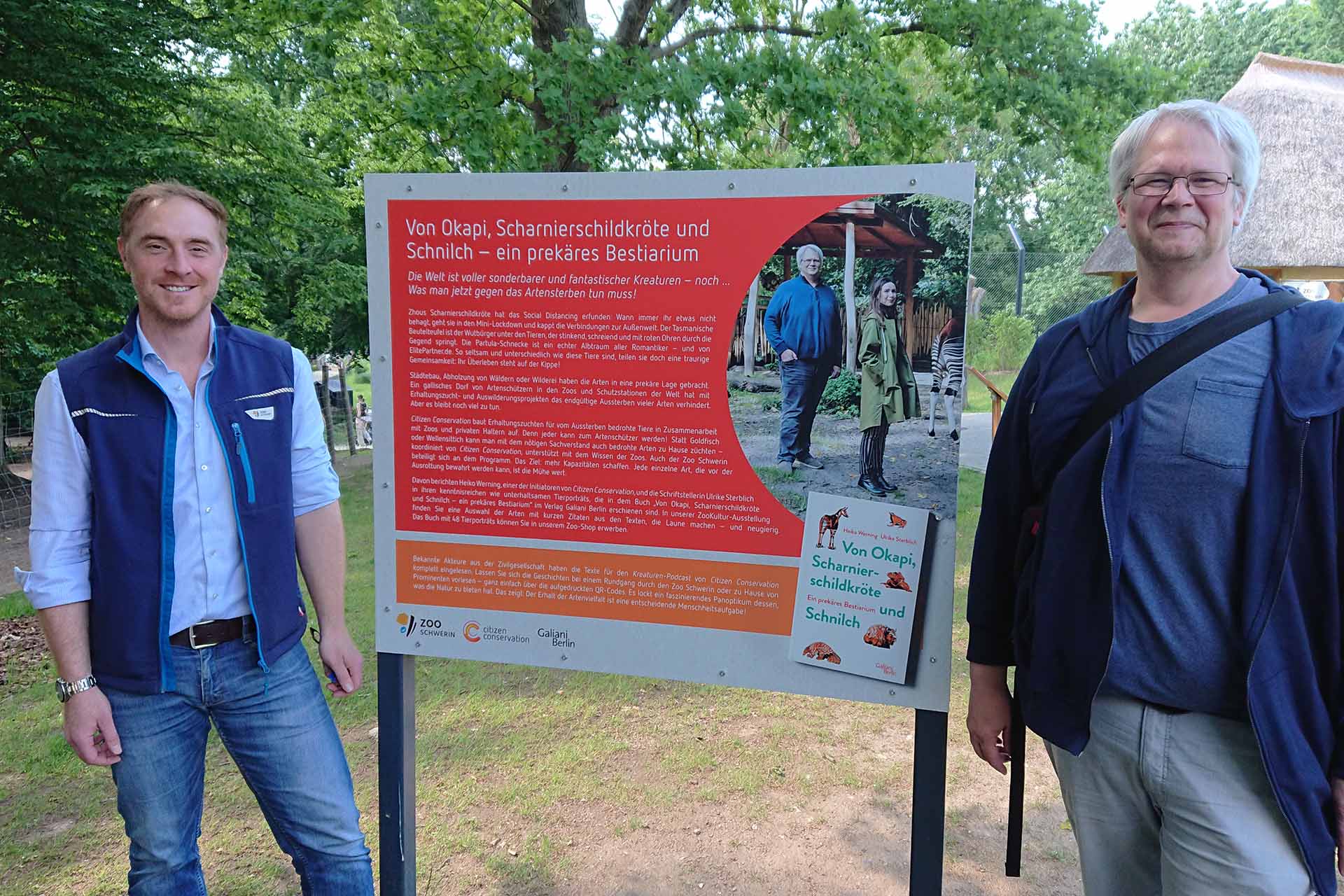
Saving endangered animal species through conservation breeding in zoos and with private keepers – that is the mission of Citizen Conservation. The stories of our Creatures Podcast and our book “Von Okapi, Scharnierschildkröte und Schnilch – ein prekäres Bestiarium”, published by Galiani Berlin, report in a humorous way on the bizarre, fascinating or simply endearing peculiarities of animals that are threatening to disappear from the planet forever. They thus make the abstract figures of the biodiversity crisis vivid for everyone.
Species conservation with all senses
The ZooKultur exhibition 2022/2023 has now been opened at Schwerin Zoo. The animal heroes of our stories are presented on a total of 22 large display panels, with a picture, a short, curious quotation from the respective story and condensed information about the endangerment situation and the ex-situ strategy to save them. In addition, there is a link to the associated episode of the Creatures Podcast that can be called up via QR code. So during a relaxed tour of the zoo, you can not only enjoy the living animals, but also listen to funny, informative or thought-provoking stories about endangered species read by prominent voices.

Schnilch sighting in Schwerin
The panels correspond in many places with the animals on display. Thus, in the surroundings of the enclosures of the animals bred in the zoo, one can also hear the matching stories at the same time. In the forest part of the zoo, Danijel Višević from Ecosia World Fund talks about the rare milu, while the proud stag strides along in the background. Shortly before reaching the amphibian house and the open-air aquariums for fire salamanders and Lake Pátzcuaro salamander, journalist and TV producer Friedrich Küppersbusch and Alphaville singer Marian Gold introduce these amphibians. In front of the zoo’s newly opened Red List Centre, humourist Horst Evers informs about the comically sad history of the Partula snails bred there, while Sarah Bosetti informs about the Mangarahara-cichlids that have just moved into the zoo. The zoo, picturesquely situated between Schwerin’s lakes, also hosts many wild animals from the surrounding area – and who knows, maybe a Schnilch will be among them?
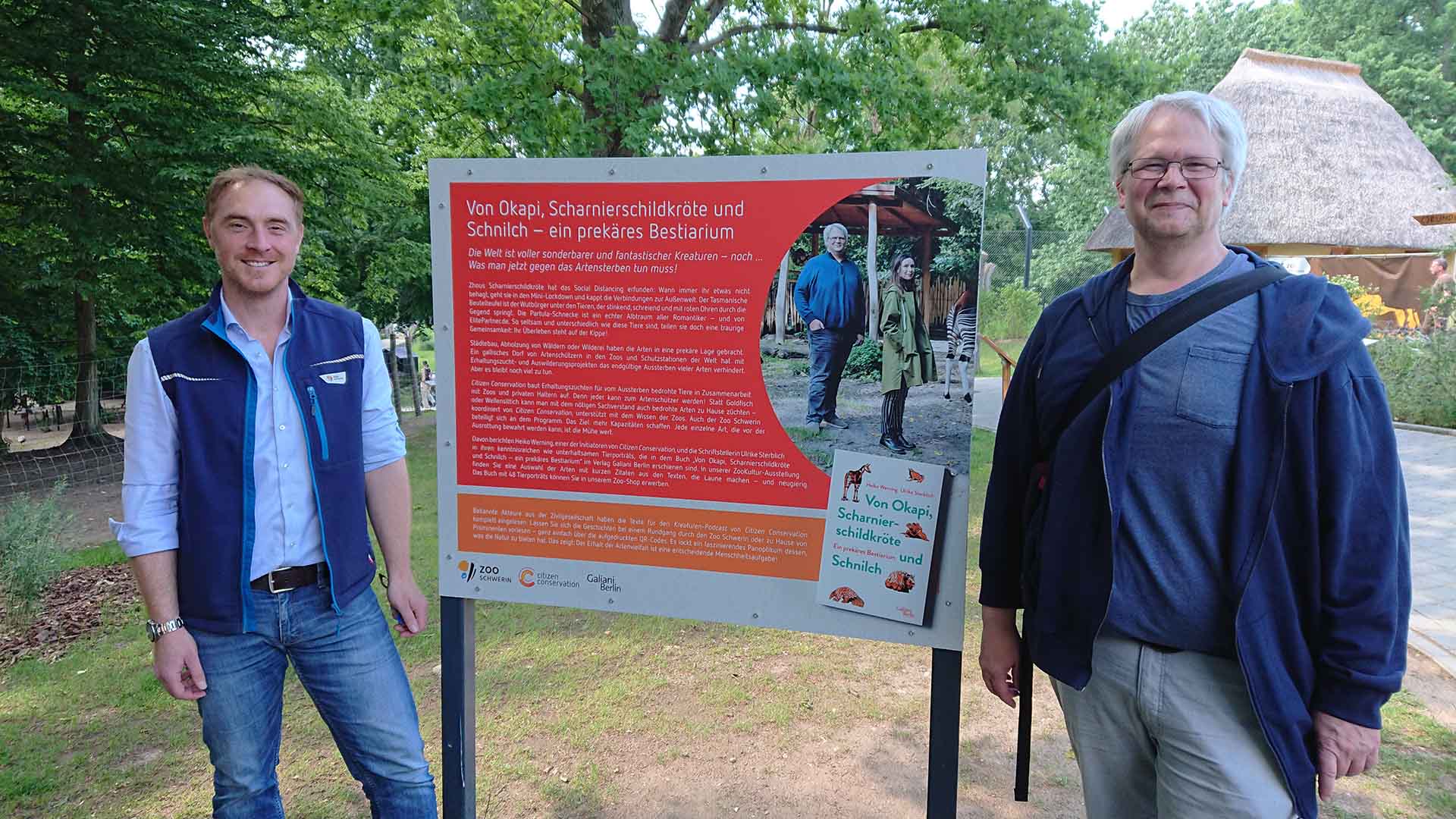
Director Tim Schikora (left) and CC co-founder Heiko Werning in front of the welcome board of the ZooKultur exhibition.
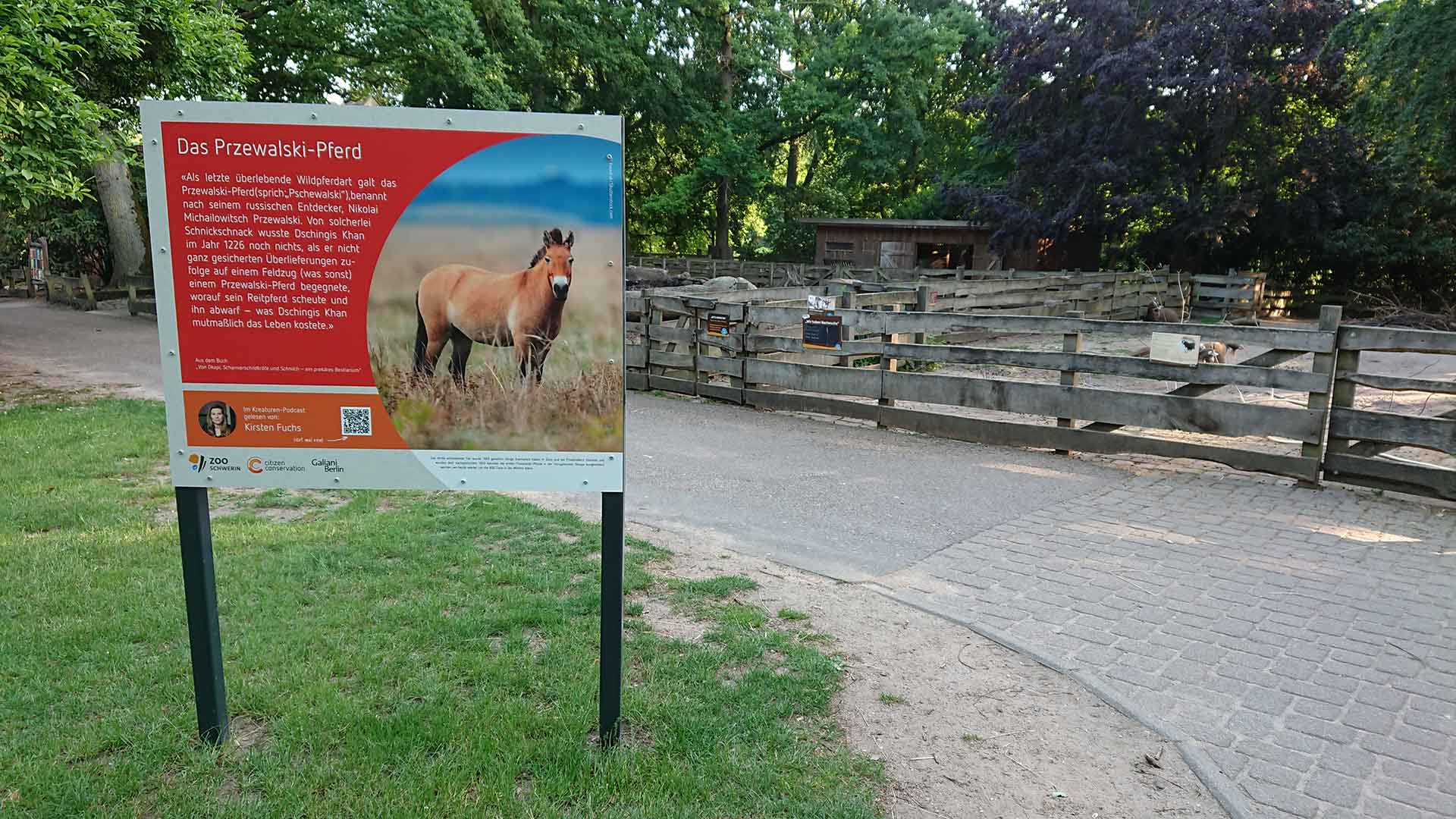
In the field of pets, think of the ancestral form of our horses ...
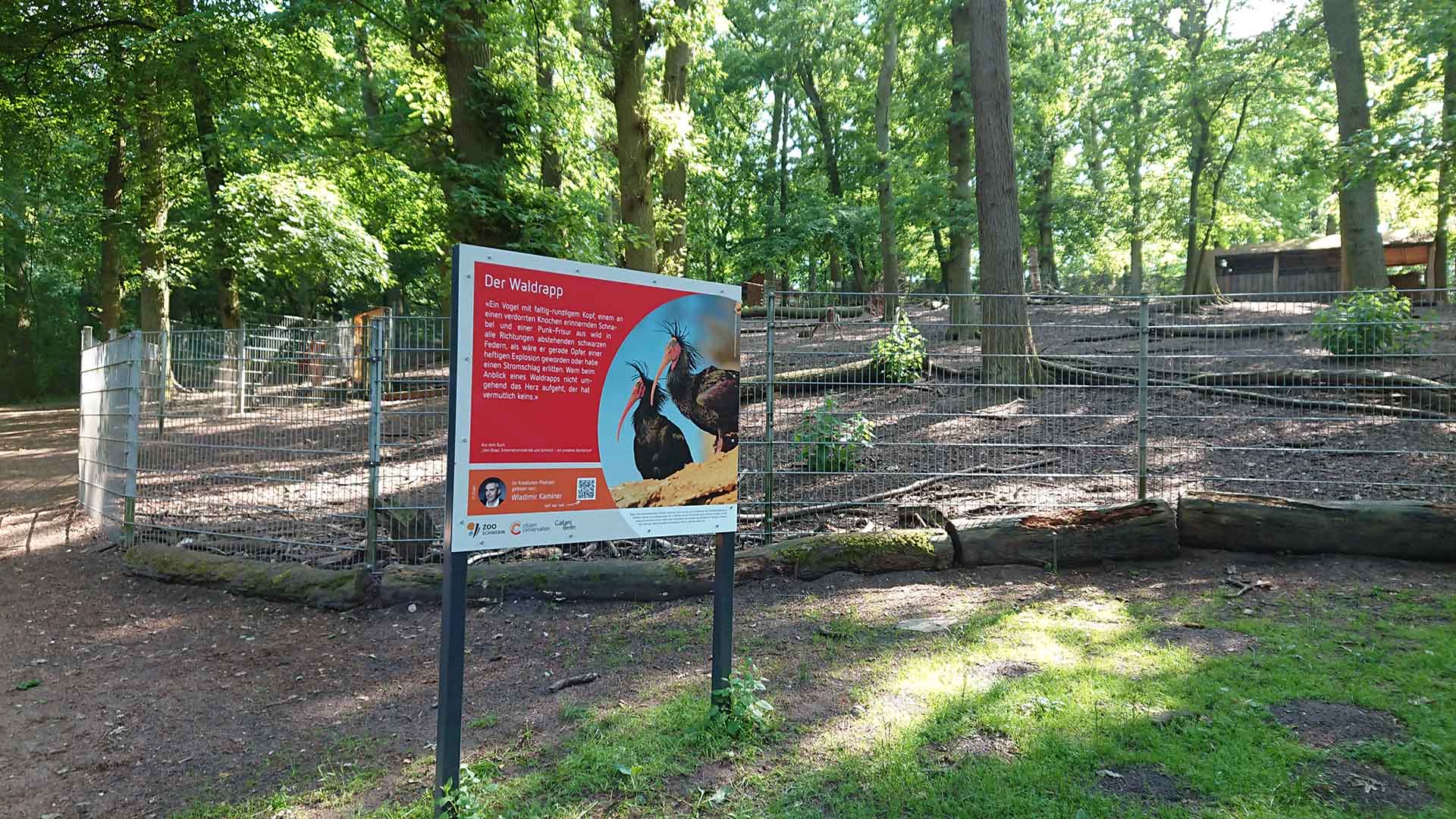
Waldrapp in the forest
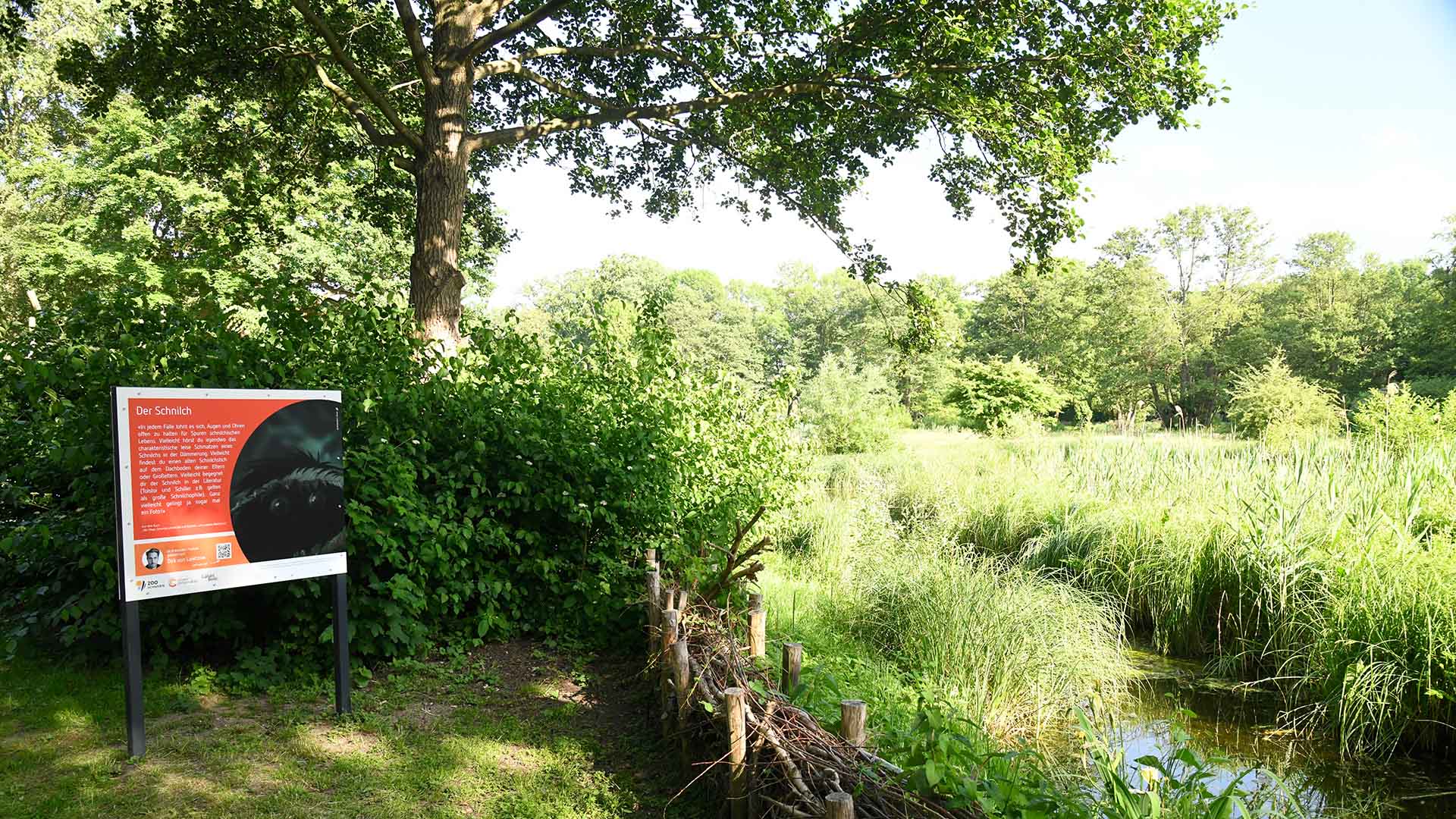
Does he live here, the Schnilch?
Until June 2023
Those who have acquired a taste for the exhibition can of course then purchase our book in the Zoo Shop and thus support the work of Citizen Conservation. Director Tim Schikora and CC co-founder and author Heiko Werning ceremoniously opened the new exhibition on 11 June 2022 with a reading and an auction of last year’s ZooKultur signs in aid of species conservation projects. The Bestiarium exhibition will be on display at Schwerin Zoo until June 2023.
Semi-annual report 1 / 2022 – the animal stock report is here
Pilot phase on final approach – semi-annual report as of May 1, 2022
Citizen Conservation is nearing the end of its five-year pilot phase. During this time, we wanted to “show that it works”. In this case, “it” is the idea of setting up coordinated conservation breeding programs for endangered animal species in cooperation with private keepers and zoos and to test and improve the necessary processes. This includes all participants reporting their populations once every six months and publishing the resulting figures transparently here. The result after the sixth and next-to-last population count of the pilot phase: it works!
Repeated offspring
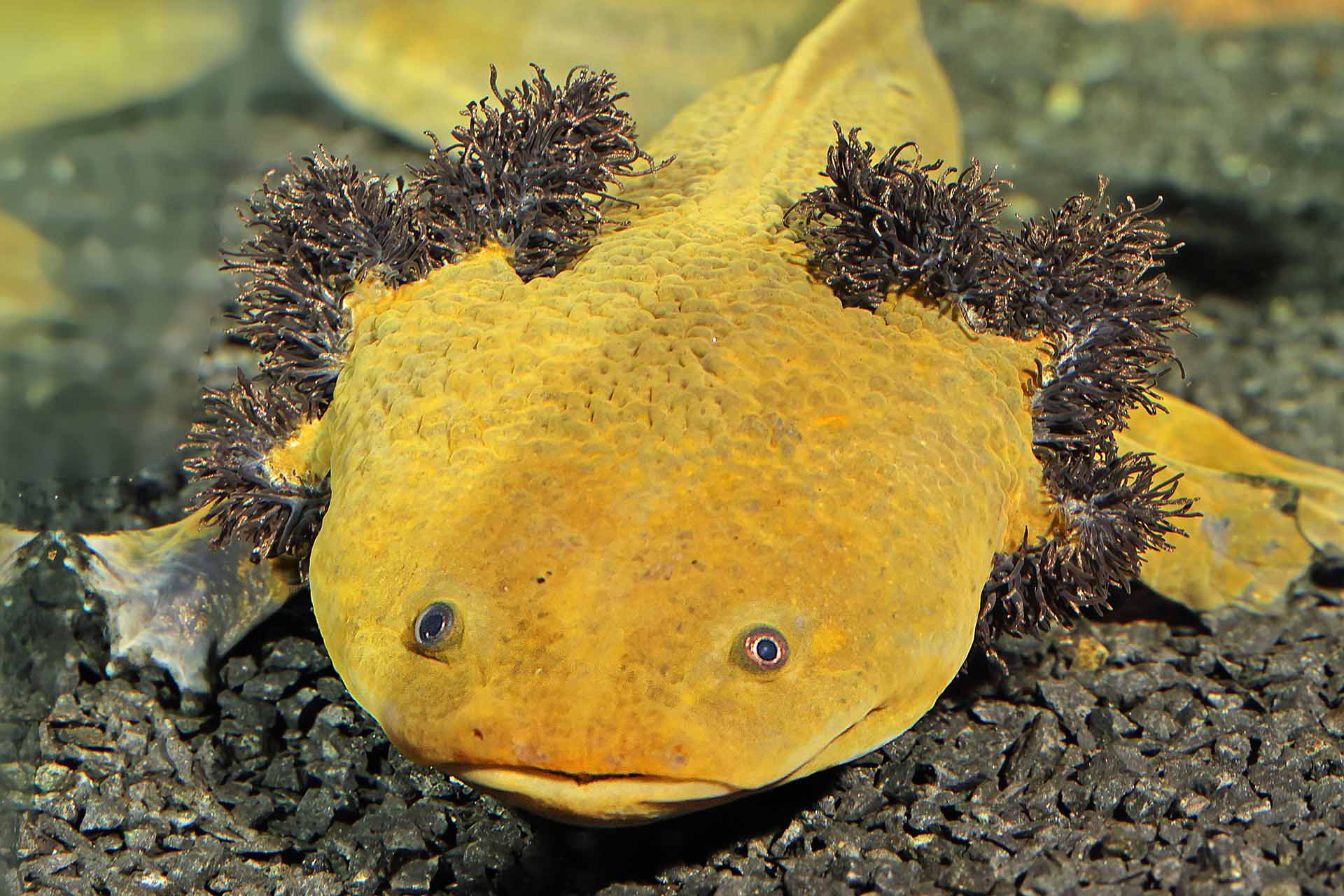
Several species have now repeatedly reproduced in our program: Lake Patzcuaro Salamander (Ambystoma dumerilii), Lemur Leaf Frog (Agalychnis lemur), Vietnamese Crocodile Newt (Tylototriton vietnamensis), Mallorca Midwife Toad (Alytes muletensis) and Oriental Fire-bellied Toad (Bombina orientalis). Our first fish species, the Mangarahara Cichlid (Ptychochromis insolitus), also gave birth again. Our other species have only been in the program for a short time or the animals only become sexually mature after several years, so that no offspring could be expected here yet.
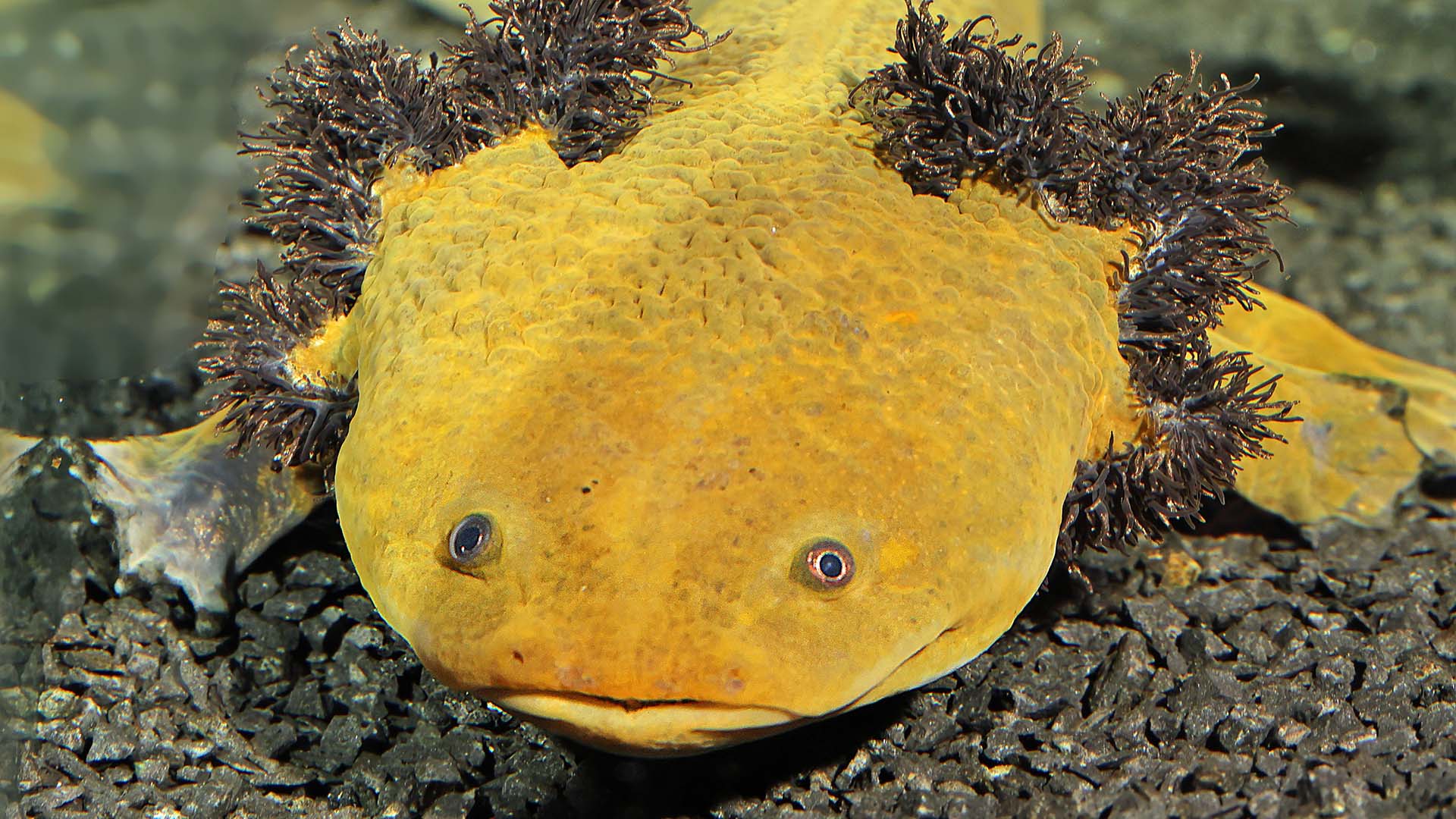
Several CC keepers, such as here at the Wilhelmshaven Aquarium, have seen the critically endangered Lake Patzcuaro Salamander reproduce.
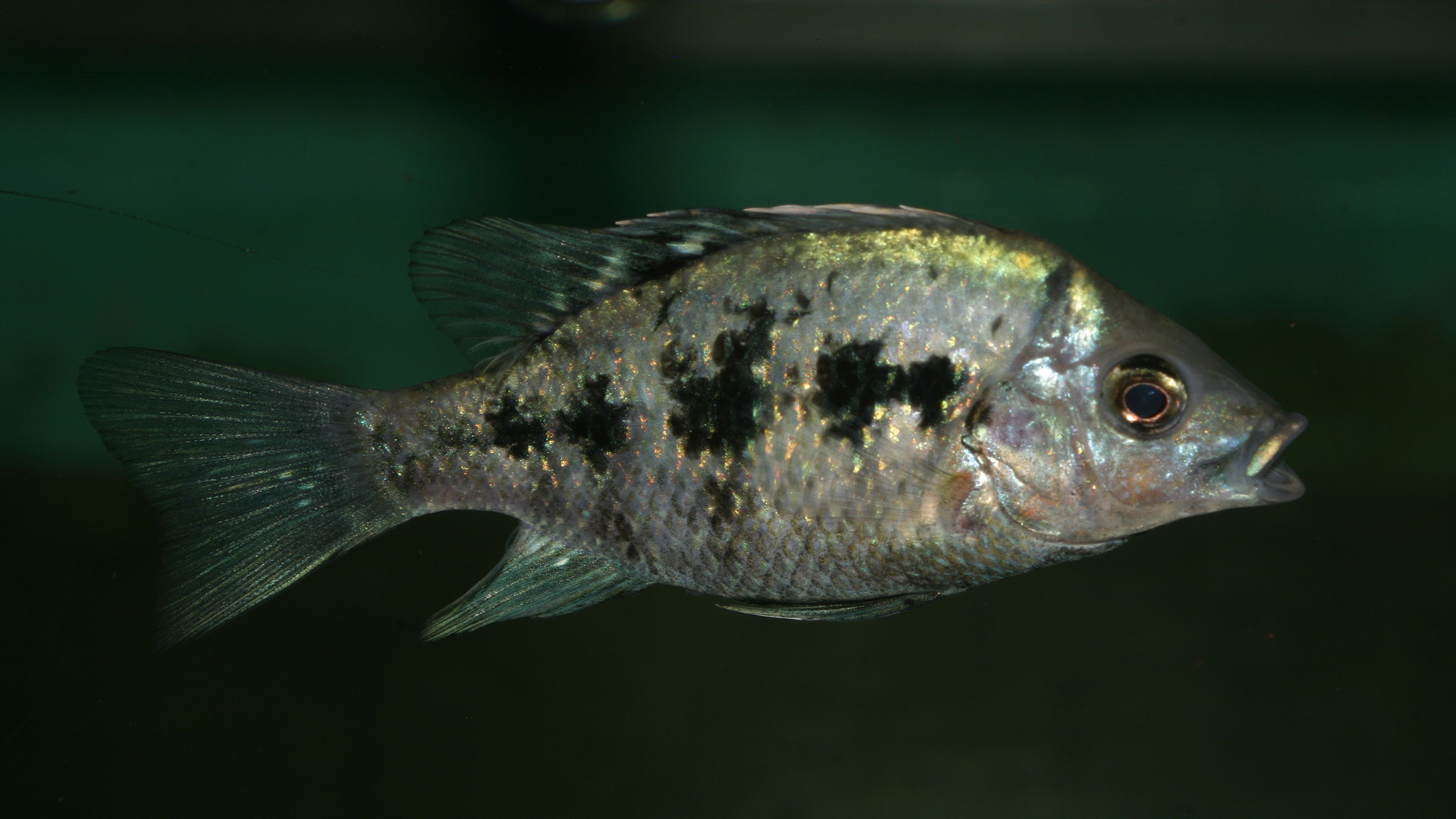
New at CC: the endangered Nosy Be Cichlid.

The Mallorcan Midwife Toad is one of the rarest frogs in Europe. It is already reproducing with several CC keepers.
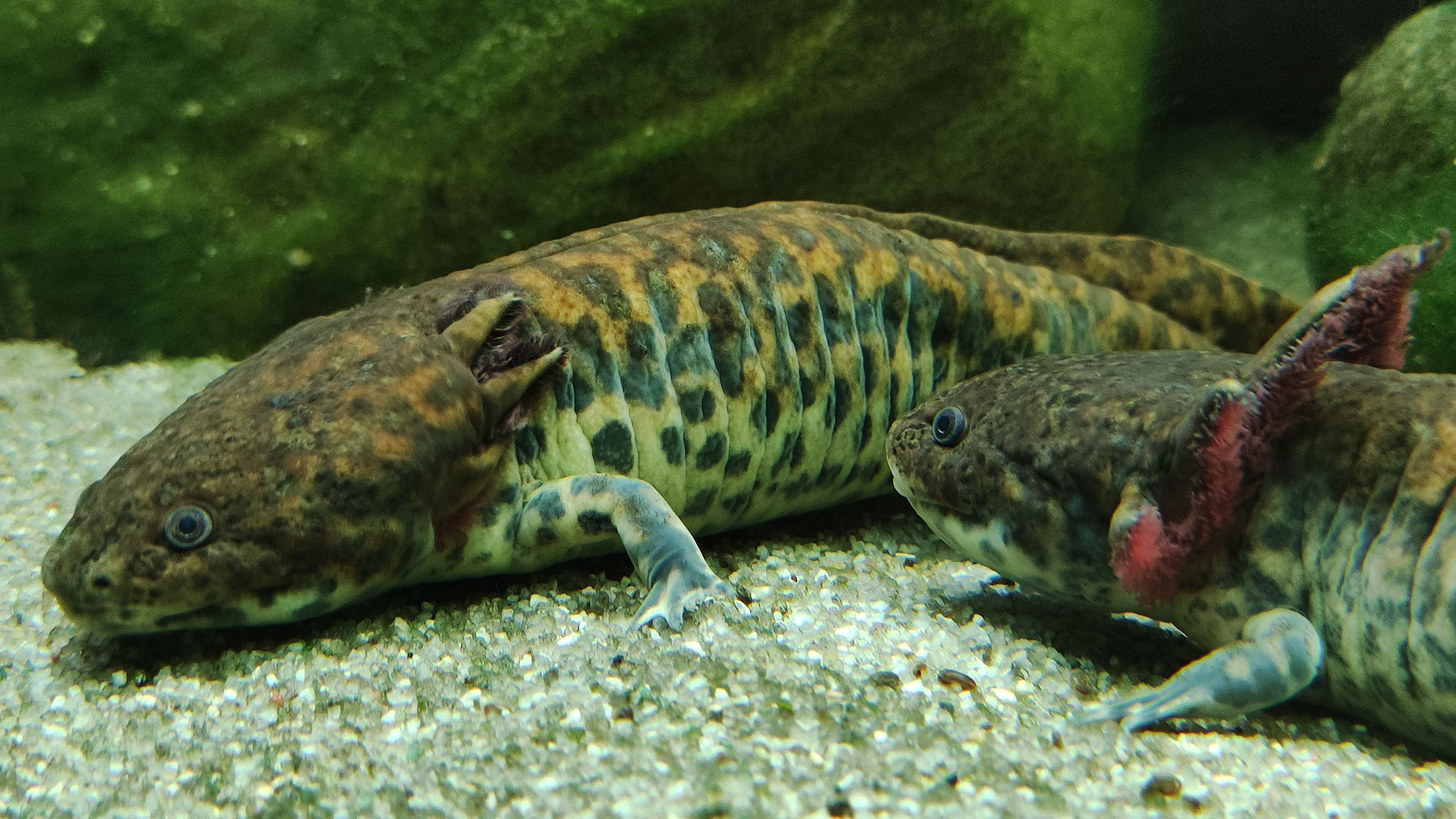
New to the program is Anderson's Salamander, a “perpetual larva” also only known from a Mexican lake, which was almost wiped out in the wild.
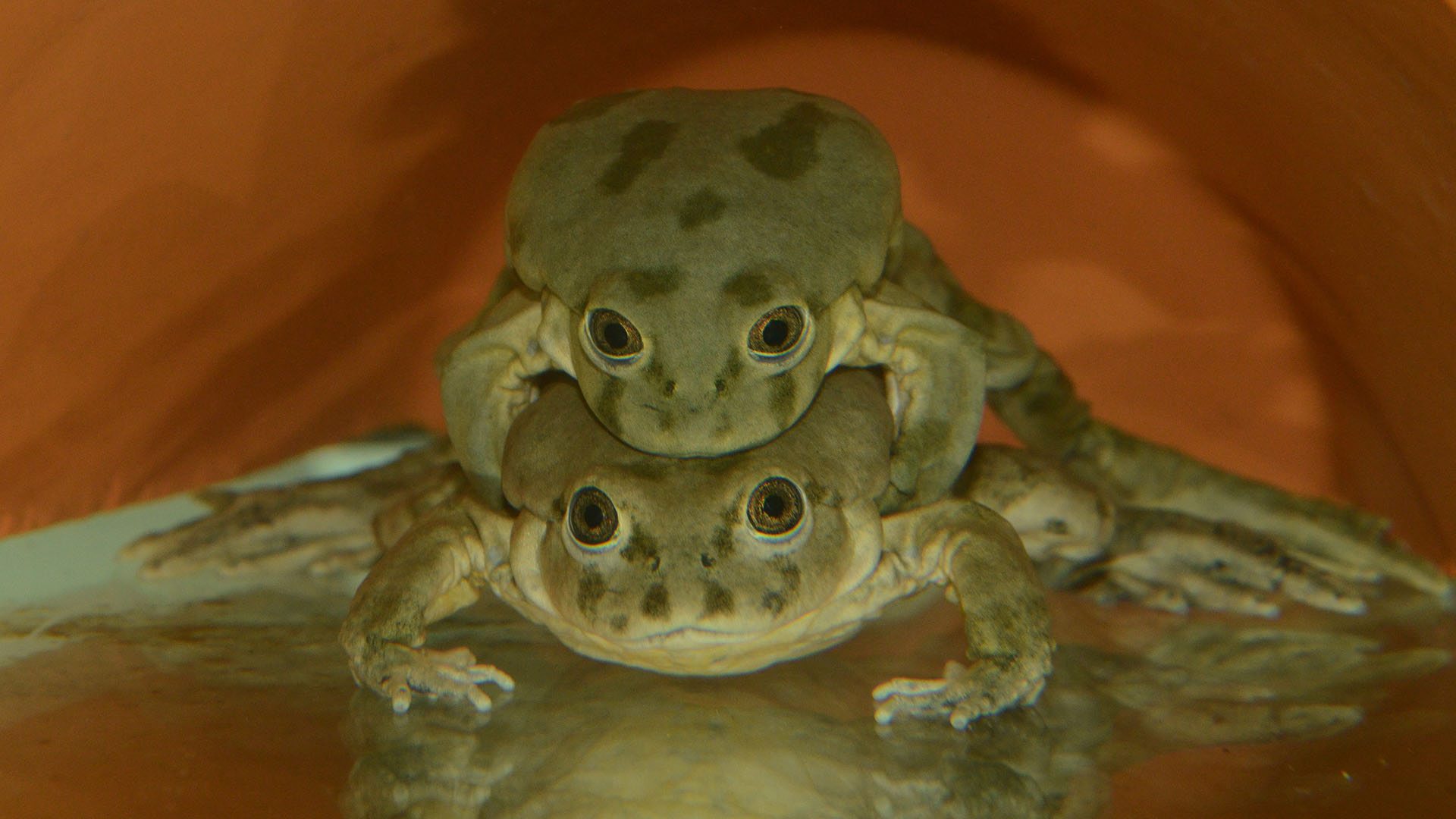
The Titicaca Water Frog has suffered severe population declines in its native habitat, South America's Lake Titicaca and neighboring waters. A network of breeding sites in Europe should also help to preserve the species in the long term.
First goal achievement in sight
For several species, it has already been possible to build up a third to more than half of the desired population size in CC (see the numbers in the table). This goal defines the required population of reproducible animals at various husbandry locations in order to maintain the species in human care for over 40 years.
New Species
At the same time, we are continuing to expand our species portfolio. Three more amphibian species have been added over the last six months: After the first Ziegler’s Crocodile Newts (Tylototriton ziegleri) were made available to us by Cologne Zoo in October 2021, further animals have now been able to form a foundation stock of these tailed amphibians at CC. The first Titicaca Water Frogs (Telmatobius culeus) from the Löbbecke-Museum/Aquazoo Düsseldorf and Anderson’s Salamander (Ambystoma andersoni) from NaturaGart Ibbenbüren followed in early 2022. In terms of fish, the first specimens of the Nosy Be Cichlid (Ptychochromis oligacanthus) were transferred to CC keepers from Cologne Zoo. All of the species mentioned are severely or even critically endangered. And finally, we have started to build up an ex-situ population of German Fire Salamanders (Salamandra salamandra), which are currently suffering greatly from the salamander-eating fungus, threatening entire populations with extinction.
Planning for the future
The animals come from offspring of the respective institutions. Of course, they only represent a very limited genetic diversity, as they can sometimes be traced back to individual pairs. However, our initial aim is to build up a functioning network of breeding facilities. We are taking a long-term view here and aim to obtain further founder animals at a later date in order to expand the gene pool of the species in question in the ex situ populations. However, the necessary knowledge about keeping and breeding these animals is already being collected, expanded, communicated and applied in practice.
More information on the CC species.
Stock overview May 2022
(You can scroll horizontally in the table.)
| Scientific name | Engl. name | Animals total (m/f/u) | Keepers total | Deaths 11/21 – 04/22 (m/f/u) | New offspring 11/21 – 04/22 | External arrivals 11/21 – 04/22 | Aim (animals, keepers) | status* |
|---|---|---|---|---|---|---|---|---|
| Amphibians | ||||||||
| Agalychnis lemur | Lemur Leaf Frog | 55 (13/11/31) | 8 | 8 (0/2/6) | 20 | 0 | 225, 40 | 22 % |
| Alytes muletensis | Majorcan Midwife Toad | 155 (4/6/145) | 17 | 20 (0/0/20) | 30 | 31 | 425, 53 | 34 % |
| Ambystoma andersoni | Anderson’s Salamander | 73 (2/2/69) | 2 | 0 | 0 | 73 | 225,40 | 25 % |
| Ambystoma dumerilii | Lake Patzcuaro Salamander | 130 (44/49/37) | 18 | 16 (0/0/16) | 23 | 1 | 225, 40 | 51 % |
| Bombina orientalis | Oriental fire-bellied Toad | 101 (12/16/73) | 11 | 18 (0/0/18) | 14 | 0 | 225, 60 | 58 % |
| Ingerophrynus galeatus | Bony-headed Toad | 74 (14/13/41) | 12 | 23 (0/2/21) | 6 | 4 | 225, 40 | 32 % |
| Minyobates steyermarki | Demonic Poison Frog | 0 | 0 | 0 | 0 | 0 | 110, 20 | 0 |
| Phyllobates terribilis | Golden Poison Frog | 11 (3/3/5) | 2 | 7 (0/0/7) | 0 | 5 | 225, 70 | 4 % |
| Salamandra sal. almanzoris | Almanzor Fire Salamander | 27 (10/8/9) | 9 | 4 (0/4/0) | 0 | 0 | 185, 30 | 22 % |
| Salamandra salamandra (D) | Fire Salamander | 88 (12/11/65) | 9 | 5 (0/3/2) | 0 | 0 | * | * |
| Telmatobius culeus | Titicaca Water Frog | 16 (1/1/14) | 3 | 0 | 0 | 16 | 225,45 | 7 % |
| Tylototriton vietnamensis | Vietnamese Crocodile Newt | 104 (17/23/64) | 17 | 6 (1/0/5) | 20 | 5 | 185, 30 | 56 % |
| Tylototriton ziegleri | Ziegler’s Crocodile Newt | 25 (0/0/25) | 6 | 0 | 0 | 16 | 185,30 | 17 % |
| Fish | ||||||||
| Bedotia madagascariensis | Madagascar Rainbowfish | 46 (19/8/19) | 3 | 13 (0/13/0) | 0 | 40 | 192, 16 | 21 % |
| Ptychochromis insolitus | Mangarahara Cichlid | 127 (13/15/99) | 8 | 1 (1/0/0) | 25 | 24 | 192, 16 | 58 % |
| Ptychochromis loisellei | Loiselle’s Ptycho | 59 (7/9/43) | 5 | 0 | 0 | 38 | 160, 16 | 34 % |
| Ptychochromis oligacanthus | Nosy Be Cichlid | 50 (0/0/50) | 2 | 0 | 0 | 50 | 192,16 | 19 % |
m: male, w: female, u: undetermined sex
* Status = mean value of the percentage of the target number of keepers already achieved and the target number of animals
NN = yet to be classified
Species conservation for Listening - Creature Podcast season 3
Our Creatures Podcast enters season 3
Well-known individuals from all ranges of civil society lend their voices to a great cause: furthering the preservation of endangered species through conservation breeding in zoos and private keeping. The prominent artists, journalists and sportspeople read short, entertaining texts about “rare and very rare animals” that could not have survived or would not survive without conservation breeding in human care. Or that actually did not survive, as is the case of the aurochs.

The German über-cow
Its history is just one example of the tragedy behind many strange animal names. This giant bovine made today’s civilization possible in the first place, as the cow is descended from it. Gaius Julius Caesar fibbed wildly about the aurochs, drinking vessels were made from its horns as status symbols, and chief Nazi Goering personally hallucinated about a Germanic Disneyland with German uber-cattle, for the creation of which thousands of people were murdered for real.

Doctor, science journalist and TV presenter Eckart von Hirschhausen reports on the most prominent victim of climate change: the polar bear.

Coinciding with the film release of "Willi and the Wonder Toad", Willi Weitzel reads the podcast about the extremely whimsical Nimba Toad
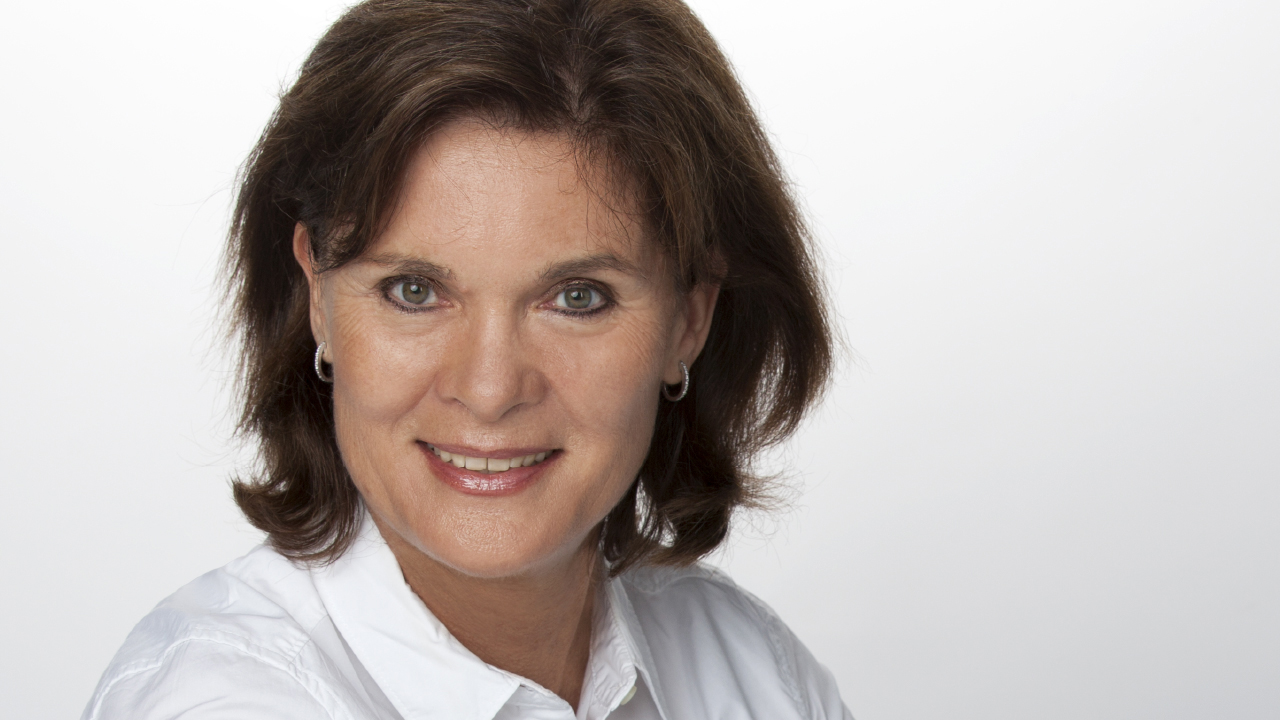
Ulrike Nasse-Meyfarth, two-time high jump Olympic champion, loved to fly high, just like the animal she sponsors, the California condor.

In a spectacular interpretation full of rolling Rs, music cabaret artist Pigor raises the aurochs from the dead

Writer and comedian Frank Goosen slags off the sturgeon
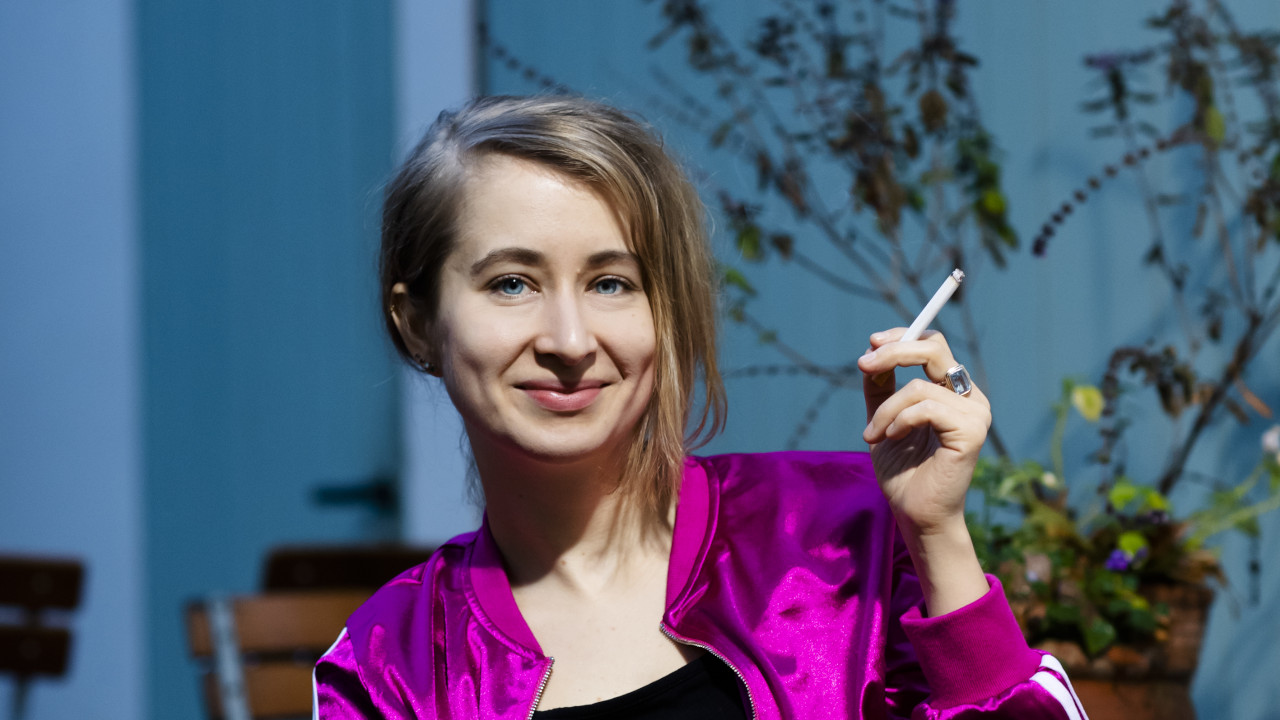
Spiegel online columnist Margarete Stokowski jauntily praises the return of the beaver

Stories between tragedy and comedy
The incredible aurochs story is just one of the crazy stories In the 3rd season of our Creature Podcast. Beavers make themselves comfortable among the freaks in hip Berlin districts, the true background of the famous Rhinocerus by Albrecht Dürer is revealed, the genre of fish reviews is brought to life using the example of the European sturgeon, and arachnophobes meet their nemesis in the form of the Deserta tarantula, the largest spider in Europe – which is brought to them in a kind of applied confrontation therapy by psychiatrist and writer Jakob Hein.
Famous voices for unknown animals
Stefan Wilkening will open the series on February 10. The actor has already lent his voice to “Rudi, the Racing Pig”, and now he will be presenting the Visayan warty pig, which has just been named “Zoo Animal of the Year 2022”. You can listen to the podcasts wherever they are available: on Citizen Conservation’s YouTube channel, on Spotify and Podigee – and of course here on the CC website.
At the same time, the stories will be published as a book by Galiani Berlin. For now, podcasts and book are only available in German language.
Biannual report 2 / 2021 - status update
Today we'll have fish – Animal Inventory November 1st, 2021
The growth continues: Citizen Conservation was able to expand its animal population again in the period of April to October 2021. And this despite the fact that some individual projects (the import of frogs and toads from Ecuador and West Africa) had to be postponed further due to the pandemic. But in return we have taken in a whole new class. We proudly welcome: fish!
Madagascar's Endangered Freshwater Fauna
Fish are the most endangered vertebrate animal group on Madagascar. The Cologne Zoo has already been involved here for several years with its aquarium and establishs a conservation breeding network for these highly endangered species. We are pleased that CC could initially participate with three species: the Mangarahara cichlid (Ptychochromis insolitus), Loiselle´s Ptycho (Pytchochromis loisellei), and the Madagascar rainbowfish (Bedotia madagascariensis) can be taken in by interested aquarists and institutions. The first representatives of all three species are already swimming in CC tanks, and we are particularly pleased that there have already been offspring in a group of the Mangarahara cichlid, which was considered the “rarest fish in the world”. A fourth Madagascan cichlid, the Nosy Be cichlid (Ptychochromis oligacanthus), will be added soon.
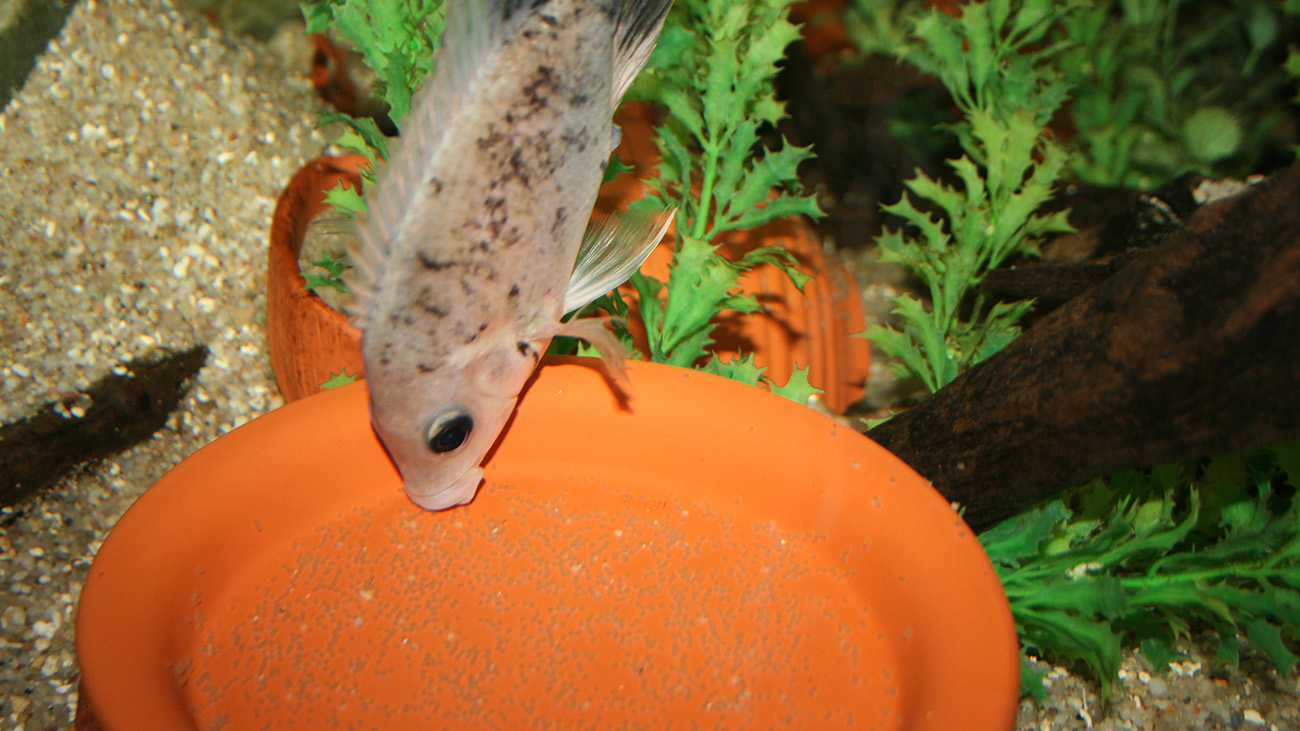
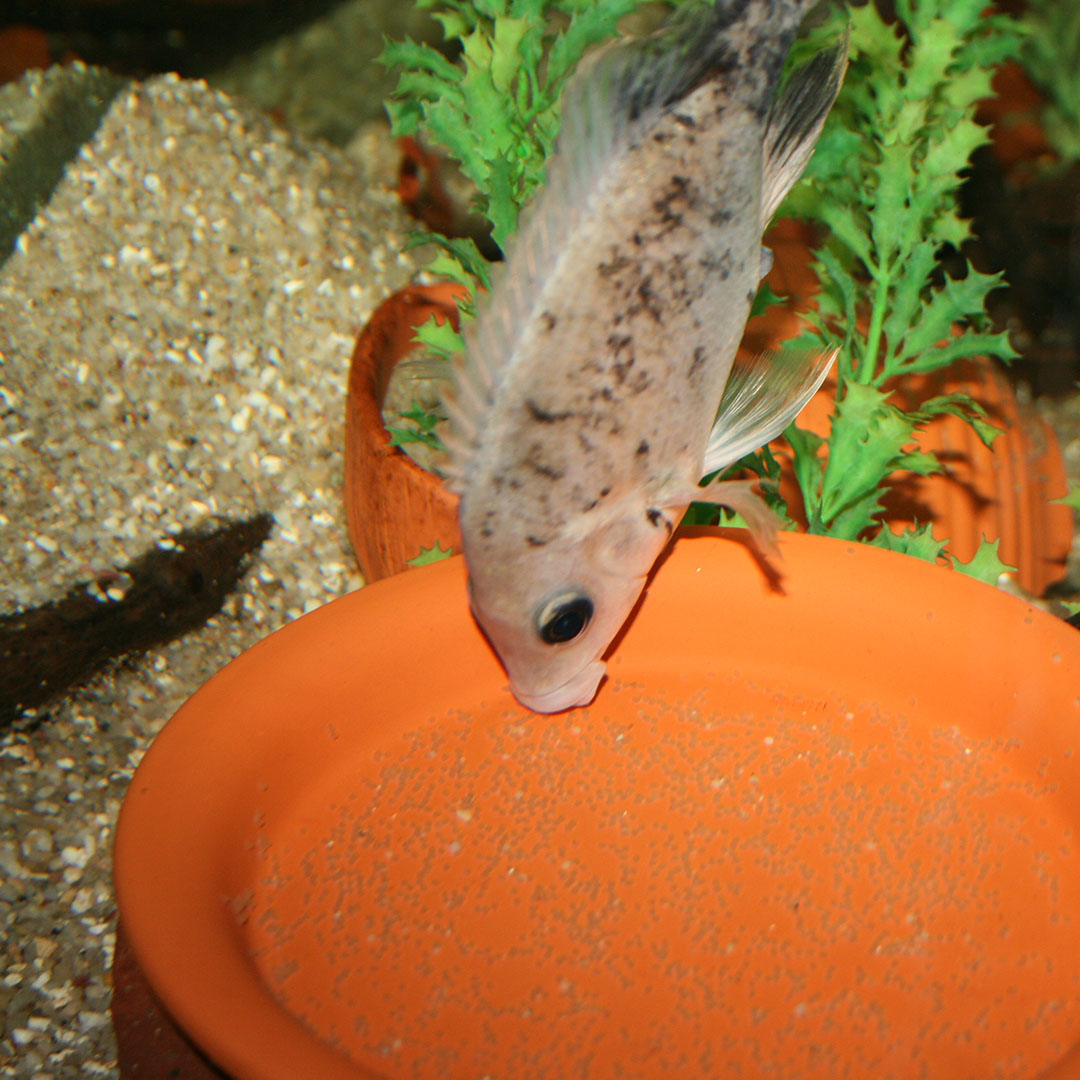
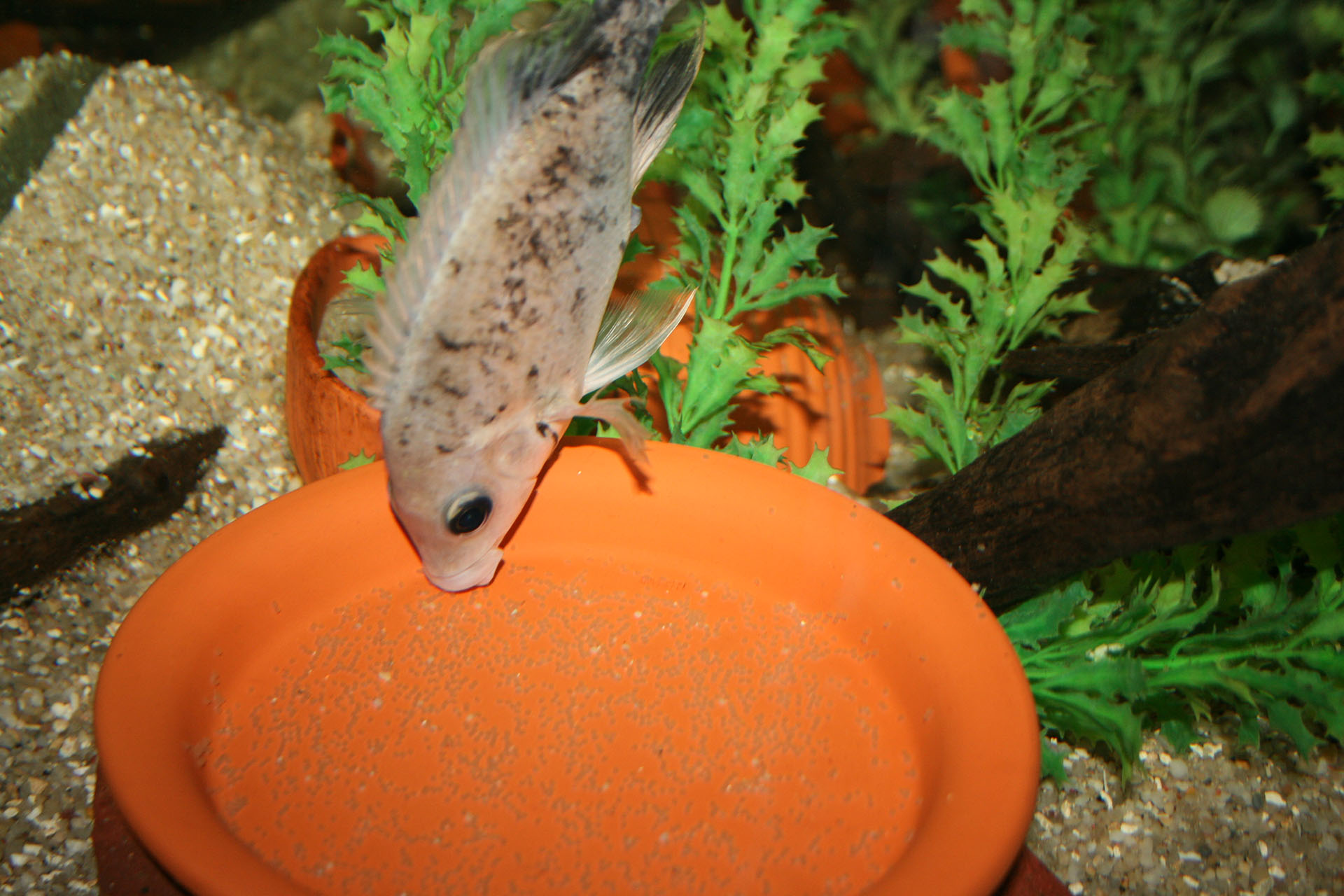
Just accepted into CC, and the “rarest fish in the world” already has offspring: a female Mangarahara cichlid in brooding care
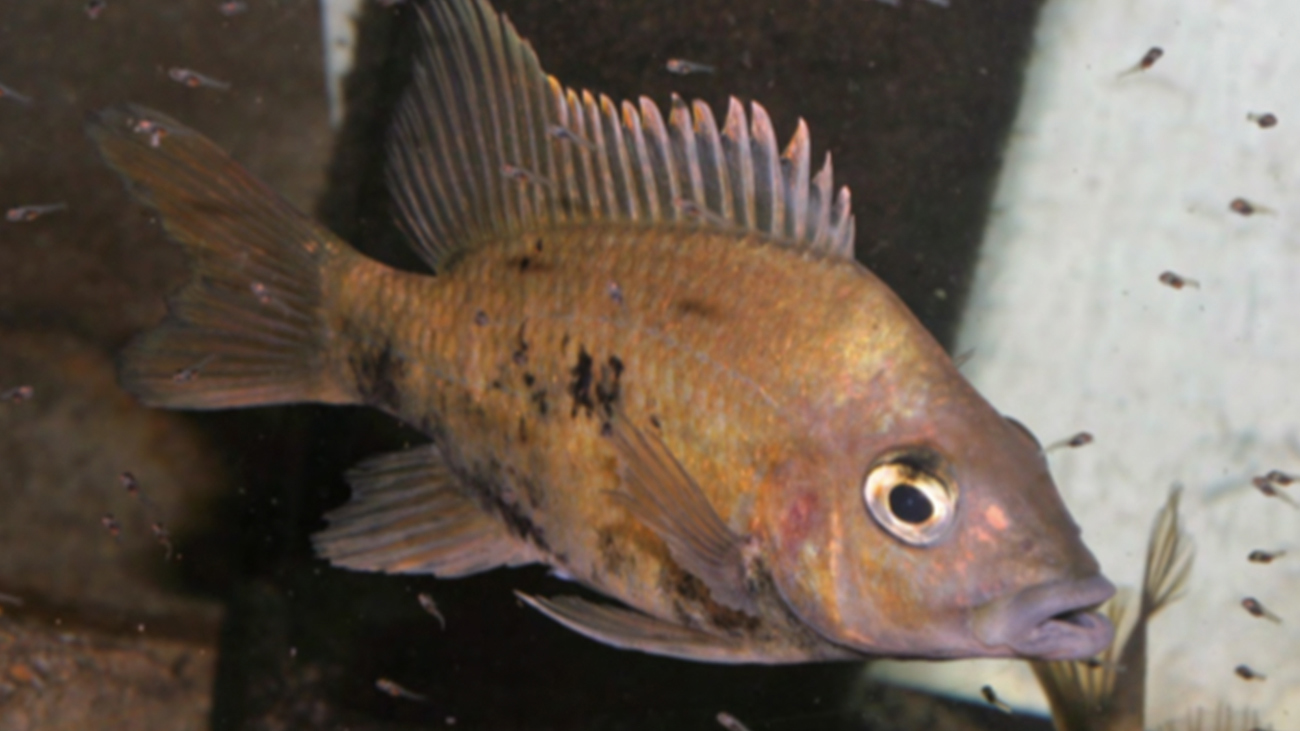
Neu in der CC: Der hochbedrohte Loiselle-Ptycho von Madagaskar
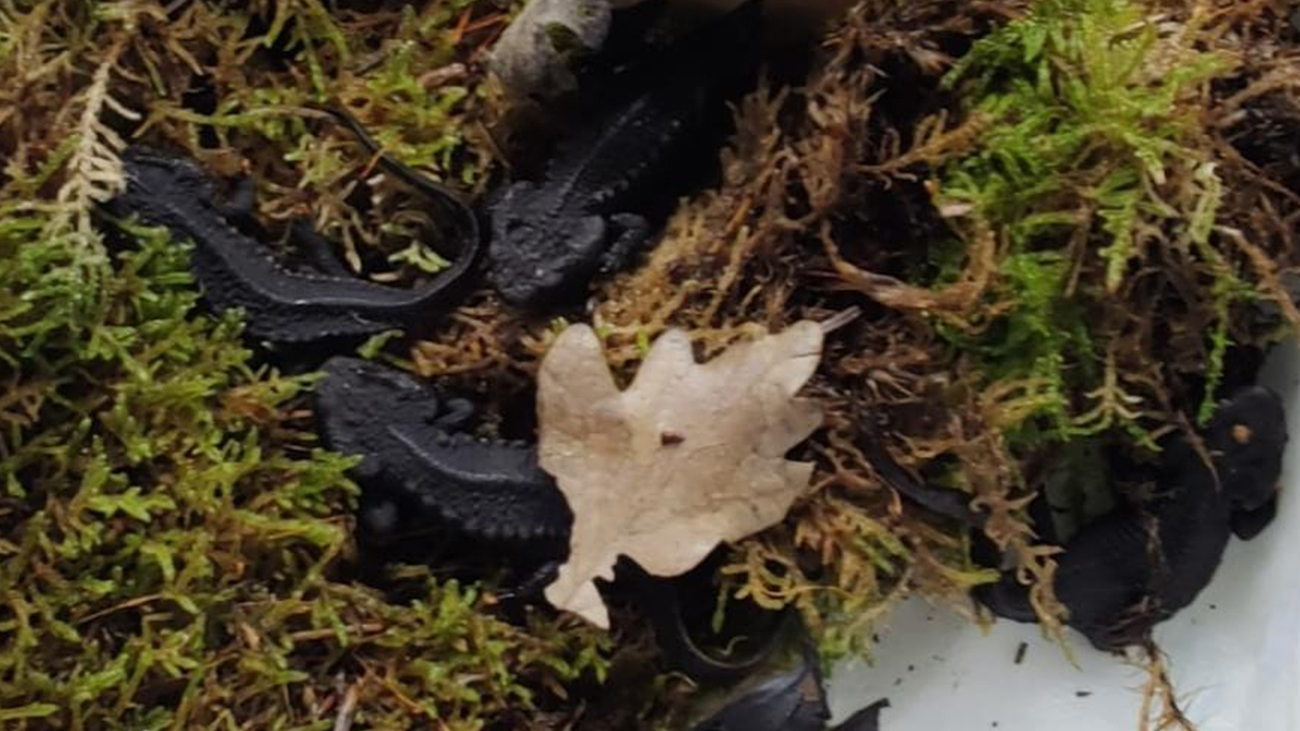
In September 2021, these first specimens of Ziegler’s Crocodile Newts moved in with a CC participant
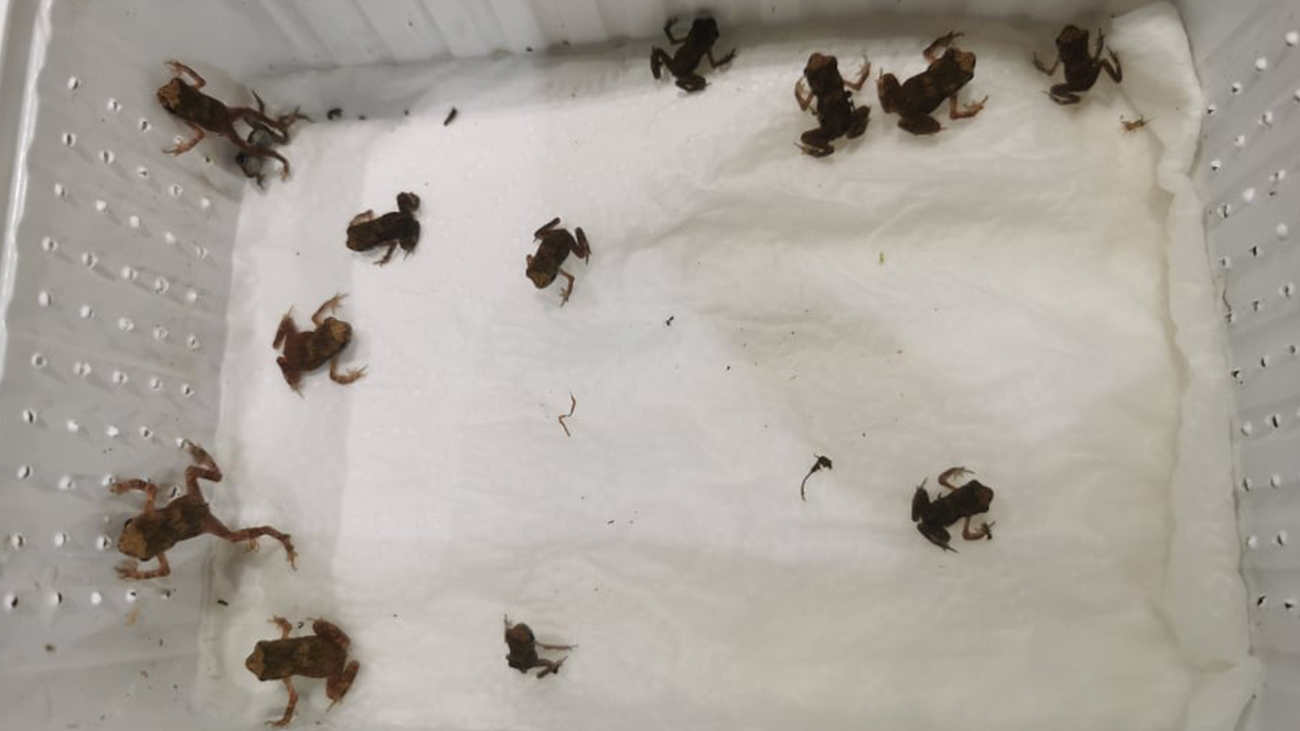
Es gab eine erfreuliche Entwicklung bei der CC-Population der Knochenkopf-Kröten, mit fast hundert gesunden Landbewohnern in zwei CC-Haltungseinrichtungen
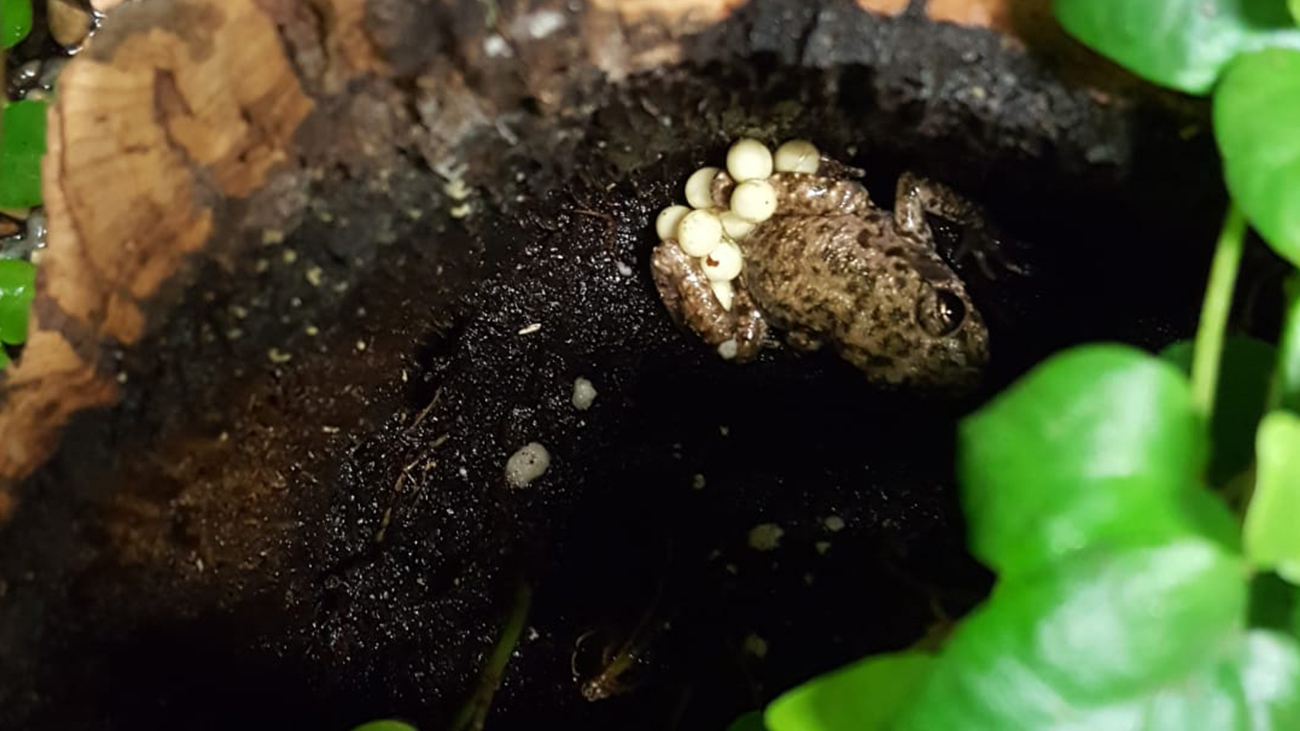
Die hochbedrohte Mallorca-Geburtshelferkröte, der seltenste Lurch Europas, hat in der CC wieder Nachwuchs gezeugt. Hier: Ein eiertragendes Männchen.
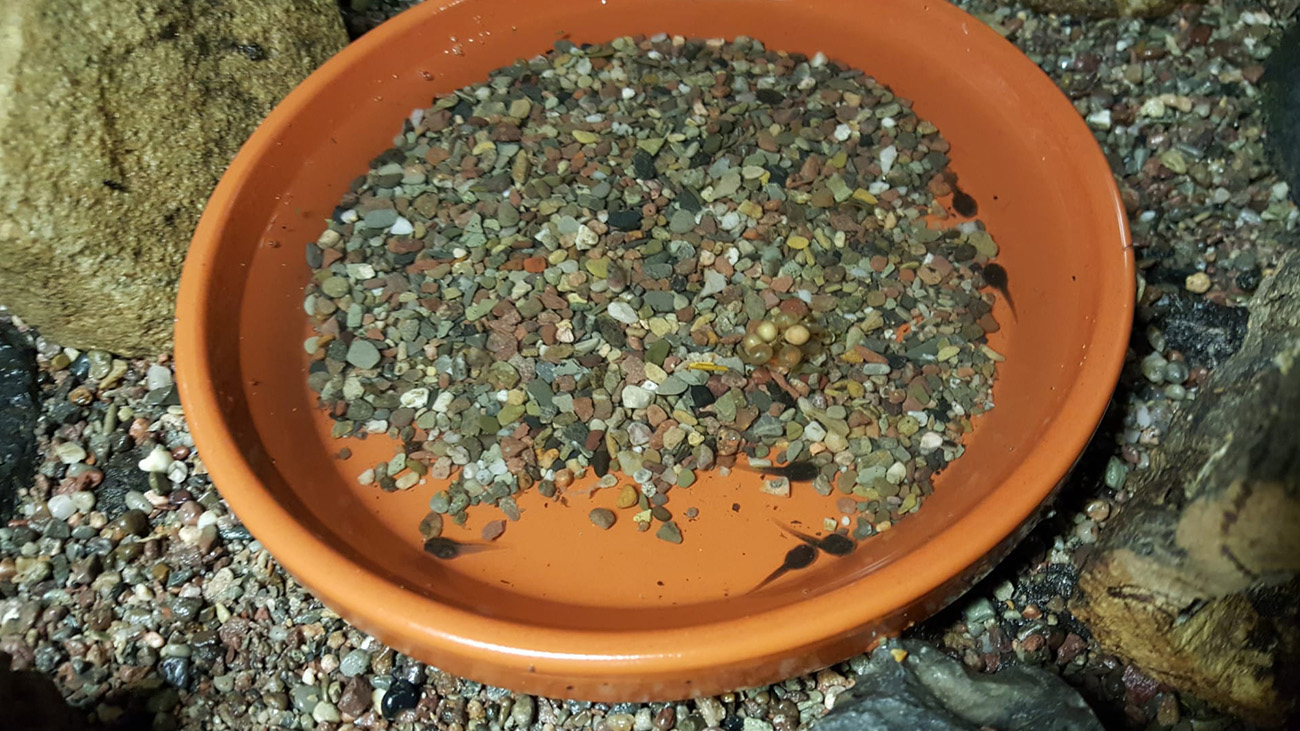
The tadpoles are then deposited in the terrarium’s water dish, Majorcan midwife style
Transition Period
The inclusion of fish is a logical step in CC’s strategy: the five-year pilot phase focused on amphibians ends in 2022, and it was part of our development mandate to prepare for the expansion of the program to other animal groups thereafter. So the Madagascan fish are the vanguard of a imminent CC #Fish section. The inclusion of other fish groups is currently in preparation as well as the establishment of corresponding organizational structures. The most important milestone is the spin-off of CC as an independent organization, which will take place soon.
Salamander-News
But, of course, things will continue with our long-established amphibians. CC’s fire salamander project is now really taking off. The salamanders are threatened by a deadly fungus that is wiping out entire populations. CC is therefore preparing to build ex-situ capacities to conserve several lineages of the charismatic salamanders. Starting with 92 fire salamanders distributed among six breeders.
With the highly endangered Ziegler’s crocodile newt (Tylototrtion ziegleri) we were able to welcome another crocodile newt species from Vietnam into our program.
The program continues
After first successes with the Vietnamese crocodile newt we had a setback – a bacterial infection killed one breeder’s flock of freshly metamorphosed newts so fast that unfortunately, all help was in vain. However, the other breeds are stable. Thus, the basic philosophy of CC already proves itself here: risk distribution by dividing the stock among many breeders. If something goes wrong with one, there are always others left. This makes our conservation breeding resistant to many problems.
We were successful with the Bony-headed Toads and the Chinese Fire-bellied Toads, which, as hoped, are proving to be optimal species for school and show facilities. We have also had some breeding successes with the Lake Patzcuaro Salamander. Since the larvae are still very young, they have not found their way into this inventory yet though.
Apart from that, we hope that our Almanzor fire salamanders will finally reach sexual maturity next year and provide for their first offspring. Good salamanders take time.
More information on the CC species.
Stock overview May 2023
(You can scroll horizontally in the table.)
| Wiss. Name | Dt. Name | Bestand Tiere (m/w/u) | Anzahl Haltungen | Todesfälle 05/23 – 10/23 (m/w/u) | Abgabe extern 05/23 – 10/23 | Zugänge Nachzucht 05/23 – 10/23 | Zugänge extern 05/23 – 10/23 | Ziel (Tiere, Halter) | Status* |
|---|---|---|---|---|---|---|---|---|---|
| Amphibien | |||||||||
| Agalychnis lemur | Lemur-Laubfrosch | 51 (13/10/28) | 8 | 9 (1/1/7) | 0 | 16 | 0 | 225, 40 | 21 % |
| Alytes muletensis | Mallorca-Geburtshelferkröte | 701 (12/13/676) | 37 | 26 (0/0/26) | 0 | 401 | 0 | 425, 53 | 85 % |
| Ambystoma andersoni | Andersons Querzahnmolch | 69 (20/21/28) | 8 | 11 (5/3/3) | 0 | 8 | 0 | 225,40 | 25 % |
| Ambystoma dumerilii | Pátzcuaro-Querzahnmolch | 206 (60/46/100) | 27 | 62 (0/0/62) | 11 | 41 | 0 | 225, 40 | 80 % |
| Atelopus balios | Rio-Pescado-Harlekinkröte | 29 (9/9/11) | 4 | 1 (0/1/0) | 0 | 0 | 30 | ** | ** |
| Bombina orientalis | Chinesische Rotbauchunke | 243 (37/22/184) | 21 | 13 (0/0/13) | 0 | 50 | 13 | 225, 60 | 68 % |
| Ecnomiohyla valancifer | San-Martín-Fransenbeinlaubfrosch | 22 (0/0/22) | 1 | 0 | 0 | 0 | 22 | ** | ** |
| Epipedobates tricolor | Dreistreifen-Blattsteiger | 45 (0/0/45) | 4 | 0 | 0 | 0 | 45 | ** | ** |
| Gastrotheca lojana | Loja-Beutelfrosch | 12 (0/0/12) | 1 | 0 | 0 | 0 | 12 | ** | ** |
| Ingerophrynus galeatus | Knochenkopfkröte | 40 (12/11/17) | 6 | 11 (6/0/5) | 0 | 0 | 5 | 225, 40 | 16 % |
| Minyobates steyermarki | Tafelberg-Baumsteiger | 26 (5/4/17) | 5 | 0 | 0 | 0 | 11 | 110, 20 | 24 % |
| Phyllobates terribilis | Schrecklicher Blattsteiger | 33 (9/5/19) | 4 | 6 (2/2/2) | 0 | 13 | 9 | 225, 70 | 10 % |
| Salamandra sal. almanzoris | Almanzor-Feuersalamander | 24 (17/7/0) | 7 | 0 | 0 | 0 | 0 | 185, 30 | 18 % |
| Salamandra salamandra (D) | Feuersalamander | 152 (19/12/121) | 16 | 3 (0/2/1) | 3 | 0 | 72 | 330, 90 | 32 % |
| Telmatobius culeus | Titicaca-Riesenfrosch | 41 (12/14/15) | 7 | 0 | 0 | 0 | 5 | 225,45 | 17 % |
| Tylototriton vietnamensis | Vietnamesischer Krokodilmolch | 200 (39/33/138) | 28 | 36 (6/9/21) | 0 | 5 | 38 | 185, 30 | 97 % |
| Tylototriton ziegleri | Zieglers Krokodilmolch | 24 (7/3/14) | 6 | 4 (3/1/0) | 0 | 0 | 0 | 185,30 | 16 % |
| Fische | |||||||||
| Bedotia madagascariensis | Madagaskar-Ährenfisch | 144 (24/20/100) | 10 | 33 (9/6/18) | 0 | 56 | 13 | 192, 16 | 69 % |
| Cyprinodon veronicae | Charco-Azul-Wüstenkärpfling | 16 (6/10/0) | 2 | 0 | 0 | 0 | 16 | ** | ** |
| Limia islai< | Tigerkärpfling | 49 (5/5/39) | 3 | 0 | 0 | 0 | 49 | ** | ** |
| Parosphromenus bintan | Bintan Prachtgurami | 8 (4/4/0) | 1 | 0 | 0 | 0 | 8 | ** | ** |
| Ptychochromis insolitus | Mangarahara-Buntbarsch | 452 (15/18/419) | 12 | 37 (8/8/21) | 10 | 222 | 0 | 192, 16 | 88 % |
| Ptychochromis loisellei | Loiselles Buntbarsch | 216 (18/18/180) | 7 | 46 (7/1/38) | 0 | 65 | 0 | 160, 16 | 72 % |
| Ptychochromis oligacanthus | Nosy-Be-Buntbarsch | 1096 (8/9/1079) | 4 | 10 (3/2/5) | 0 | 1000 | 0 | 192,16 | 63 % |
| Reptilien | |||||||||
| Cuora cyclornata | Vietnamesische Dreistreifen-Scharnierschildkröte | 1 (1/0/0) | 1 | 0 | 0 | 0 | 1 | ** | ** |
m: male, w: female, u: undetermined sex
* Status = mean value of the percentage of the target number of keepers already achieved and the target number of animals
** To be determined.